


KLM
Royal Dutch Airlines has admitted that it will have to take action to structurally improve the airline’s operational and financial performance, saying that while its revenue has grown, cost growth has outpaced its ability to generate income.
At the same time, it was in the process of renewing its fleet, which will require significant capital expenditure (CapEx) to introduce more fuel-efficient aircraft.
The Dutch carrier expressed that its goal was to improve its operating result – not net profit – by €450 million ($496.8 million) and, in line with the ambitions of Air France-KLM
, achieve a structural profit margin above 8% within the 2026-2028 timeframe.
Suffering from high costs
KLM said that it was taking these and other measures to maintain its network and services and to protect jobs as much as possible. In total, the airline announced seven initiatives that should help achieve its financial goals.
The Dutch carrier also said that it has informed the Works Council and its unions about the proposed measures, promising to continue talking to the unions to finalize the moves.
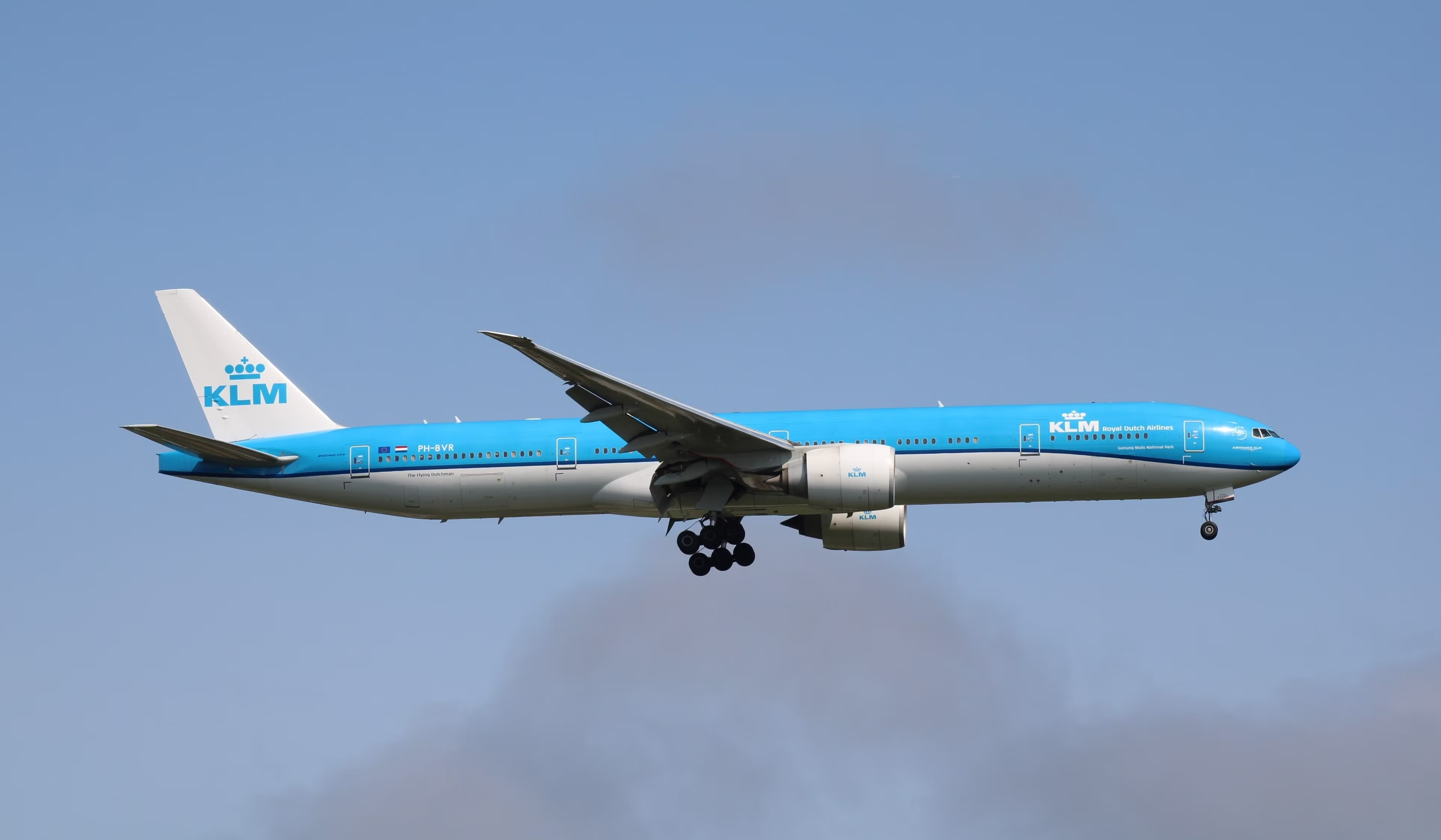
Photo: The Global Guy | Shutterstock
Marjan Rintel, the president and chief executive officer (CEO) of KLM, said that the airline wanted to maintain its 105-year pioneering role in aviation and continue to connect the Netherlands with the rest of the world.
“However, just as many other airlines, KLM is suffering from high costs and shortages of staff and equipment.”
Rintel admitted that while its aircraft are full – the average H1 load factor was 87.1% – its capacity was still below its pre-pandemic levels. Furthermore, KLM has wanted to remain at the forefront of customer and employee satisfaction, as well as sustainability.
“To continue doing this effectively, we must make clear and decisive choices now. This is painful for every KLM colleague, but it is necessary, and it has to be done now.”
Labor inefficiencies and shortages
The seven initiatives cover labor, investments into real estate and other non-critical areas, improving the existing product offering, and potential outsourcing of non-critical functions within the airline.
For example, KLM wants to increase labor productivity by at least 5% by 2025 through automation, mechanization, and reducing absenteeism.
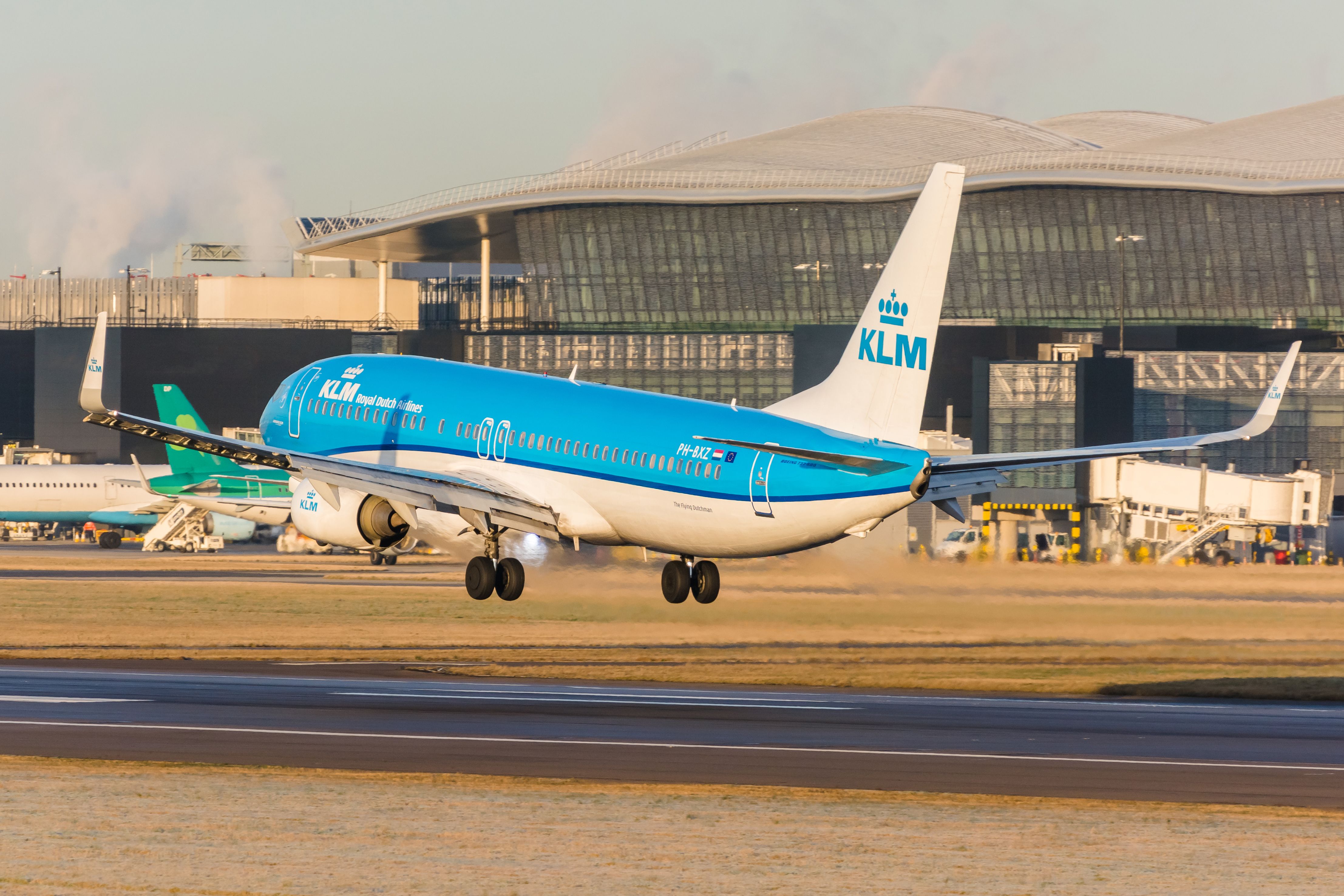
Photo: Arseniy Shemyakin | Shutterstock
Furthermore, it will take measures to resolve its current pilot shortage, ensuring that it can operate flights with its pilots with a better balance between intercontinental and European flights.
“Due to the shortage of technicians and ongoing supply problems of parts, KLM can operate fewer flights. Measures are being taken at Engineering & Maintenance to reduce the number of cancellations. If this does not yield sufficient results, options to partly outsource maintenance will be examined.”
According to the aviation analytics company Cirium, the Dutch airline has scheduled 5,123 weekly flights, or 40 more, in October compared to the same month a year prior. In July, the airline improved its year-on-year (YoY) weekly departure number by 113, offering 2.3% more flights than in July 2023.
Focusing on new aircraft additions
The airline has also planned to improve existing products and introduce new ones onboard. While trials are underway with an expanded catering offer and optimization of its cabin layout, KLM estimated that this should bring at least €100 million ($110.4 million) in additional revenue annually.
According to the carrier, it will also cut investments in non-critical areas, such as safety and compliance. Budget cuts could affect its new headquarters as well as the KLM Engineering & Maintenance buildings.
However, the Dutch carrier said that it will strive to maintain CapEx on new aircraft as much as possible. Air France-KLM’s H1 report showed that the group spent €2 billion ($2.2 billion) on acquiring aircraft, other tangible and intangible assets, and changes in fixed asset liabilities.
In H1 2023, the Franco-Dutch group’s CapEx totaled €1.3 billion ($1.4 billion), of which €1.2 billion ($1.3 billion) was spent on flight equipment. In H1, that figure was €1.8 billion ($1.9 billion).
Photo: Vincenzo Pace | Simple Flying
Ch-aviation data showed that so far in 2024, the Dutch airline has taken delivery of only two aircraft: two Airbus A321neo (delivered on August 23 and September 27). The site estimated that Embraer should deliver four E195-E2s in 2024, while Boeing should hand over a single 787-10 to KLM in October.
Lastly, KLM will attempt to simplify its organizational structure by eliminating overlap and overhead, as well as explore options to outsource, divest, or discontinue activities that do not contribute to flight operations.
For example, on February 1, KLM closed a deal to sell its ground handling company, KLM Equipment Services, to Belgium-based TCR International. While that has resulted in a recognized €30 million ($33.1 million) cash gain and a further €2 million ($2.2 million) increase in non-current income and expenses in H1, KLM will be forced to lease the ground handling equipment at its main hub, Amsterdam Schiphol Airport (AMS).
Rintel concluded that the goal was to future-proof KLM, with management doing everything it could to maintain its network and services. The package should lay down the foundations for a strong KLM that will continue connecting the Netherlands with the rest of the world for the next 105 years.
