


The Australian Transport Safety Bureau (ATSB) has issued its final report about an incident in April 2022 when a Regional Express (Rex) Saab 340 was preparing to depart Melbourne, Australia.
According to the investigators, multiple deviations from standard procedures occurred while the aircraft was still on the ground. This resulted in a left-hand engine fire and an evacuation that included some passengers bringing their belongings despite being specifically instructed not to do so.
Disconnecting ground power prematurely
Events preceding the incident, which happened at Melbourne Airport (MEL) on April 6, 2022, had begun at 14:44 local time (UTC +10) as the Saab 340, registered as VH-ZRK, was preparing for departure.
Initially, after completing the engine start checklist, the pilots started the right-hand engine. About 40 seconds later, the flight crew began going through the same checklist for the left-hand engine. However, while the propeller had started spinning, a ground staff member disconnected the ground power unit (GPU).
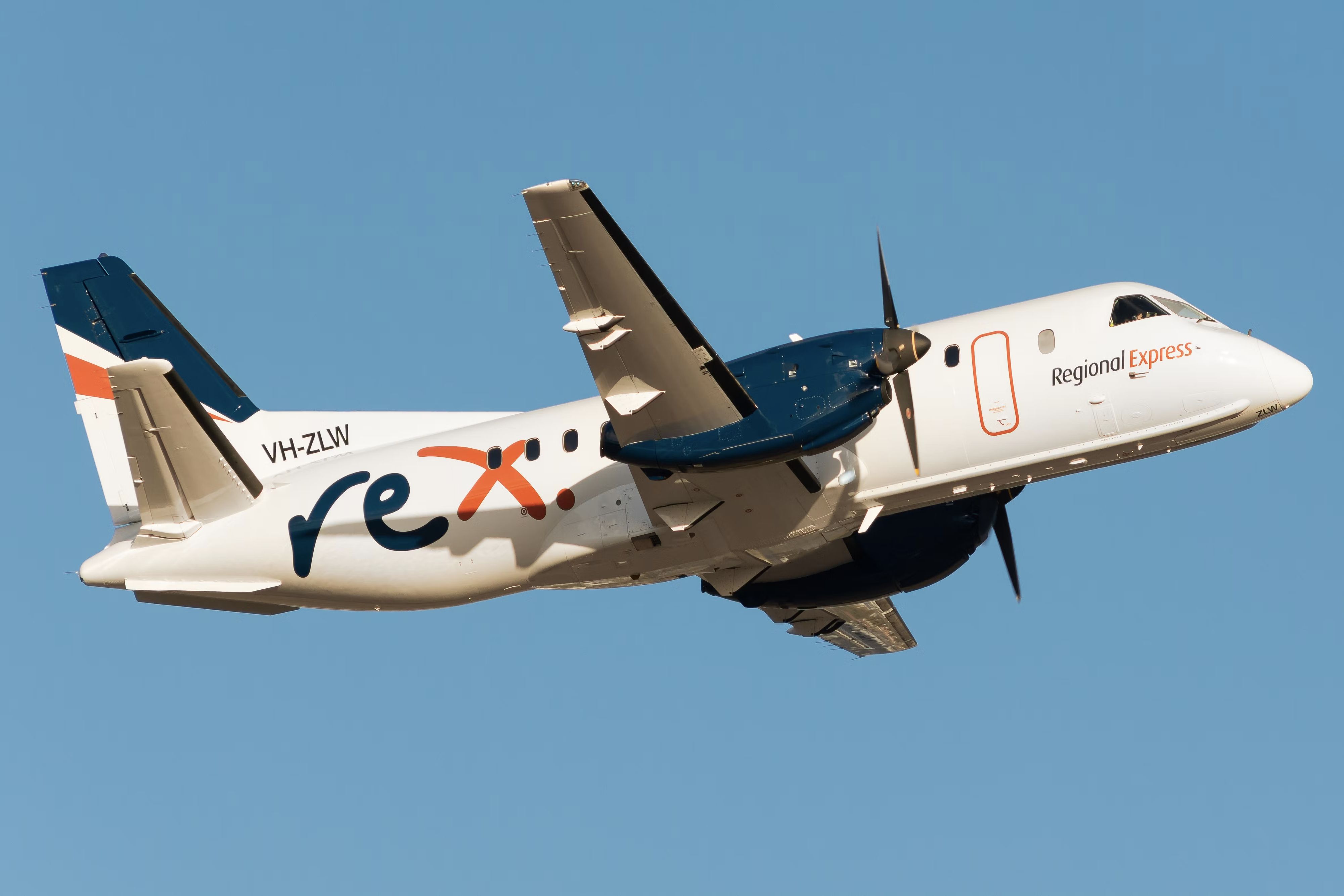
Photo: Steve Worner | Shutterstock
“They recalled not being sure why they disconnected the GPU without the instruction to do so, but recalled being preoccupied with the next aircraft departure.”
After the pilots realized that the GPU had been disconnected since the cockpit instruments had no power, the captain started going through the interrupted engine start memory items. The ATSB pointed out that this included turning off the fuel feed, the ignition switch, and motoring to remove any residual fuel from inside the engine.
Related
The Role Routes Played In Rex’s Decision To End Boeing 737 Flights
Its big-stakes gamble was unlikely to pay off.
Saab 340 Engine fire
However, a tailpipe fire developed when the left engine’s propeller began to rotate due to the motoring. The ATSB noted that the marshaller standing at the front of the aircraft saw a burst of flames and began signaling to the pilots to stop what they perceived was an engine start.
“As the marshaller and flight crew were not able to communicate verbally (there was no radio and no communications headset for the Saab 340), the marshaller reported they tried to signal to the captain to shut the engine down using a ‘cut-throat’ hand signal.”
In response, the captain, who was still going through the motoring procedure, signaled to the marshaller that they had to continue. Eventually, the message went through to the pilot, and the captain stopped removing residual fuel from the engine, resulting in the left-hand engine’s propeller stopping turning.
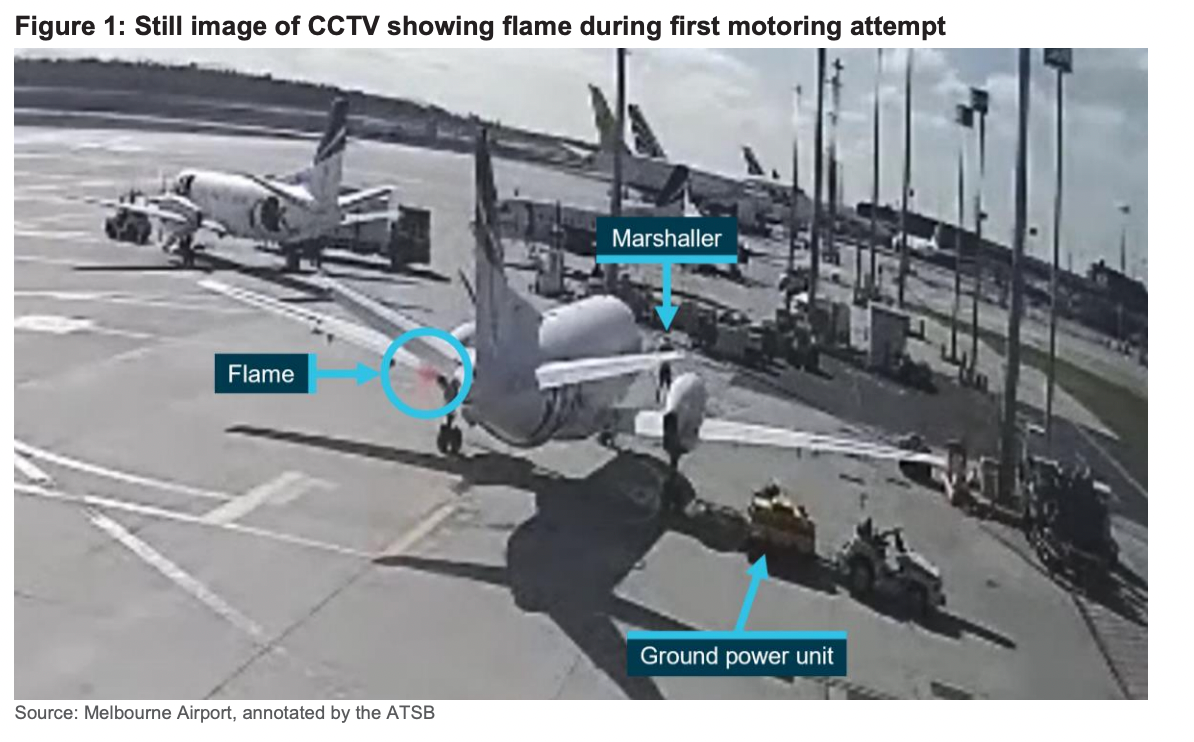
Photo: ATSB
At the same time, the interstage turbine temperature (ITT) kept rising, and as a result, the captain decided to continue motoring. The marshaller, once again believing that the pilots were starting up the engine, attempted to get them to stop.
While this resulted in the captain looking outside the aircraft’s window, the pilot could not observe any flames from the engine. No other signals, including the cockpit instruments, had indicated a fire.
As the ITT continued to climb, the captain abandoned the motoring procedure and initiated an engine fire emergency checklist at 14:46. The pilot then said, “All right, mate, fire.”
The captain told the first officer to pull the fire handle for the left-hand engine, which discharged the engine fire bottle. In less than 30 seconds, a second engine fire bottle was discharged.
“The captain later recalled that they omitted 2 engine fire checklist items relating to the power and condition levers […] due to the stress at the time.”

Related
Investigation Finds Cathay Pacific Airbus A350 Engine Fire Due To Damaged Fuel Hose
Hong Kong’s investigators highlighted that it had recommended EASA to mandate Rolls-Royce to issue inspection instructions of the part.
Evacuating with personal belongings
Before the captain instructed the first officer to discharge the second fire bottle, the pilot ordered an evacuation at 14:47:03. They did so by cycling the seatbelt sign, which created four chimes.
At the same time, a flight attendant was using the public announcement (PA) system to provide a safety briefing to the passengers. The investigators pointed out that the PA system was the primary method to inform the cabin about an evacuation.
“[…] the captain incorrectly believed they would be unable to use it as the flight attendant was already using the system for the passenger safety briefing.”
At 14:47:33, less than a minute after verbally saying that there was an engine fire, the captain opened the cockpit door and instructed the cabin crew to initiate an evacuation. At this moment, the first officer and the flight attendant were unaware of the need to evacuate the Saab 340.
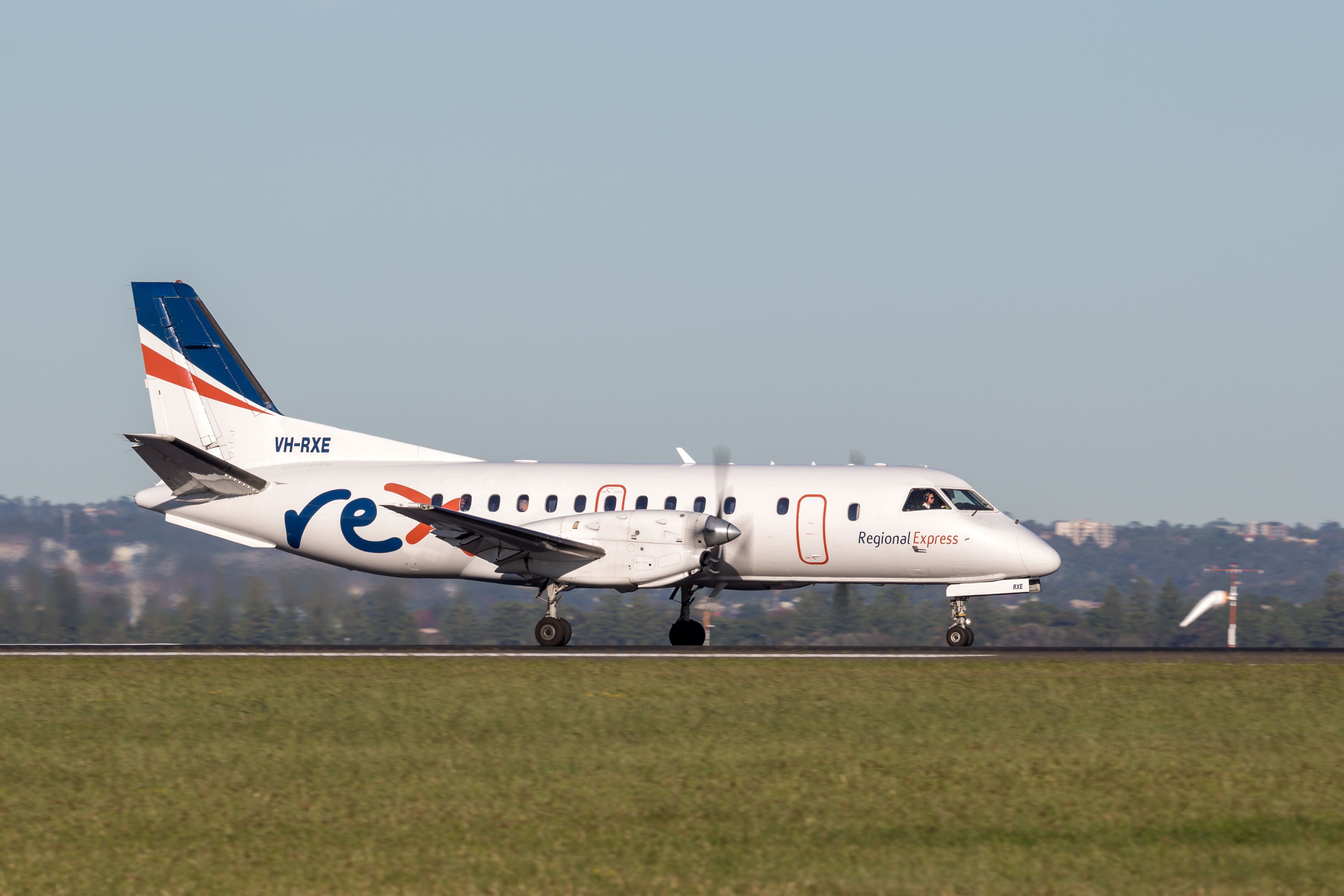
Photo: Ryan Fletcher | Shutterstock
23 seconds after the captain emerged from the cockpit, the flight attendant shouted evacuation commands, opening the forward right exit (R1). The ATSB stated that passengers were told to evacuate, leave everything behind, and sit and jump from the turboprop. Passengers seated in the exit row did not open their exits.
“Some passengers attempted to bring their bags during the evacuation and the flight attendant and the captain (after exiting the flight deck) instructed them to leave everything behind. After receiving these instructions, a small number of passengers still exited the aircraft with their bags.”
The evacuation was completed at 14:51:24, or in less than four minutes. The ATSB cited the aircrew emergency manual, which stated that any evacuation requiring the utmost speed should be done in 90 seconds. Following the event, an examination of the left-hand engine showed no engine defects or fire damage.
The investigators concluded that the decision to disconnect the GPU without an instruction to do so, the marshaller’s instructions that resulted in the captain stopping the motoring, and the uncoordinated response to the interrupted engine start or the later fire signals from the marshaller contributed to the incident.
Other risk factors included, but were not exclusive to, were the usage of non-standard signals, the failure to communicate about the aircraft evacuation, including the cycling of the seatbelt sign, and the failure to tell air traffic (ATC) about the fire in a timely manner.
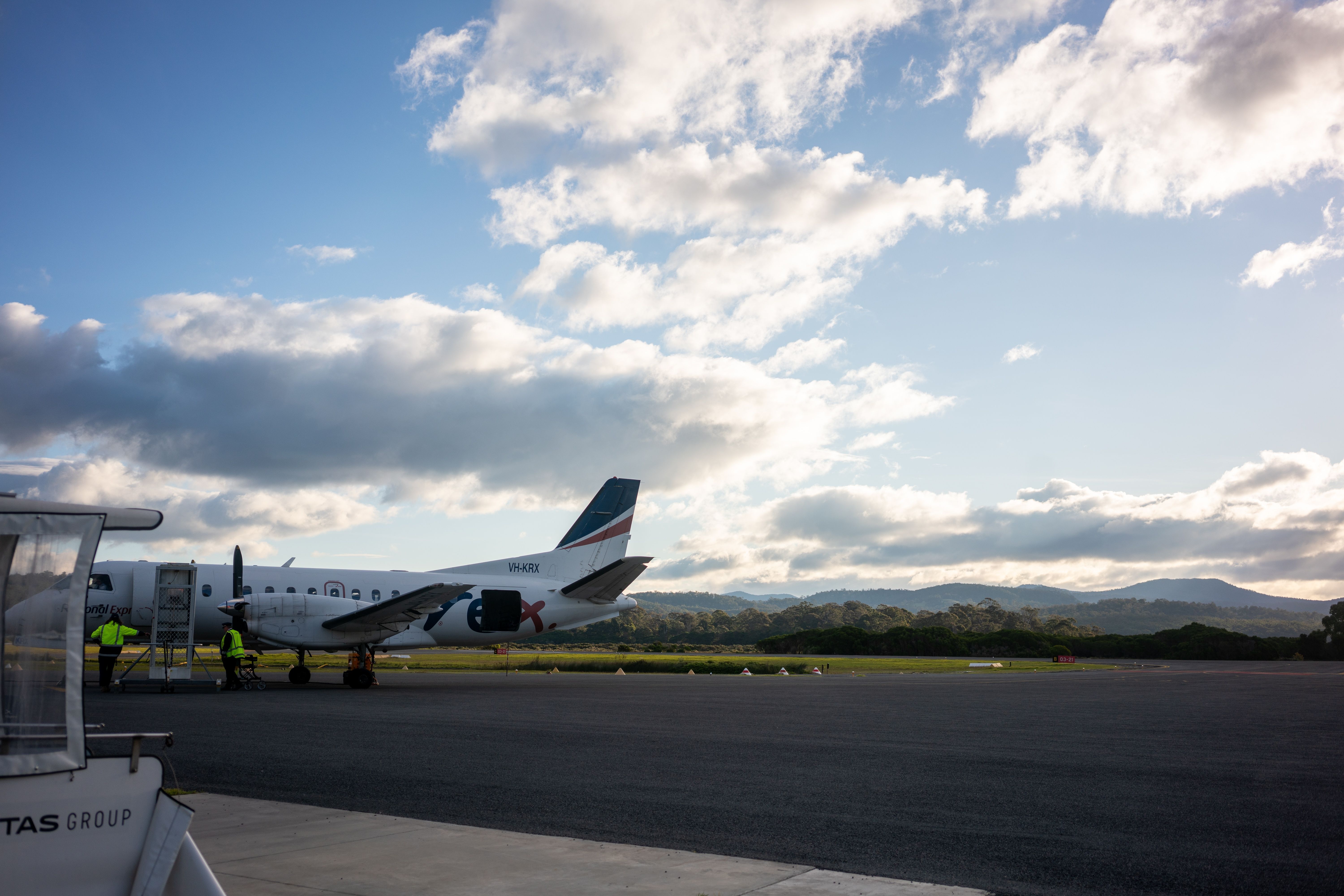
Photo: Darcy Perkins | Shutterstock
“Regional Express did not provide flight crew or ground crew recurrent training to review the hand signals required to communicate with each other, including those used in an emergency.
(Safety issue)
.”
On May 22, 2022, Rex reported that it had issued advisories and notices to its ground and flight crews, which highlighted correct hand signals, dispatch procedures, and marshaling signals.
Furthermore, the airline developed a new computer-based training (CBT) about two-person dispatch, engine motoring identification, and updated hand signals.
“Regional Express developed a new hand signal to indicate an interrupted engine start, which was included in face-to-face and computer-based training content.”
Only two passengers received two minor injuries out of the 25 people onboard the aircraft during the incident. The Saab 340 has been stored at Wagga Wagga Airport (WGA) since June 3, 2024, according to planespotters.net data.
Related
40 Years Of The Saab 340: Today’s Biggest Passenger Operators
The longest scheduled Saab 340 flight in February has a block time of nearly three hours.
