


The United Kingdom Air Accidents Investigation Branch (AAIB) has published its final report on an incident in which a TUI Airways Boeing 737-800 departed Bristol with insufficient thrust due to an older autothrottle servo motor (ASM). The aircraft overflew the end of the runway at a height of around 10 feet (3 meters), continuing to its destination without further incident.
Autothrottle issues on takeoff
On March 4, 2024, a TUI Boeing 737-800, registered as G-FDZS, was preparing to take off from Bristol Airport (BRS). On that day, the aircraft carried 169 souls: six crew members and 163 passengers.
The flight was operated by a captain and a to-become captain, with the itinerary being a line training sector for the latter. The line training captain acted as pilot flying (PF), while the other pilot monitored the aircraft’s systems and communications as pilot monitoring (PM).
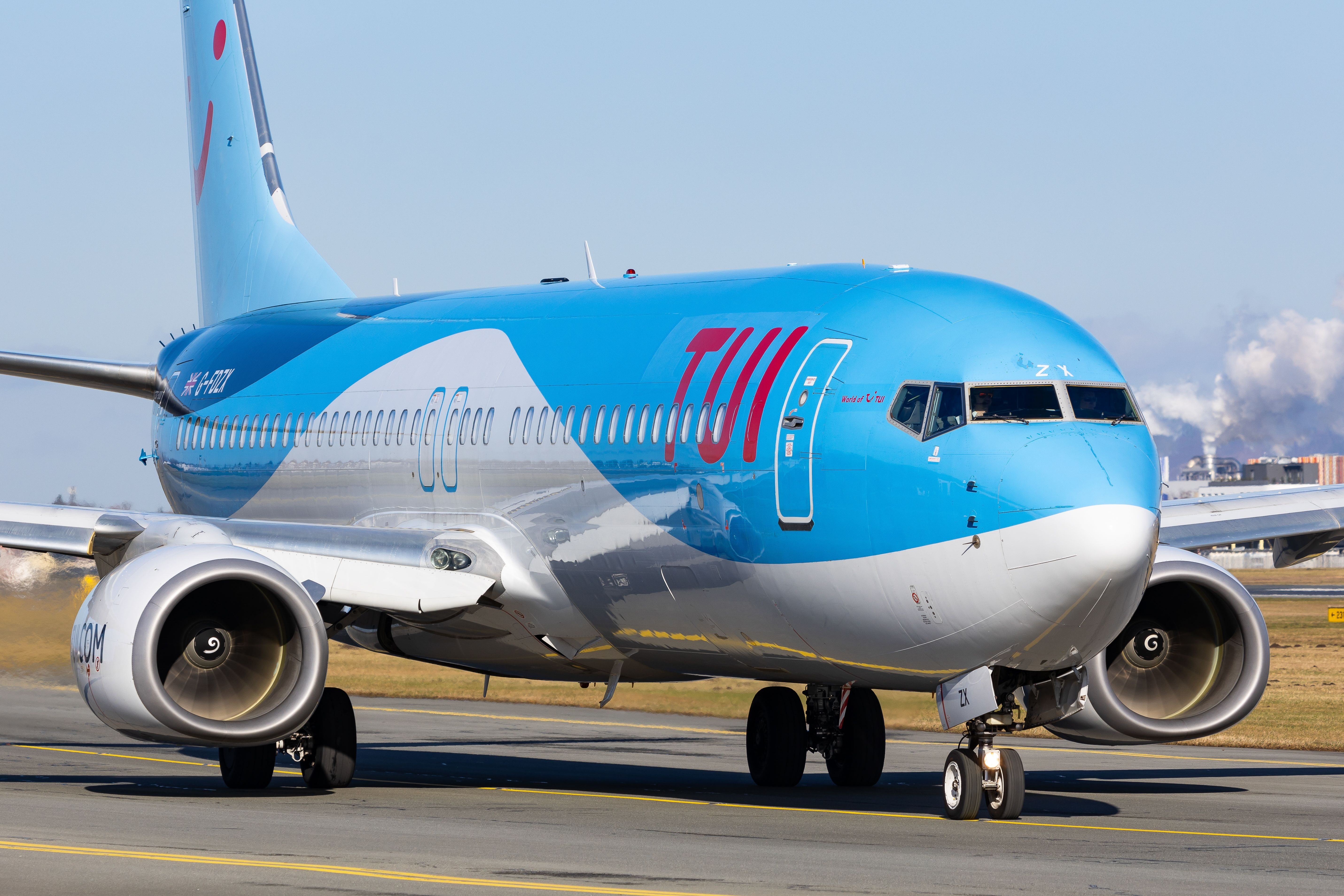
Photo: Photofex_AUT | Shutterstock
After completing their pre-flight preparations, the 737-800 taxied to runway 09 at 10:41 local time (UTC +0). At that point, the pilots had armed the autothrottle (A/T) switch on the Mode Control Panel (MCP), according to TUI Airways’ standard operating procedures (SOP).
Air traffic control (ATC) cleared the aircraft to take off, and the PF proceeded to advance the thrust levers to 40% N1, pausing for the engines to stabilize before selecting the Takeoff/Go-Around switch (TOGA) switch.
The switch engages both the A/T in N1 mode and the autopilot/flight director system (AFDS) in takeoff mode, the AIIB noted.
“At this point, the A/T disengaged with an associated warning and the A/T arm switch on the MCP was re-engaged by the PM almost immediately afterwards.”
In response, PF advanced the thrust levers manually toward the required takeoff setting before releasing them for the left-hand seat occupant to operate, which was in accordance with the airline’s SOPs.
According to the investigators, both pilots had believed that the A/T was engaged and expected the system to function as if in TOGA mode. However, while the arm switch was re-engaged on the MCP after the initial disengagement, it did not control the thrust.
“As a result, the thrust levers did not advance to the required thrust setting and neither pilot moved them from the position the PF had set them to. Despite the SOP requiring that the thrust is set by 60 kt and checked as correct at 80 kt, the incorrect setting was missed by both pilots.”
Related
AAIB Finds Boeing 737-800 Autothrottle Failure Led To TUI Overflying End Of Runway At 10ft
The investigators pointed out that the TUI Airways jet overflew an adjacent road at a height that was less than 100 ft (30.4 m).
Significantly less thrust
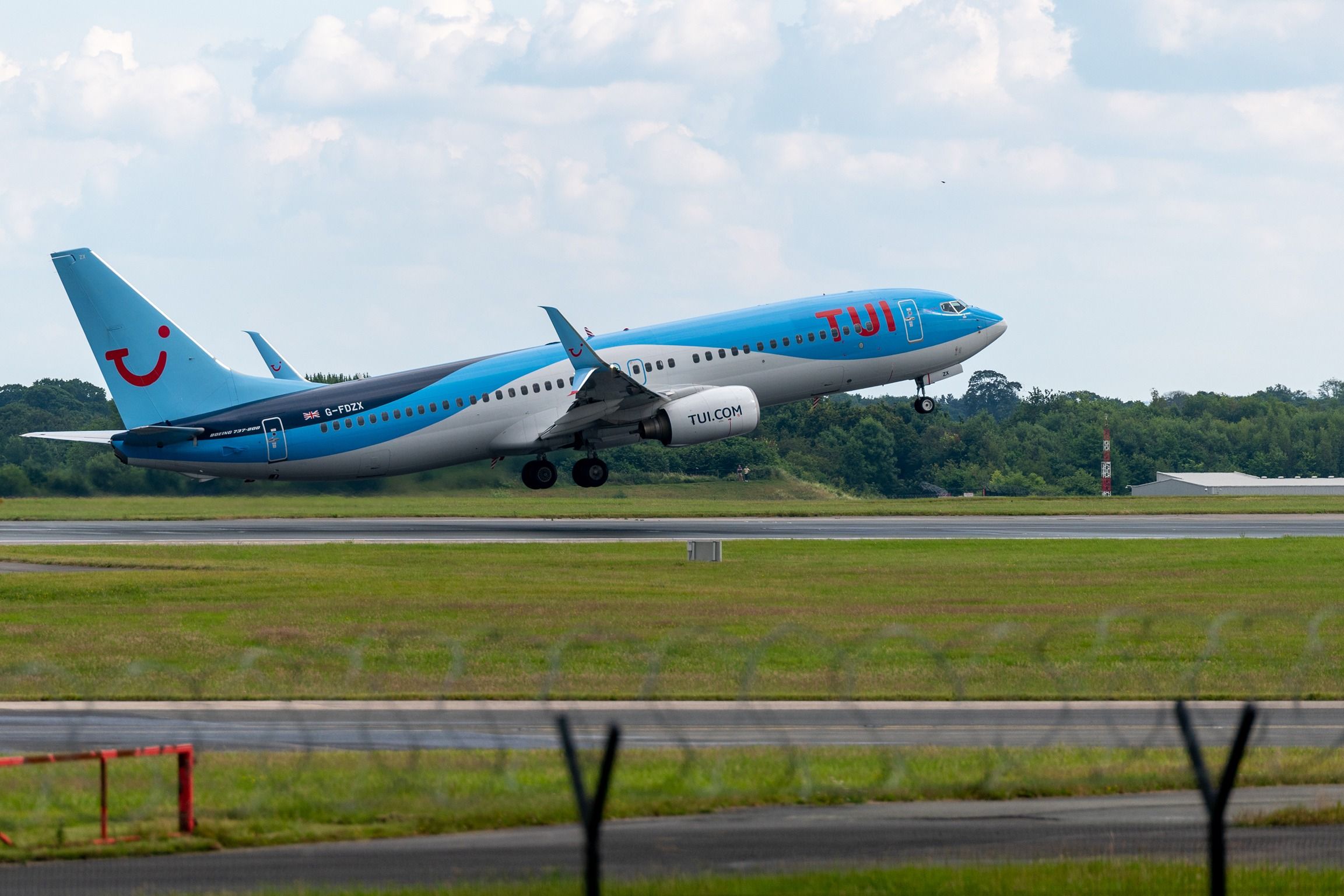
Thus, the aircraft began lifting off with significantly less thrust than required, with the 737-800 taking off with a thrust setting of 84.5% N1 instead of 92.8% N1, which reduced the performance of the aircraft.
“The rotation point was 260 m [853 ft – ed. note] from the end of the runway and the aircraft crossed the end of the runway at a height of approximately 10 ft [3 m – ed. note]. Both pilots had noted how close to the end of the runway they were.”
The aircraft continued toward Las Palmas Gran Canaria Airport (LPA) without further incident. None of the six crew members or 163 passengers were injured during the event.
According to the AAIB, both pilots had significant experience on the 737-800. However, the investigators noted that they had been flying the 737 MAX 8 almost exclusively before the incident.
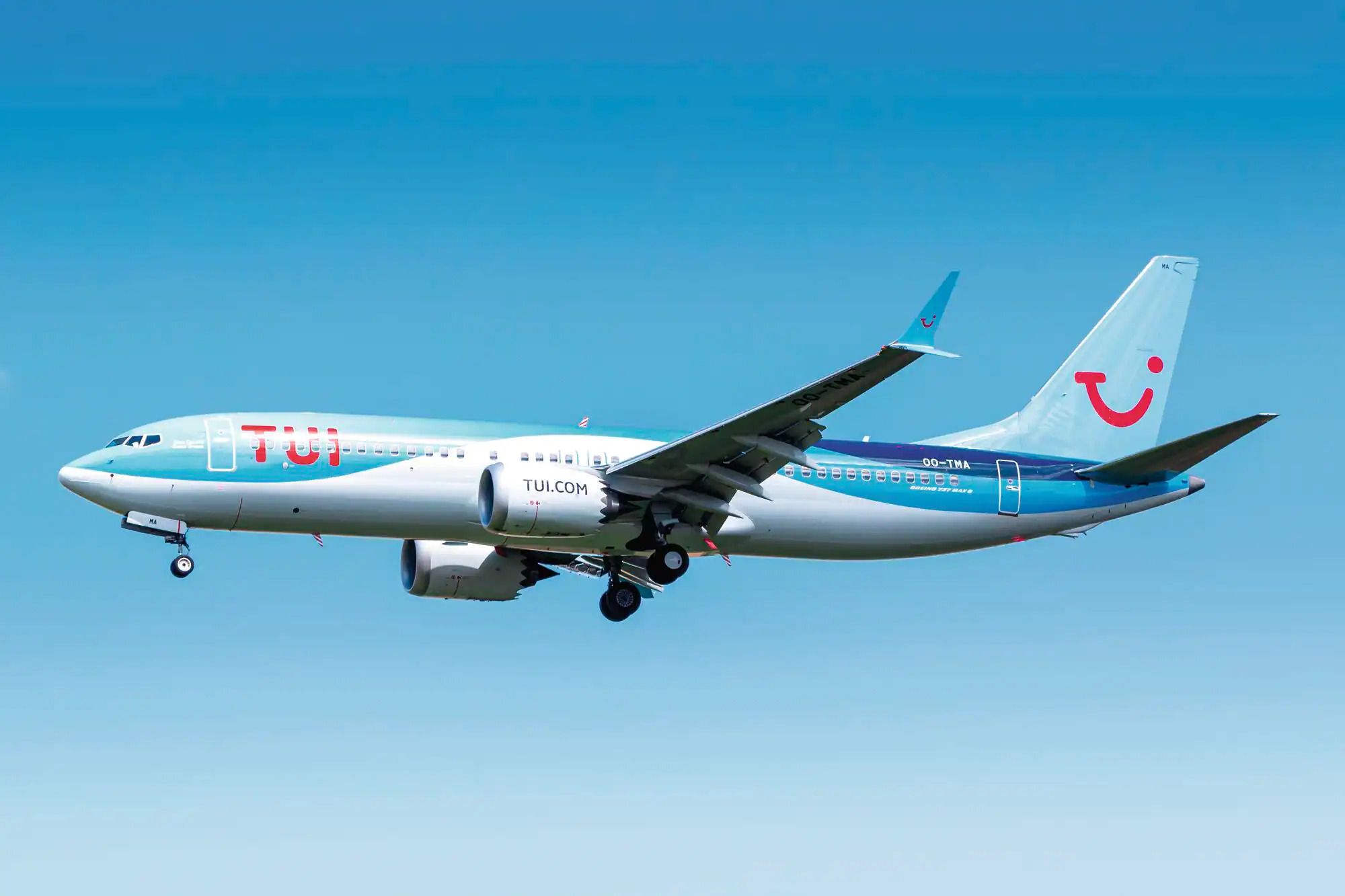
Photo: TUI Airways UK
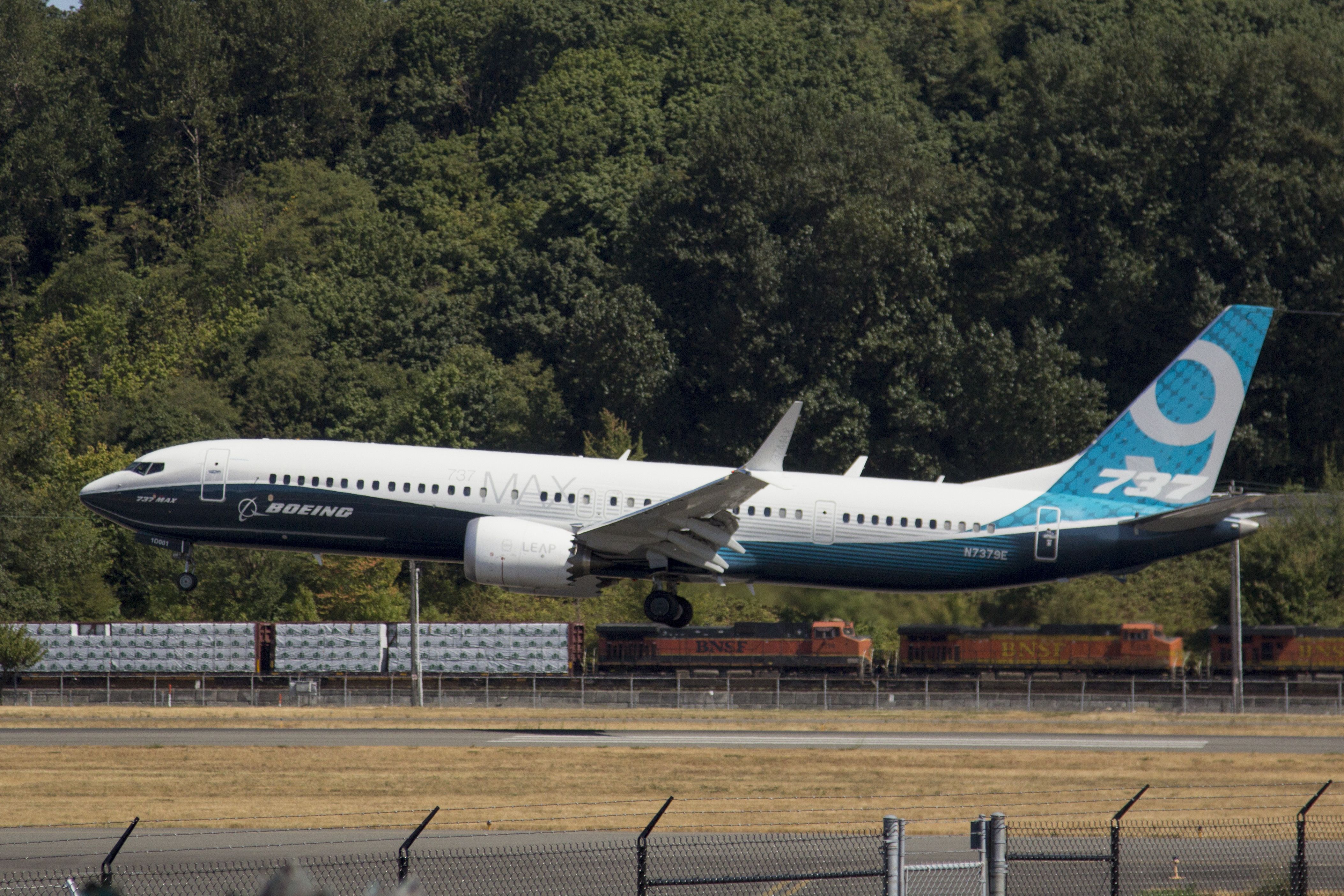
As such, in addition to subtle differences in cockpit displays, the 737 MAX requires a lower thrust setting on takeoff than the 737-800 – due to the much bigger engines on the former – and following a calculation by the AAIB, the investigators determined that a 737 MAX could have taken off with a thrust setting of 85% N1 on that day.
The figure was much closer to the actual takeoff, which was 84.5% N1, the investigation branch highlighted.
Furthermore, while both pilots expected the A/T to function after it re-engaged, neither noticed that the displayed N1 did not match the reference N1.
“The PF commented that he was busy with trying to align the aircraft with the centreline and probably did not glance at the gauges at the 80 kt check. It is likely that the PM glanced at the gauges and noted the green number without processing that the white number did not match it.”

Related
History: Analyzing American Airlines’ Role In Making Boeing Launch The 737 MAX Family
When American Airlines ordered the 737 MAX, Boeing had not even officially launched the aircraft yet.
Older ASM model
The AAIB concluded that the uncommanded A/T disconnection was likely caused by a low voltage being supplied to the ASM, causing it to disconnect. The issue is well-known, and there is a newer model of the motor alongside a new flight control computer (FCC) software to reduce the potential for A/T disconnects.
“The operator took action to raise awareness of the issue and what actions are expected as well as strengthening their FDM [flight data monitoring – ed. note] programme to better monitor the occurrences.”
Meanwhile,  Boeing“encourages” airlines who have experienced A/T disconnects to replace the ASM with a newer model and update the FCC software.
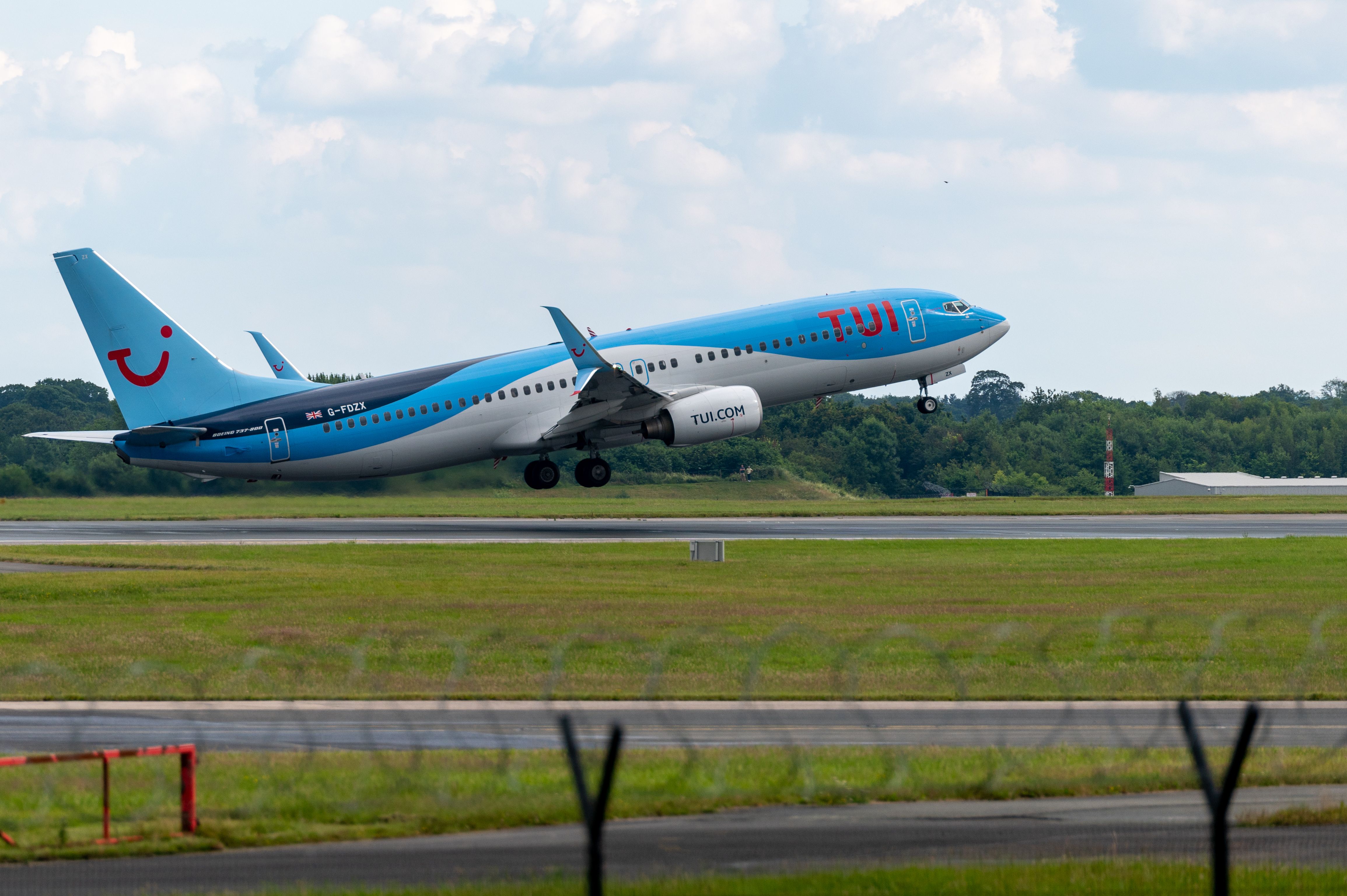
Photo: Martin D Brown | Shutterstock
In total, TUI took six safety actions following the incident in Bristol:
- Created an event trigger for A/T disconnection during takeoff
- Further refined the slow acceleration event trigger using statistical analysis
- Created a trigger event for N1 reference and actual takeoff thrust delta (the latter three are related to FDM processes)
- For flight ops, published a safety alert to raise awareness and provide clear guidance that A/T disconnect was a system failure and met the definitions of a rejected takeoff (RTO)
- Further work includes exploring the reliability of ASM and considering any further training for flight crews.
The Federal Aviation Administration’s ( FAA) records showed that the US regulator, acting as the state of design for Boeing aircraft, has not issued an airworthiness directive (AD) or notice of proposed rulemaking (NPRM) to mandate the replacement of older ASMs on the 737-800.
Related
FAA Issues Airworthiness Directive To Address Boeing 737 MAX SPCU Design Flaw
The FAA has warned that the Boeing 737 MAX’s SPCU has a single point of failure, which could affect the engine anti-ice (EAI) system.
