


easyJet
has announced a world-first application of new lighter-weight paint for its aircraft as part of its sustainability initiatives. The lower-weight paint, manufactured by Mankiewicz Aviation Coatings, could help the airline save up to 1,296 tonnes of fuel and 4,095 tonnes of CO2 emissions when rolled out fleet-wide.
A lighter easyJet orange and white
easyJet partnered with Mankiewicz Aviation Coatings to develop a new system that reduces the amount of paint previously needed to create its iconic easyJet orange and white livery. The lighter-weight coat results in a 27-kilogram weight savings per plane, but every gram counts for airline fuel reduction. The new paint program complements various initiatives to reduce fuel burn and carbon emissions that easyJet is implementing.
Lahiru Ranasinghe, Director of Sustainability at easyJet, said of the new paint:
“This forms a small part of a bigger strategy, formulating a new lightweight paint with our partners at Mankiewicz Aviation Coatings exemplifies how we’re assessing every single part of our operation to find efficiency gains to help us achieve this mission.”
With its UK and European operations combined, easyJet operates an all-Airbus fleet of over 300 aircraft, so those 27 kilograms quickly add up.
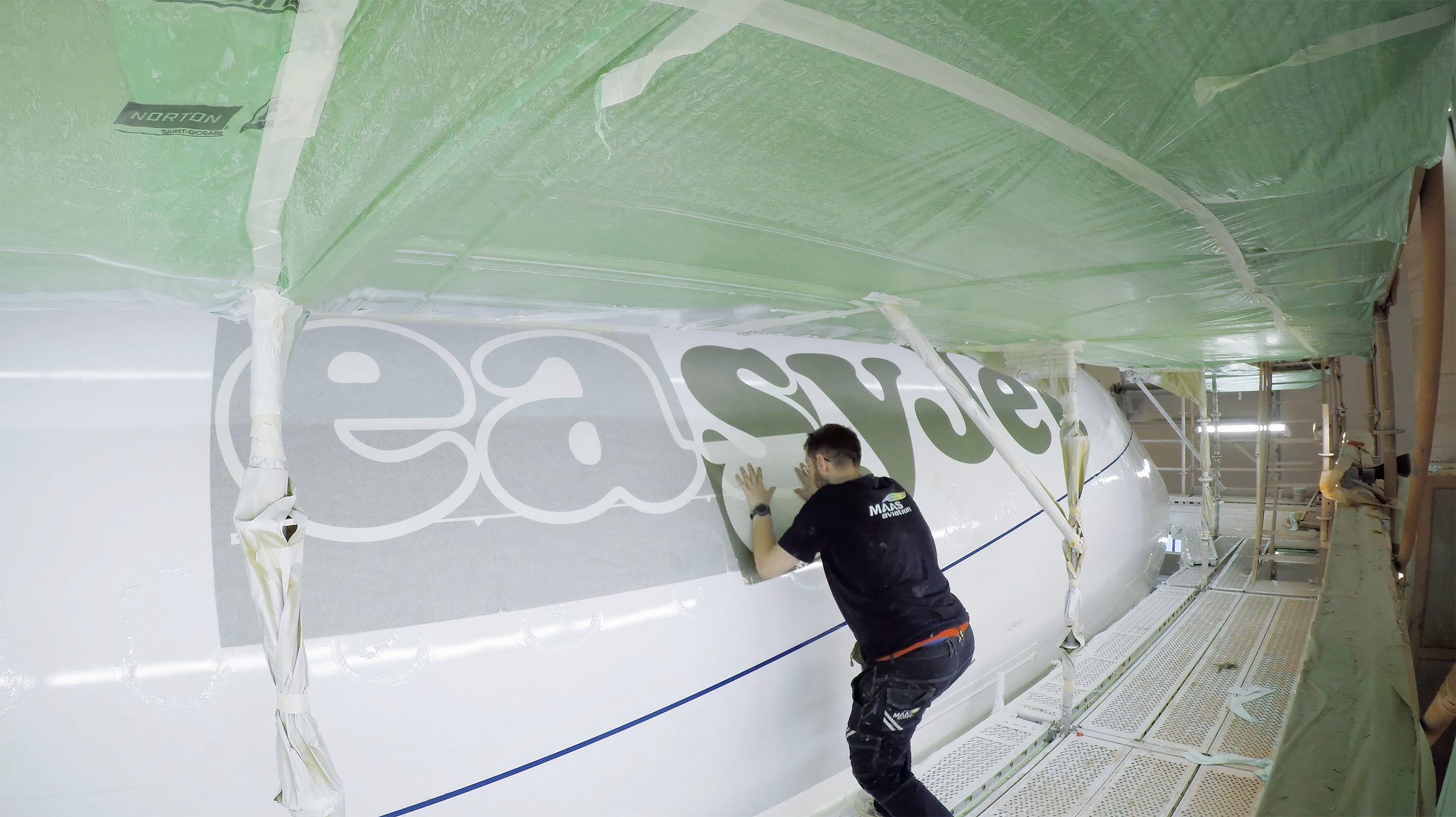
Photo: easyJet
The new lighter-weight paint has already been applied to 38 easyJet aircraft, with the paintwork performed by MRO specialists at MASS Aviation at their facility in Maastricht.
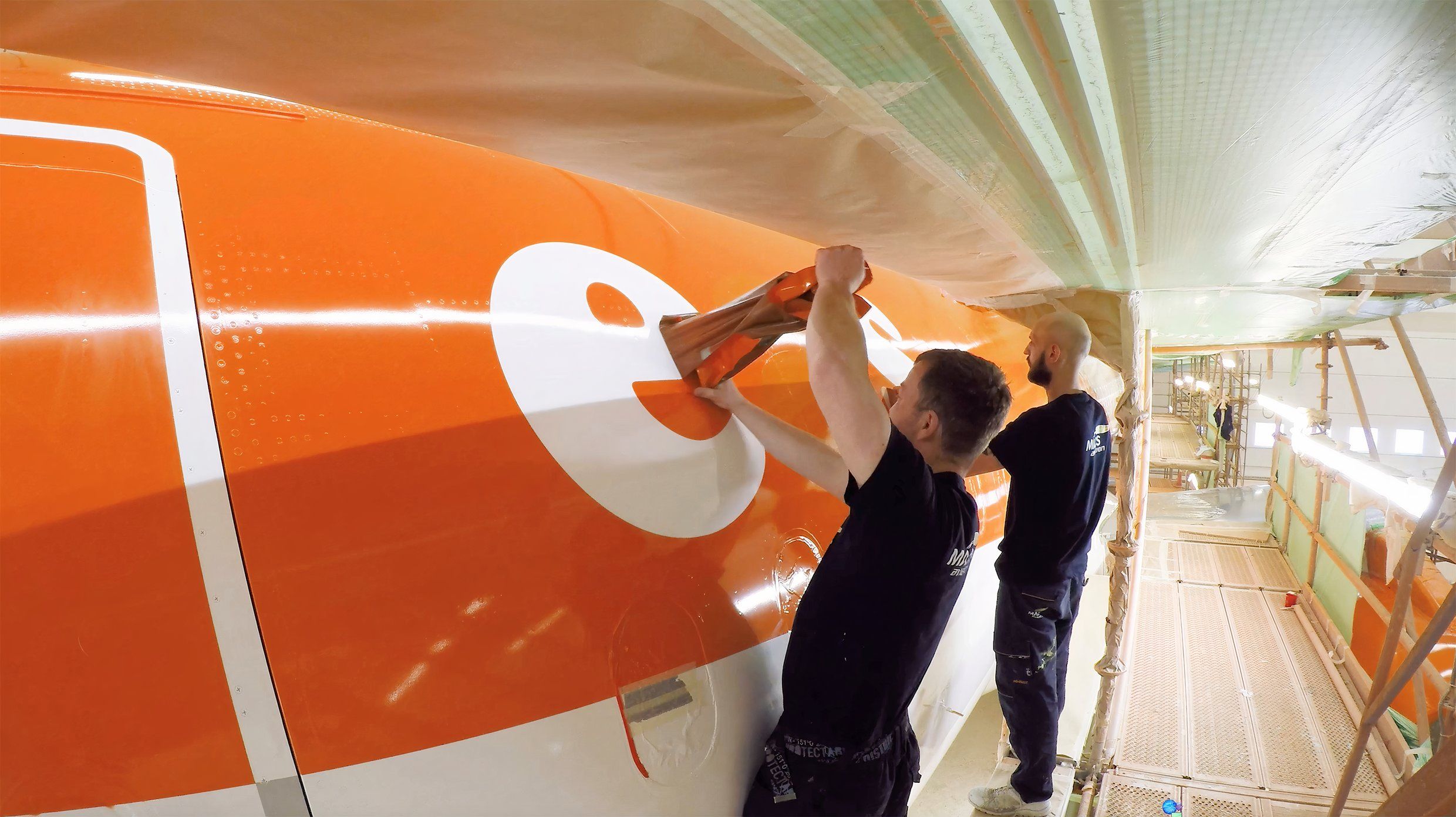
Photo: easyJet
The airline plans to gradually roll out the new paint fleet-wide by 2030. Once the rollout is completed, the lightweight paint is expected to save 1296 tonnes of fuel annually.
Related
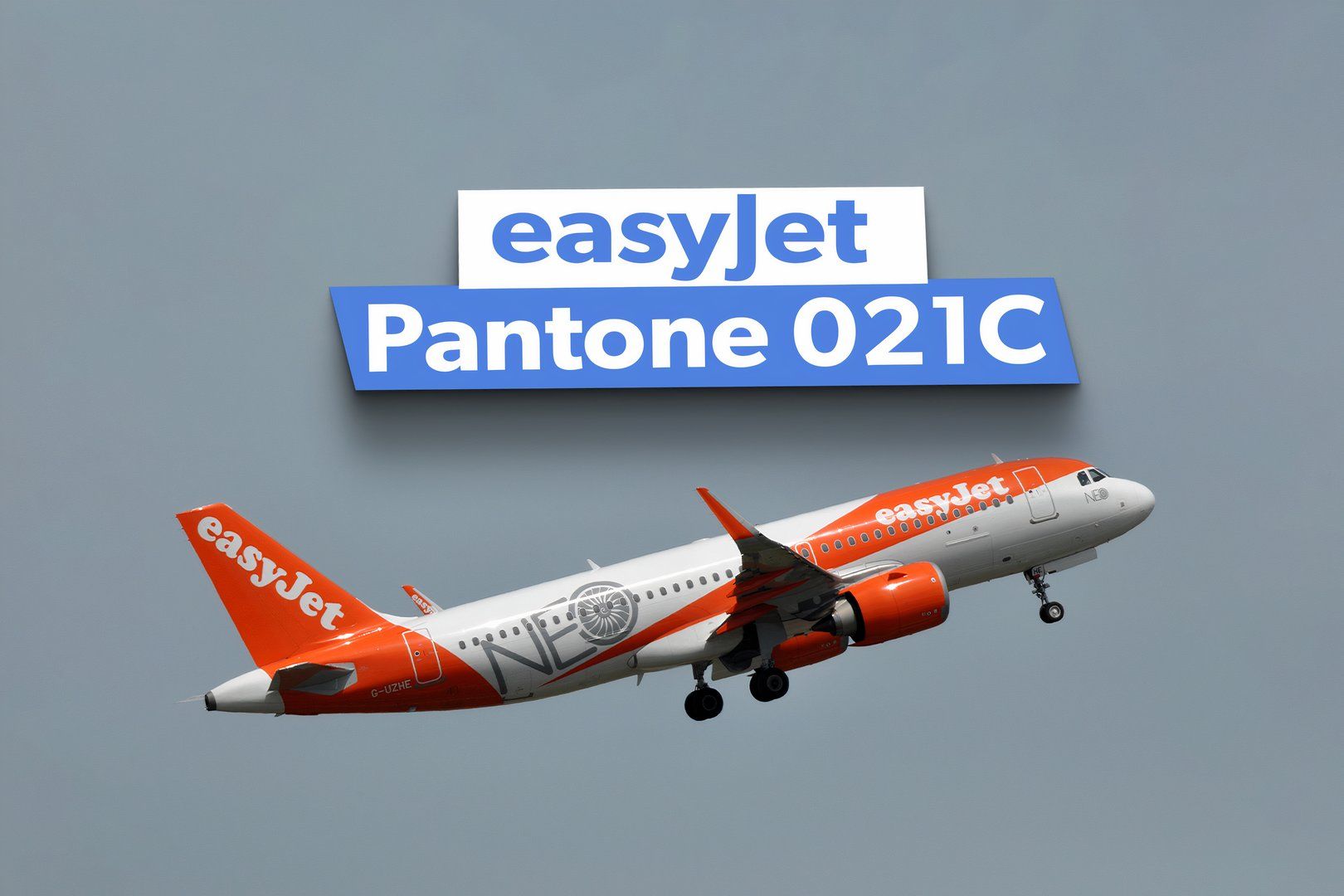
Pantone 021C: Why easyJet Embraced Vibrant Orange For Its Iconic Brand
The British budget carrier quickly became one of the world’s most recognizable airlines thanks to its bright branding.
easyJet sustainability initiatives
In 2022, easyJet published a roadmap to net zero by 2050, which includes a combination of measures to improve its operations, from fleet renewal, operational efficiencies, airspace modernization, Sustainable Aviation Fuel, and carbon removal technology. The airline aims for an interim carbon emissions intensity reduction target of 35% by 2035.
The ultimate goal is to completely transition its fleet to zero-carbon emission technology. To this end, the airline has established strategic partnerships with aerospace firms, including Airbus, Rolls-Royce, and GKN Aerospace Solutions. Since 2000, easyJet has reduced its carbon emissions per passenger per kilometer by one-third.
Recently, the airline has reached various sustainability milestones, including completing a full rollout of its multi-million-pound tech software installation of Descent Profile Optimisation (DPO) to its fleet to save 88,600 tonnes of CO2 annually. DPO is a fuel-saving initiative that updates the Flight Management System (FMS) for more efficient descents. It allows the aircraft to remain in the cruise phase longer and removes the ‘level-off’ stage at the bottom of the descent, which reduces carbon emissions.
In April last year, easyJet conducted an airside hydrogen refueling trial at Bristol Airport to refuel and power a baggage tractor servicing easyJet planes. The successful trial proved hydrogen can safely be used at airports to refuel ground equipment.
Last September, easyJet became the first European airline to partner with the US-based startup Jet Zero, which is developing an ultra-efficient blended-wing aircraft. The partnership was announced during a Net Zero technology showcase at Cranfield University on the second anniversary of easyJet’s Net Zero Roadmap.
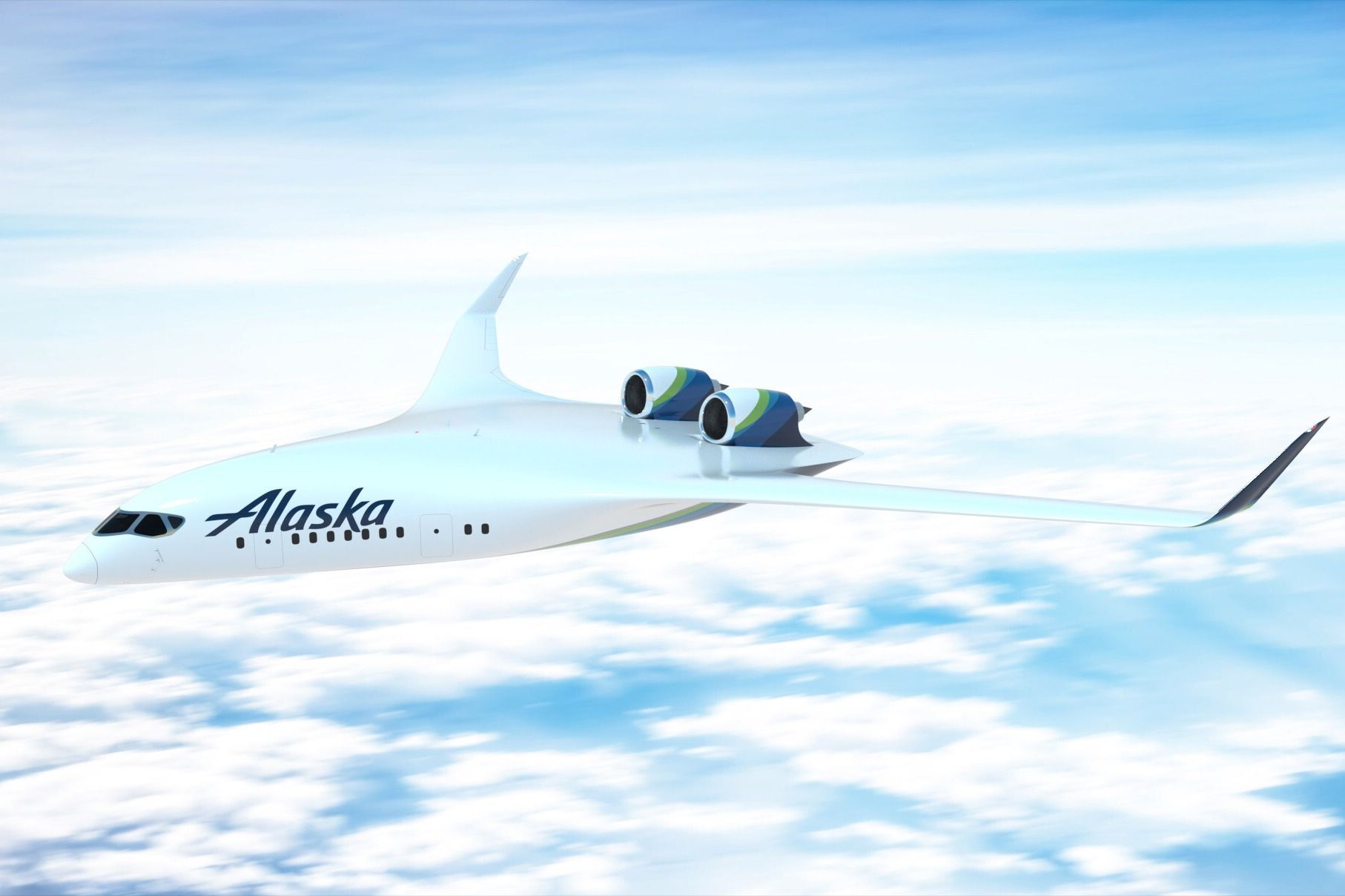
Alaska Airlines Bets On Blended Wing Body With JetZero Investment
The airline has not revealed details of the financing or the number of aircraft ordered.
JetZero has the backing of the US Air Force, NASA, and the FAA as it works on the first blended-wing aircraft to enter service by 2030. Unlike traditional tube-and-wing designs, blended-wing aircraft promises up to 50% lower fuel burn and GHG emissions. Future models of this unique plane would support hydrogen combustion engine technology. easyJet is also working on developing hydrogen combustion with engine maker Rolls-Royce.
In November, easyJet partnered with Airbus to trial a new model to help business travelers address their carbon footprint while supporting global Sustainable Aviation Fuel (SAF) production. The current production rate of SAF covers only 3% of the total fuel required by the airline industry and costs 3–5 times more than conventional jet fuel.
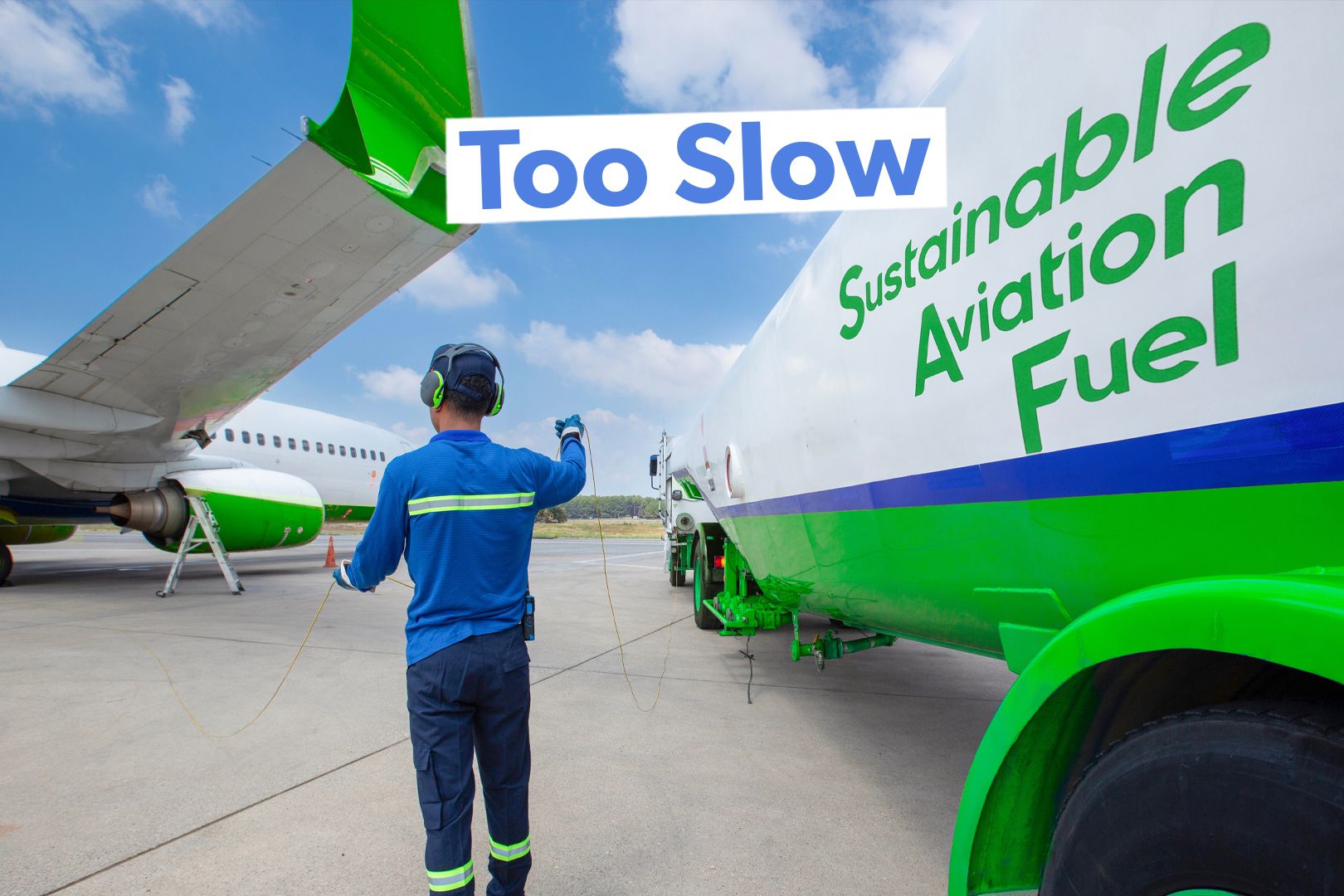
3 Key Reasons Airlines Feel Sustainable Aviation Fuel Production Is Too Slow
So far, SAF production and use has been too slow but could be accelerated in coming years.
Through the new model, easyJet’s corporate travel partners would buy a specific amount of SAF to address the carbon footprint of their corporate air travel. Airbus was easyJet’s first corporate travel customer to sign up for the scheme. It purchased 106 tonnes of neat SAF, equivalent to the fuel required to operate three months of easyJet flights between Toulouse and Bristol with a 30% SAF blend, a route commonly used by Airbus employees.
