


This article covers a developing story. Continue to check back with us as we will be adding more information as it becomes available.
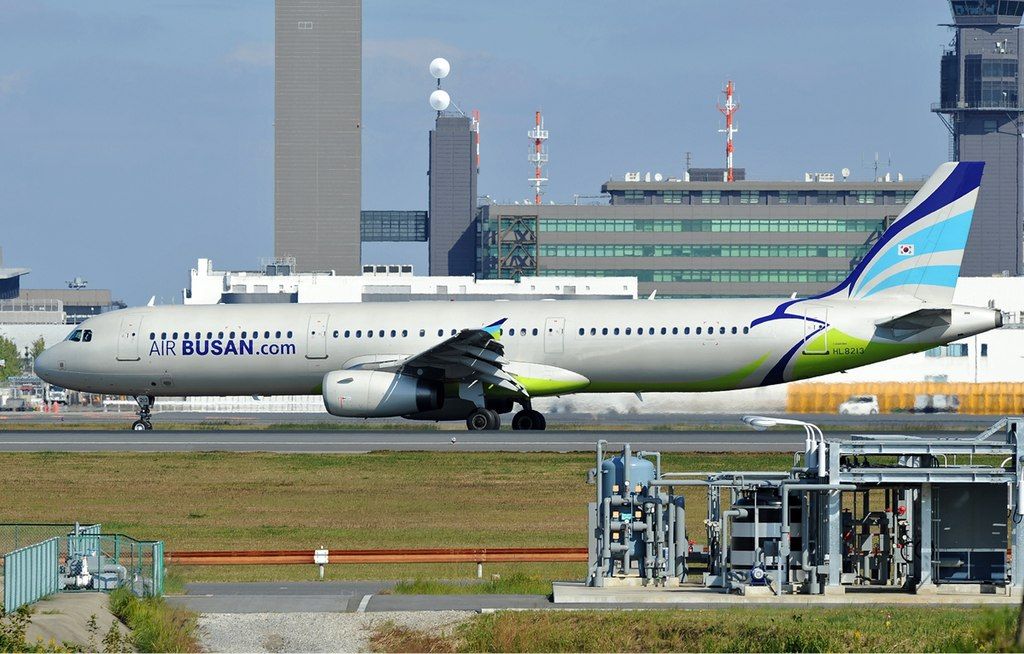
A fire broke out on an Air Busan A321-200 operating flight BX391 bound for Hong Kong at Gimhae International Airport in Busan-Gimhae International Airport in South Korea. The fire started before departure at around 22:26. Officials say all passengers and crew evacuated safely, though four persons were reportedly injured during the evacuation and were sent to a local hospital.
Though airport firefighters responded quickly, arriving on the scene at 22:34, the intense fire spread through the fuselage and gutted the aircraft. By 23:31, firefighters had put out the flames.
The cause of the fire is unknown at this time. The Yonhap News agency cites a fire official saying the fire apparently started inside the plane’s tail. Attention has turned to an unidentified object placed in an overhead bin as a possible source of the fire.
Crew and passengers stated the fire had begun there. One possibility is that a lithium battery-powered device could have ignited in passenger luggage stored in the overhead bin. Lithium battery thermal runaway fires are intense, which would explain how the fire propagated through the fuselage so quickly. As Airbus explains in a detailed safety publication on lithium batteries:
“A thermal runaway consists of an uncontrolled energy release. It refers to a situation where an increase in temperature changes the conditions in a way that causes a further increase in temperature, often leading to a destructive result.”In multi-cell batteries, the thermal runaway can then propagate to the remaining cells, potentially resulting in meltdown of the cell or a build-up of internal battery pressure resulting in an explosion or uncontrolled fire of the battery.
The airline industry has been grappling with the increased risks posed by the batteries that power most of the electronic devices we rely on daily. Several incidents of lithium battery fires on aircraft have been recorded, though cabin crews have been able to respond quickly to isolate the smoking devices in special bags designed to help extinguish the flames. Still, large lithium-battery fires on cargo aircraft have resulted in aircraft losses and fatalities.
The incident comes as South Korea’s transport ministry is investigating the tragic crash of Jeju Air 7C2216.
According to ch-aviation data, Air Busan currently operates a fleet of 20 aircraft, eight of which are Airbus A321-200s, four Airbus A321-200neos, and three Airbus A321-200neo LRs. This is a developing story. We will update as more information becomes available.
