


The last few years have been a mixed bag for the Airbus A380, with some operators keeping their faith in the double-decker quadjet while others have withdrawn the ‘superjumbo’ from service altogether. One carrier where the A380 is set to enjoy a longer operational life than initially expected is Korean Air, which now plans to operate the type long after the aircraft’s initially planned retirement date in 2026.

Another interesting recent development has been a series of schedule changes at Korean Air
that will see the A380 deployed on certain short-haul routes within Asia. Indeed, scheduling data from Cirium, an aviation analytics company, shows that the Korean flag carrier and SkyTeam member has recently scheduled two additional daily short-haul A380 flights (each way).
Short-haul superjumbo service
These extra flights will run daily, from March 30th to August 31st, with two corridors chosen by Korean Air for these rotations with the superjumbo. Originating at Seoul Incheon Airport
, these will serve Taipei Taoyuan and Hong Kong. According to Cirium, Korean Air last served Hong Kong with the A380 in October 2023, while its last flights to Taipei with the type were in November 2024.

Photo: Vincenzo Pace | Simple Flying
Flying from Seoul to Taipei, Korean Air will deploy the A380 on flight KE185 this summer, which departs at 10:30 and lands at 12:10 local time. After a quick turnaround, KE186 will leave Taipei at 13:20, landing in Seoul at 16:50 local time. As for Hong Kong, the A380 will operate flights KE177 and KE178, with block times close to four hours.
While long-haul routes are typically the domain of the A380, the double-decker quadjet’s huge size will provide useful additional seating capacity (as well as extra space below deck for cargo in the belly hold) during the peak Northern Hemisphere summer months.
According to aeroLOPA, Korean Air’s A380s have 12 first class suites, 94 ‘Prestige Class’ flatbeds, and 301 economy seats onboard.
Part of a wider shakeup
In isolation, the use of the superjumbo on short-haul routes is already an intriguing development. However, looking closer, we can see that the deployment of the A380 from Seoul to Taipei and Hong Kong is, in fact, part of a wider operational shakeup on these Asian links over the summer. Indeed, while the number of flights scheduled on these routes has remained consistent, seat capacity has shot up considerably.

As of last week, Korean Air was set to serve Seoul to Taipei twice a day in the summer using the 276-seat A330-300. However, recent changes have seen one of these rotations replaced, as noted, by the 407-seat A380, with the 311-seat A350-900 swapped in on the other. This has resulted in a weekly capacity boost of 1,162 seats each way.
Similarly, Seoul to Hong Kong was initially set to be served three times a day, using the following aircraft types:
- 156-seat Boeing 737 MAX 8
- 276-seat A330-300
- 277-seat 777-300ER
However, these three rotations have now been replaced by the 407-seat A380, the 368-seat 747-8, and the 182-seat A321neo, resulting in an overall weekly capacity boost of 1,736 seats each way from April to August.
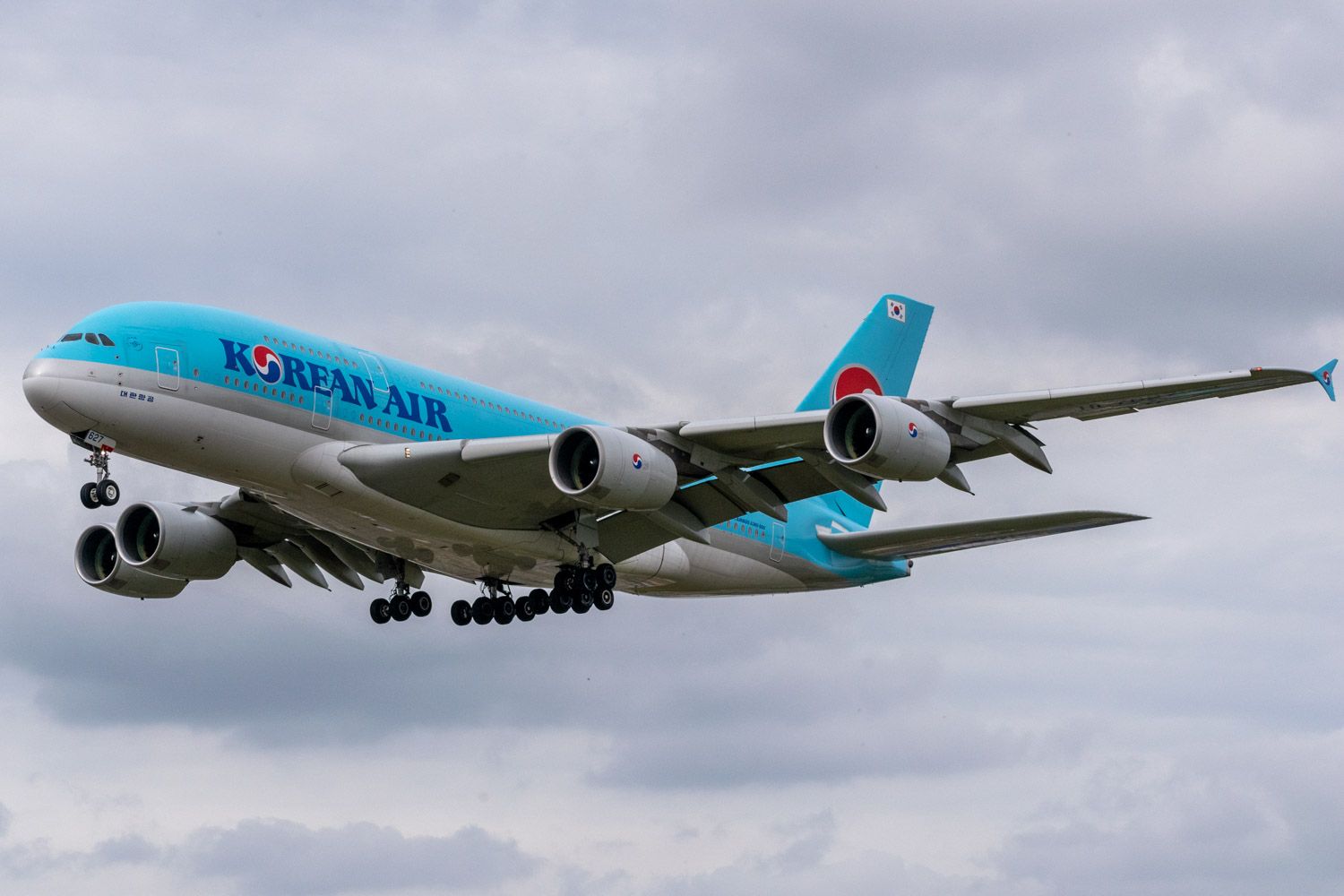
Photo: Tom Boon | Simple Flying
At face value, adding extra capacity makes operational sense during the busy Northern Hemisphere summer season. However, for the A380, it also acts as a welcome vote of confidence for an aircraft whose future has looked uncertain in recent years. As we shall now see, Korean Air is actually one of two airlines flying the A380 between Seoul and Taipei, underlining the high demand on this corridor.
Among the world’s shortest Airbus A380 routes this year
Readers familiar with Korean Air’s usage patterns of its A380 fleet will know that the SkyTeam founding member often deploys the type on long-haul routes. Indeed, among the intercontinental destinations being served by the South Korean flag carrier’s superjumbos this year are Los Angeles and New York JFK, respectively, located 5,995 and 6,907 miles away from Seoul.
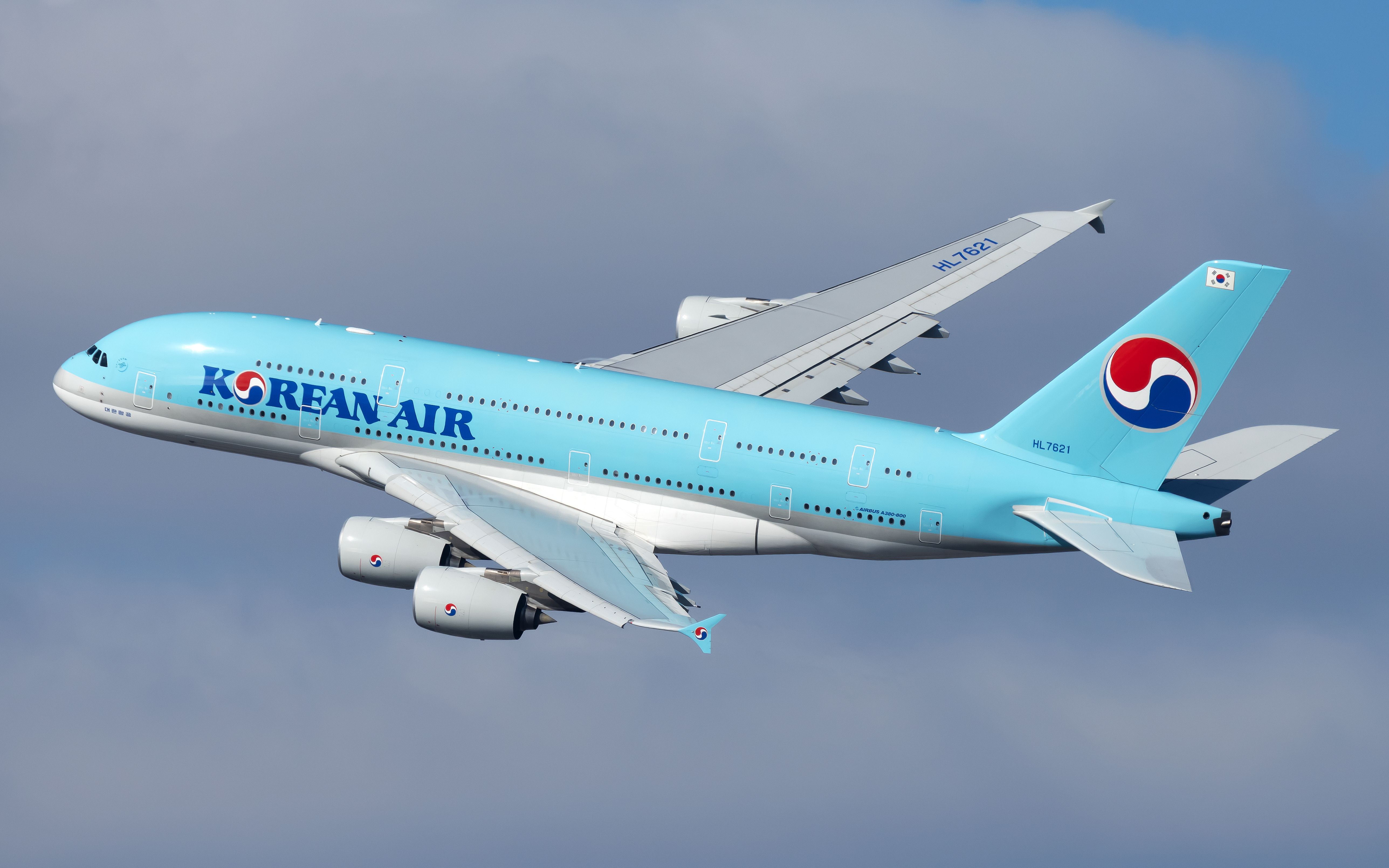
Photo: Vincenzo Pace | Simple Flying
However, the routes from Incheon to Hong Kong and Taipei are far shorter, clocking in at just 1,284 miles and 906 miles, respectively. This makes them among the shortest scheduled A380 airport pairs this year, as shown below:
|
Distance |
Airport pair |
Operator(s) |
|
783 miles |
Seoul Incheon – Tokyo Narita |
Asiana, Korean Air |
|
906 miles |
Seoul Incheon – Taipei Taoyuan |
Asiana, Korean Air |
|
1,049 miles |
Hong Kong – Bangkok Suvarnabhumi |
Emirates |
|
1,058 miles |
Dubai International – Jeddah |
Emirates |
|
1,198 miles |
Dubai International – Mumbai |
Emirates |
|
1,226 miles |
Abu Dhabi International – Mumbai |
Etihad Airways |
|
1,258 miles |
Dubai International – Amman |
Emirates |
|
1,284 miles |
Seoul Incheon – Hong Kong |
Korean Air |
