


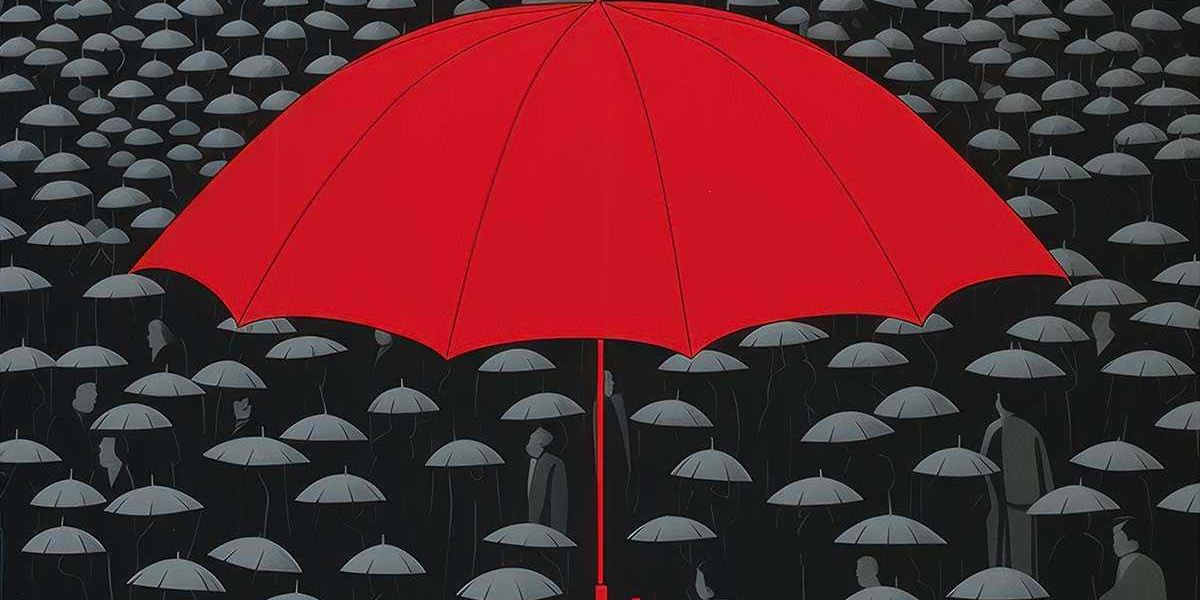
Some measure success by salaries and titles. Others use a different yardstick altogether. Take the eight professionals selected as our 2026 Rainmakers, for example. When asked about their proudest professional accomplishments, their answers included the satisfaction they found in mentoring younger colleagues and watching them grow both personally andprofessionally, working with others as part of a successful team, and serving the industry through their roles in industry organizations.
So who are these Rainmakers and how were they chosen? As in the past, DC Velocity selected the 2026 Rainmakers in concert with members of the magazine’s Editorial Advisory Board from candidates nominated by readers, board members, and previous Rainmakers and DCV Thought Leaders. This year’s selections represent different facets of the business—practitioners, consultants, software and logistics service company executives, and training specialists. But as the profiles on the following pages show, they’re united by a common goal of advancing the logistics and supply chain management profession.
If you’d like to nominate someone for our 2027 Rainmakers report, please send your suggestions to DC Velocity’s group editorial director, David Maloney, at dmaloney@agilebme.com.
The class of 2026 Rainmakers include:
Steve Hopper
Steve Hopper, founder and principal, Inviscid Consulting
When Steve Hopper decided to start his own supply chain consulting business in 2004, he remembered a term he learned while studying aerospace engineering at Georgia Tech in the 1980s: “inviscid flow.”
“It means there is no friction,” explains Hopper. “Things flow through the air without air resistance.” People in supply chain, Hopper realized, want to reduce friction too. “They want the product to flow through the network or a facility without getting hung up,” he says.
Hopper has maintained his focus on reducing friction throughout his career. As founder and principal of Inviscid Consulting, he has helped more than 200 companies move product through their networks more smoothly. Through his work with industry associations—such as MHI and the Warehousing Education and Research Council (WERC)—he has also helped develop industry standards and promote best practices. Finally, he is passionate about mentoring young people, helping to ease their way into a complex industry.
Q: How have the issues and challenges in warehousing and distribution changed since you started in the industry?
A: You know, I was speaking at a Georgia Tech professor’s Ph.D. class on warehousing science recently, and I said, “I hope your professor won’t be mad at me for this, but I’m going to say nothing’s really changed since I was here 40 years ago in terms of the problems we’re trying to solve.” Everybody wants to do things more accurately in less time, with less risk, and with better safety. Those principles haven’t changed. What has changed is the tools we use to do that: the equipment, the automation, AI, all the buzzwords, and all the acronyms. So the tools evolve over time, but the actual problems themselves are age old.
Q: What are the top three challenges you see in warehouses and DCs?
A: I’ve had over 200 clients now in my career, and I’d say that when it comes to the challenges I see most consistently, labor challenges top the list. Everybody’s always trying to find qualified workers, and that’s why all this emphasis on things like automation.
Secondly, I would say operational discipline. Unfortunately, I think that some of the fundamental, foundational disciplines—like the 10 principles of material handling—have faded over time, and a lot of the younger people aren’t being exposed to them.
And then I think the third one is the “ivory tower” mentality. I think warehousing has been treated by the boardroom for many years as the Rodney Dangerfield or the Cinderella of the organization, [where it doesn’t get much attention or respect]. Rarely does the board focus on the warehouse or the distribution network, and sadly, that’s where a lot of money is left on the table.
Q: Wha advice do you give companies that are looking to automate their distribution operations?
A: When I talk about automation and robotics and AI, I think people perceive that I’m against them, but I’m really not; I love all those toys. My first job out of school was working for an automation company. One of the principles that [my industrial engineering professor at Georgia Tech] John White drove into our heads was to be requirements-driven, not solutions-driven. Before you start looking at solutions, you really need to understand the business requirements and what the underlying issues are. It’s like the old expression, people don’t want drills, they want holes.
We do a lot of operational assessments for clients, and we have a preliminary survey we send the executives before we meet with them. The first question on that survey is, “What are your goals for the operation?” Nine times out of 10, one of the goals is automation. When we meet with them, I say, “OK, you said automation is your goal. **ital{Why} is it your goal?” And a lot of times, they don’t really have a great answer. And I say, “So let me give you an example. Suppose you could automate your operation, and your cost per unit shipped would be $2.10, but you could have this other solution over here that isn’t automated, and your cost per unit shipped would be $1.80. Do you still want to automate?”
The flag that I keep waving is you’ve got to define the business problem first. You’ve got to really start with what is the business trying to achieve, and then examine the different ways to do that, and then examine [those approaches] from an economic standpoint.
Q: What advice do you give people who are just starting out in supply chain?
A: It goes right back to the Georgia Tech professor whose class I spoke to. He told me today’s students essentially want to be math majors. They want to sit in the ivory tower and crunch numbers in some sophisticated software. While there’s nothing wrong with that, they’re not getting exposed to what actually goes on in warehouses and DCs. So I consistently tell young people, you really need to get out there, you need to actually observe the way operations work, and understand from the people doing the work what the problems are.
Q: What would you say is your proudest professional achievement?
A: A couple of things. One is that I’ve had the chance to work with these 200-plus companies, and I believe that I’ve helped them make fundamental changes that have improved their operations.
For my own personal career, it was launching Inviscid. The first almost half of my career I was an employee at big firms, and then I finally decided to go out on my own. I tell my wife all the time how thankful I am that I took that risk because I feel I was born to do what I do.
Ann Marie Jonkman

Ann Marie Jonkman, vice president, products and services, Blue Yonder
Over the past two-plus decades, Ann Marie Jonkman’s career in logistics has taken her everywhere from the warehouse floor to the executive suite. In that time, she has worked for some of the biggest names in the business, such as XPO Logistics, Syncreon, RR Donnelley, Blackstone, and Radial. And today she is vice president, products and services at software developer Blue Yonder.
Initially recruited to scale Blue Yonder’s software-as-a-service (SaaS) strategy for manufacturing and CPG (consumer packaged goods) customers, she was then tapped to create a new vertical for logistics service providers (LSPs), where she counseled customers on best practices that optimize operations, reduce costs, and drive growth. She also established Blue Yonder’s first Logistics Customer Advisory Board, and she now leads market strategy and positioning for Blue Yonder’s AI-powered platform, network ecosystem, and services portfolio. Across every role, she has shown a blend of operational, technology, and leadership excellence, colleagues say.
Q: What is your proudest professional achievement, and why?
A: Building something from nothing—and doing it more than once.
Early in my career, I saw an opportunity that had no budget, no playbook, and no defined role attached to it. I wrote the strategy, built the investment case, created the go-to-market (GTM) strategy, and led it. That experience taught me something I’ve carried with me ever since—the most important work lives in the white space nobody has claimed yet.
But if I’m honest about what shaped me most, it was working inside private equity-backed environments. I learned to hold the whole business simultaneously—growth, cost, customers, culture, and people—all on the same scorecard, all at once. That financial acuity changed how I make decisions. I stopped optimizing for one dimension and started looking at the full picture.
Beneath it all, technology was always the strongest driving force for me. Selecting a vendor, implementing a system, transforming a business through technology—that energy never left me.
Q: What advice would you give someone just starting out in supply chain?
A: Learn the business before you chase technology trends. Go see the work where it actually happens. AI doesn’t replace that process—it changes what you look for when you get there.
Develop financial acuity early. Understand how your decisions show up across the full business scorecard—not just within your function. The leaders who advance are the ones who can connect customer satisfaction, organizational health, and cost in the same conversation. That thinking comes from staying close to how businesses grow and how they struggle.
Be intentional about where you’re heading. The leaders who will matter most are the ones who can bridge strategy, operations, and technology. Build your judgment deliberately. Every tool and platform will eventually change; your ability to recognize when something is working—and when it isn’t—is what makes you invaluable.
Q: What advice do you have for someone who is looking to move into more of a leadership role?
A: Leadership is less about control and more about clarity. The leaders worth following simplify complexity, align teams across functions, and keep people moving through change rather than stalling in it.
My own path has spanned operating supply chains to building and delivering the platforms that run them. The skill that carried across wasn’t technical—it was the ability to make decisions with incomplete information and own the outcome. Choose an environment whose culture and pace align with your strengths. Don’t force a round peg into a square hole—the mismatch will show up quickly in your work.
Modern leadership also demands intellectual curiosity and a commitment to continuous learning. As business models, workforce expectations, and AI capabilities evolve rapidly, the leaders who will make a lasting impact are those who combine operational discipline with adaptability, empathy, and strong decision-making.
Q: What advice do you have for companies looking to develop top supply chain talent?
A: Teach people to see the whole business—not just their function. The best leaders learn early how growth, cost, customer outcomes, culture, and organizational design connect. That kind of systems thinking doesn’t develop on its own; it must be deliberately built through exposure, accountability, and real decision-making under pressure.
Invest in financial acuity at every level. Leaders who understand how their decisions impact the full business scorecard make better trade-offs. That judgment is rare, and it compounds over time.
Don’t overlook governance as AI moves deeper into operations. Organizations need leaders who can tell the difference between a model that’s delivering value and one that’s quietly drifting—and who build the guardrails before they’re needed. That judgment is harder to hire for than technical skill, and it gets better with age.
Q: What are the biggest changes you’ve seen in supply chain during your time in the industry?
A: I’ve watched supply chains evolve from linear handoffs to connected systems. I’ve experienced that shift from both sides: first running operations, and now building the platforms that orchestrate that work. What stands out most is the speed at which decisions now move from data to action.
At the same time, customer expectations have continued to rise, and disruptions have become a constant rather than an exception. Organizations are being challenged to respond faster, operate with greater resilience, and make smarter decisions across increasingly complex global networks. The conversation is no longer just about efficiency—it’s about agility, adaptability, visibility, and how quickly companies can translate insights into action.
Q: What hasn’t changed?
A: Execution—and the human judgment behind it.
You can automate the work and still win or lose based on trust, clarity, and how a team performs under pressure. I learned that in environments where every decision was visible on the scorecard—where culture, customer satisfaction, and cost all showed up together. While technology has continuously evolved, outcomes have always been determined by the quality of people and the decisions they make.
Vishwanath Krishnamoorthy
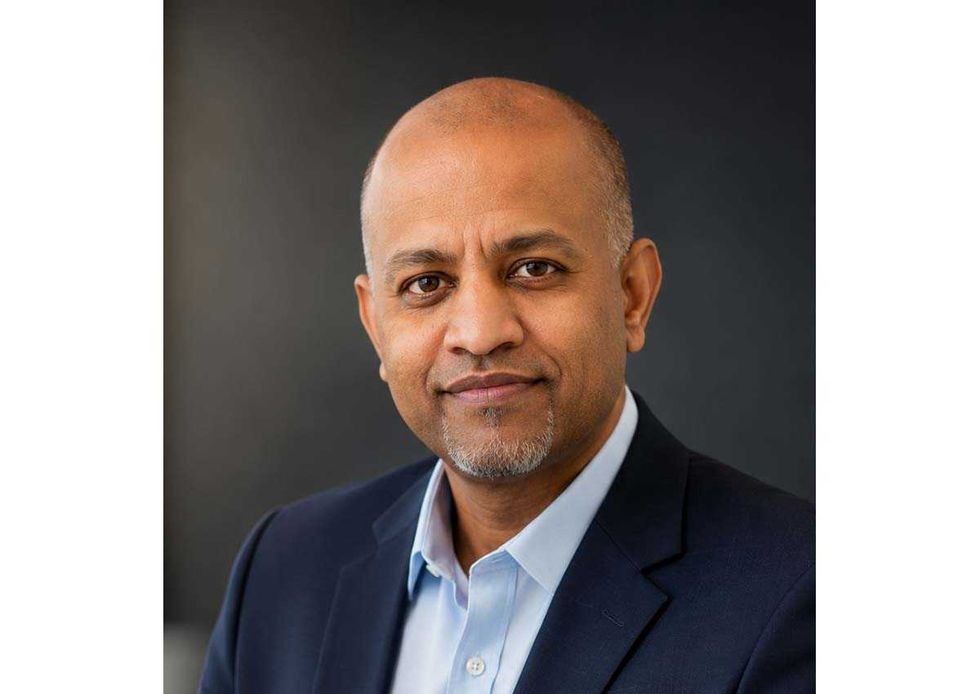
Vishwanath Krishnamoorthy, associate vice president of logistics planning, process, and optimization, PriceSmart
Warehouse clubs are where members go to find deals, especially if they’re willing to buy goods in bulk. Ensuring those stores have the right products in the right amount in the right places is the mission of Vishwanath Krishnamoorthy. He is associate vice president of logistics planning, process, and optimization at PriceSmart, a membership warehouse retailer operating across Latin America and the Caribbean.
Krishnamoorthy brings more than 20 years of experience across consulting, retail, and e-commerce to his role. Today, he works to translate complex models into practical decisions that improve cost, service, and resilience at scale.
He also is committed to mentoring the next generation of supply chain talent through organizations such as the Council of Supply Chain Management Professionals (CSCMP), helping others see possibilities in themselves they may not yet fully see.
Q: What led you to pursue a career in supply chain?
A: My background in chemical engineering gave me a strong foundation in how operations work at a deeper level. I found myself increasingly interested in how products flowed, how systems connected, and how decisions shaped outcomes.
Wanting to better understand and influence the bigger picture led me to pursue a master’s in industrial engineering specializing in supply chain, followed by an MBA focused on connecting business and technology. As I progressed into broader consulting and industry roles, I finally had the chance to see the end-to-end flow of products and information across entire networks. That is when I realized this was the work I wanted to do and where I wanted to build my career.
Q: What is the biggest challenge supply chain professionals face today?
A: One of the biggest challenges today is the constant level of disruption and unpredictability across the supply chain. Between geopolitical tensions, changing consumer behavior, economic pressures, and ongoing global disruptions, supply chain professionals are operating in an environment where something new is always emerging. In many ways, every day feels like Christmas because there is always a new surprise waiting to be opened.
Because of that, the role has shifted from being reactive to becoming far more proactive and predictive. Organizations need the ability to evaluate scenarios quickly, understand trade-offs, and make decisions with incomplete information. That is where data, analytics, and technology become critical in helping teams move faster and make more informed decisions.
Q: How are AI and advanced analytics changing the future of supply chains, and what does that mean for talent development?
A: The amount of data available today has fundamentally changed how organizations make decisions. The goal is no longer just reacting to disruptions but rather becoming more proactive and predictive. AI and analytics are helping organizations model scenarios faster, identify risks earlier, and make more informed decisions across the network.
Yet technology alone is not the answer. The real value comes from combining technology with business context, collaboration, and human judgment. As the industry evolves, I think the most effective leaders will be the ones who can connect those pieces while continuing to invest in developing people and building adaptable teams.
Q: What is your proudest professional achievement?
A: The most meaningful achievement for me has been the ability to influence decisions that create lasting business impact by acting as a techno-functional bridge between data, analytics, and leadership. Whether it is designing supply chain models, evaluating where to invest in distribution capacity, or building cost-to-serve frameworks, the common thread is turning complex problems into clear, actionable choices for the organization.
Q: What do you look for when choosing members for your supply chain team?
A: The biggest things I look for are drive and curiosity. Having an understanding of supply chain fundamentals definitely helps, but most of the rest can be taught or learned. What matters more is the willingness to ask questions and understand the “why” behind things.
Critical thinking is also essential. Supply chain problems are rarely linear, and the ability to break down ambiguity, evaluate trade-offs, and make sound judgments with incomplete information is what really allows someone to operate effectively in this space.
Q: Mentorship is important to you. In what ways have you helped others build their careers and hone their skills?
A: I did not have the benefit of a strong, consistent mentor early in my career, and that shaped how I approach mentorship today. My focus is usually less about giving answers and more about helping people think through problems, structure their approach, and communicate their ideas effectively. Whether it is discussing supply chain concepts, navigating career decisions, or helping someone build confidence in how they present their thinking, I try to share the lessons and experiences that helped shape me over the years. One of the most rewarding parts is seeing people grow into larger roles and become confident decision-makers themselves.
Q: What advice would you give to someone just entering the supply chain profession?
A: Be curious, ask questions, take risks, and find a mentor. Supply chain is a broad field, so spending time across different areas helps build an understanding of how interconnected the network really is and how decisions in one area impact another.
Communication is equally important. You can have a strong technical solution, but if you cannot clearly explain the story, the trade-offs, and the impact, it becomes much harder to drive alignment and execution. The people who tend to grow the most in this field are the ones who stay open to learning and continuously challenge themselves.
Keith Moore
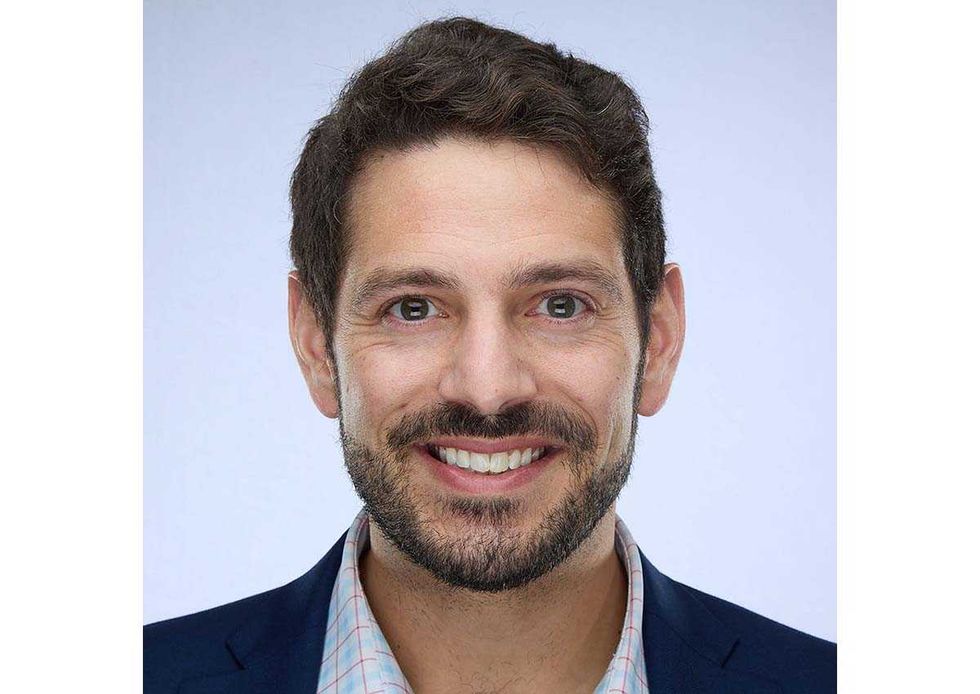
Keith Moore, chief executive officer, AutoScheduler.AI
Tech-savvy entrepreneur Keith Moore is CEO of AutoScheduler.AI, a warehouse resource planning and optimization platform that integrates with a customer’s warehouse management system to orchestrate and optimize all activities at the site.
Moore is a mechanical engineer by training but quickly moved into a life of software after graduating from the University of Tennessee. Prior to venturing into the supply chain business, he was a director of product management at Austin, Texas-based industrial AI startup SparkCognition (now Avathon), where he helped raise more than $120 million in capital and grow the business to one of the largest startups in the Austin area.
Moore co-founded AutoScheduler.AI in 2020. Under his leadership, the company has received numerous industry accolades, including being named a finalist in the Council of Supply Chain Management Professionals’ (CSCMP) 3V’s Business Innovation Award contest in 2025 and appearing twice in the Gartner Hype Cycle for supply chain execution technologies. Moore has been honored with many leadership awards as well and now adds **{DC Velocity} Rainmaker to his résumé.
Q: What led you to a career in logistics and supply chain?
A: My dad. I grew up in warehousing and logistics because of him. He’s been a supply chain consultant [and worked in] transportation and warehousing my whole life—he started software businesses in supply chain, as well. [But] when I came out of college, I swore I would not go into supply chain. I was going to do my own thing. And I did for about a decade. I got really into machine learning and AI.
My dad and I talked a lot, though, and after about 10 years [of me] working outside of supply chain, we decided that it would be really fun and market-ready to start a business together, so we did. And it’s been a blast. We started AutoScheduler in 2020.
Q: As someone who has focused on the tech side of things for many years, how would you describe the influence that AI is having on the industry today—especially in the warehouse?
A: [AI] is going to have a massive influence on everything in supply chain, warehousing included. The influence that AI is having today in the warehouse is specifically focused on decision optimization and decision management. There are all sorts of sensory things AI can help with—image detection for safety, using vision systems in the yard, [and] using optimization technologies for better inventory placement or better pick paths. But the big opportunity for AI is in how we can take all of this physical flow and physical automation that we’ve put into place and actually trigger the right decisions at the right time so that we’re running a smoother, higher-service, more efficient operation.
Q: What are some of the greatest challenges facing companies as their warehouses become more connected and automated?
A: When I go to universities and talk about AI, I actually set up the problem this way: Back in the day, people used to walk into a warehouse and say, ‘Here are the orders for today’ and there would be a stack of papers. A person would come and take the first stack, and they’d go do it, and things would go out the door. Next stack, next paper, next paper, [and so on]. It was a Pez dispenser for order releases and a very linear process flow through the building.
As we’ve introduced connectivity and automation, we now have specialists. There are people who only load and unload. There are people who only transport from staging to racks. There are people who only case pick. There are automation flows as well, performing different functions—like belts that convey inventory through the facility, AS/RS [automated storage and retrieval systems], AGVs [automated guided vehicles], and automated loading systems.
I say this just to call out that as more and more flows for inventory are added, the problem increases combinatorially with regard to the complexity of how you should run the facility. Every decision is now dependent upon the last one that was made, which is dependent on the sequence before it. So if I have an order that requires automation, manual workflows, case pick, shelf pack pick, and each pick, I have to release all of that at the right time, get all of them through the right systems to the right staging bay, and make sure that we’re getting that trailer loaded before I can turn that staging bay. And anything that goes wrong becomes a bottleneck.
We’ve spent a lot of time adding flows and automating flows in facilities, but far less time on the decision sequencing and optimization of those flows—which is the massive opportunity for AI that I called out.
Q: On the flip side of that, what are some of the greatest advantages?
A: Automation does provide better productivity when used and sequenced effectively. That’s the first thing.
The second thing that connectivity gets you is visibility into problems: 90% of the time when there’s a service failure in the supply chain, it’s not because a truck got a flat tire. It’s because you didn’t ship what you needed to ship when you needed to ship it. That is the primary cause of customer service misses. When you have visibility into everything happening inside the four walls of a building, you then start to be able, as a supply chain, to be more proactive in how you are making decisions and when you are firefighting—for lack of a better word—to make sure that you are maximizing services. So you’re more proactive in nature instead of purely reactive.
Q: What has been the biggest challenge you’ve faced in your career?
A: This has been a really fun space to play in because it’s highly challenging to take what is the latest and greatest cutting-edge technology and bring it to a market that historically hasn’t been tuned for early technology adoption. AI is still early stage. It’s in its infancy around the world across all industries. Warehouses are risk-averse because their requirement is service, first and foremost, and efficiency second. Not the other way around. The change management that has come with rolling out this complex AI technology to warehousing has been super rewarding. It is a challenge, but what do we do this for if not to be challenged? And so, it’s fun.
Q: What is your proudest professional achievement, and why?
A: I’m really proud of what we’ve been able to do with AutoScheduler, I’m really proud of being able to work with my dad, but my proudest achievement was at my last company. I was voted the most reliable person in a company of 400 people—meaning that, when you needed something, I was the person they called to make sure it got done.
This is something we have set into our standards at AutoScheduler. We list the words we work by on our website. And the very first one is “Do what you say you are going to do.”
Laura Ritchey
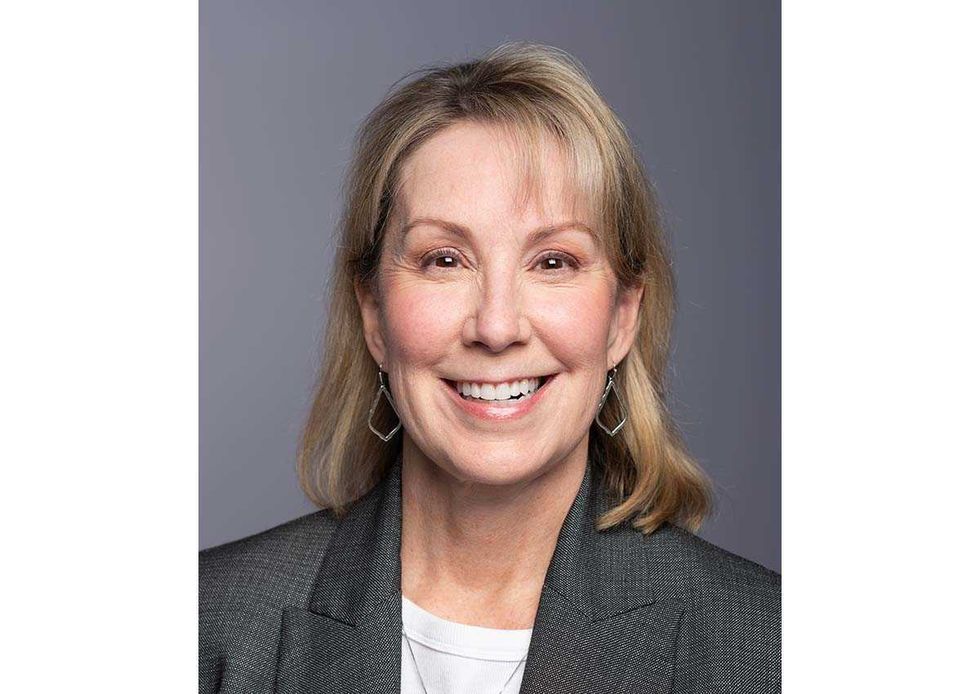
Laura Ritchey, president and chief executive officer, Geodis Americas
What sets Laura Ritchey apart from the crowd is her human-centric leadership approach. Instead of viewing profit and loss, employees, and customers as separate entities, she sees them as intrinsically linked.
This mindset allows her to align talent and finance with her company’s operational goals. “The wins on a scoreboard are great,” Ritchey says, “but the people who grow and go on to lead—that’s the achievement that lasts.”
She has maintained this focus over the past 30 years working in finance, law, and supply chain operations. Ritchey currently serves as president and chief executive officer of Geodis Americas, a regional subsidiary of French transport and logistics company Geodis, where she supports the company’s 230-site network in the Americas. Prior to joining Geodis, Ritchey led comprehensive supply chain improvement initiatives for big brands like Victoria’s Secret and Bath & Body Works.
Her commitment to both people and the supply chain profession have left an indelible mark—making her a true “rainmaker” in the eyes of her peers and colleagues.
Q: Early in your career, you shifted from finance to supply chain operations. What prompted you to make that switch?
A: Honestly, it wasn’t something I planned; it was a challenge my boss put in front of me. He pushed me into an operations role supporting M&A [merger and acquisition] activity, and I think he knew something I didn’t yet: that I would love it. What I discovered pretty quickly is that supply chain is this incredibly unique intersection of customers, finance, and operations. You’re always asking both “Does this make sense for our customers?” and “Can we actually execute it?” That combination just clicked for me. I’ve never looked back.
Q: As you reflect on your 15+ years in the logistics and supply chain industry, is there one project or initiative you found particularly memorable?
A: There are so many, but the one that stays with me is developing and implementing a speed sourcing and logistics model at a retailer early in my career. At the time, it felt like we were figuring it out as we went. There wasn’t really a playbook. What makes it memorable now is seeing that the model has become standard practice across the industry. You don’t always get to see the long-term impact of the work you do, but when something you helped shape becomes the norm, that’s pretty special. It also taught me early on that the best innovations come from really listening to what the customer needs and then being willing to rethink how things have always been done.
Q: Technology plays a critical role in supply chains today. How do you see artificial intelligence (AI) impacting digital transformations in the next few years?
A: I think the most important thing [to keep in mind] is that AI isn’t a separate technology sitting off to the side; it’s an enabler that’s woven into the supply chain itself. And it’s absolutely accelerating the pace of digital transformation in ways that would have seemed unrealistic even a few years ago.
But here’s what I always come back to: We can never divorce the physical from the digital. We touch customers’ products. We put them on real trucks and in real ocean containers. So the question isn’t “Will AI replace supply chain?”—it’s “How do we use AI to make the physical execution smarter and faster?” There’s an AI solution for everything right now. The harder and more important questions are how do you stitch it all together and who’s going to orchestrate the AI to keep an end-to-end supply chain running? The companies that figure that out are the ones that are going to win.
Q: Looking ahead, what excites you about the future of retail and your company’s initiatives to support retail supply chains?
A: A few things genuinely energize me. First, the ability to free our teammates from the administrative and mundane so they can focus on the real challenges, the complex problems, the customer relationships, and the decisions that actually require human judgment. That’s where the value is, and that’s where our people shine. We are never going to be just pushing data bits and bytes around. There will always be a physical element to this business, and that’s a winning strategy for us.
Second, I’m excited about the ability to react more quickly to the unexpected. If the last few years have taught us anything, it’s that uncertainty is the new normal, and I actually think we’ve become more resilient because of it. People have accepted that the chaos isn’t going away, and they want to move forward anyway. The investments we’re making in visibility, digital twins, real-time data—those aren’t just technology bets; they’re resilience bets. They give us and our customers a faster way to act when it matters.
Q: What is your proudest professional achievement, and why?
A: Honestly, when I think about this question, my mind doesn’t go to a deal or a financial result. It goes to people.
When I joined Geodis, what genuinely surprised me—and I don’t say this lightly because I’ve been in retail and 3PL (third-party logistics) a long time—was the quality of people and the passion for this business. That’s not something you find everywhere. And what I’ve come to understand is that my most important job as a leader is to protect that, invest in it, and create opportunities for people to grow into their potential.
I posted on LinkedIn when I left my last role to share that I would now be with Geodis. I was grateful to see the posts from people I have worked with throughout my career celebrating my next step as I have celebrated with them. Many have gone on from manager roles to senior leadership roles, and I am proud to have supported their journey.
I think about succession planning the same way. How do we make sure that when someone is ready for the next level, we’ve already been building toward that? How do we create pipelines, not just for the business, but for the people in it? Every teammate who aspires to grow deserves a leader who is actively thinking about how to get them there.
Joe Tillman
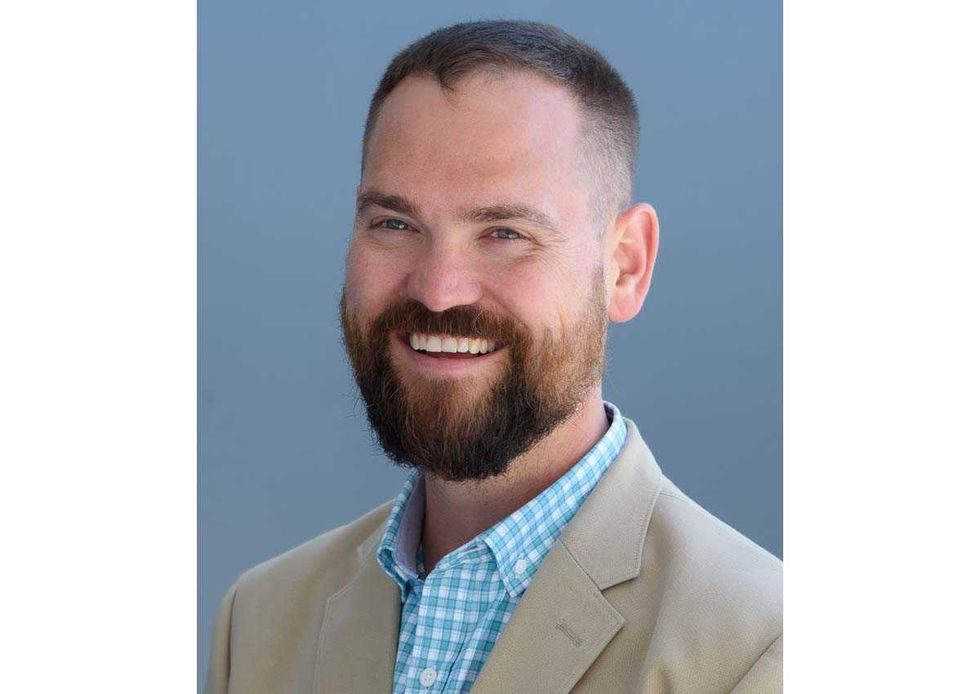
Joe Tillman, operations training lead, BlueScope Buildings North America Inc.
Joe Tillman has given years of service to the logistics and supply chain industry, most notably in research and education. Today, he serves as the operations training lead at BlueScope Buildings North America Inc., a manufacturer of engineered building solutions. Prior to that, he led the building and creation of the CLTL program (a less-than-truckload industry training and certification program) for transportation industry data and technology firm SMC³, later joining the company full time as manager of education programs and a CLTL instructor. Other education-focused industry posts include founder of TSquared Logistics, an education development and research consultancy; as a researcher for the Warehousing Education and Research Council (WERC); and as the dangerous goods expert for the American Logistics Aid Network (ALAN), among others. He is co-author emeritus of WERC’s annual “DC Measures Report.”
Tillman says his journey into logistics and supply chain management began at age 11, when he was elected quartermaster for his Boy Scout Patrol. It continued in high school, where his first part-time job showed him “how product availability and simple, local logistics shaped customer experience.”
Q: What attracted you to the logistics and supply chain field, and what motivates you to continue your work each day?
A: The opportunity to serve—customers, colleagues, employees, friends, mentors, and suppliers. Knowing each morning when I wake up that I will have an impact on someone, helping them improve or achieve something that seemed impossible yesterday, keeps me going. My first boss taught me the importance of focusing on my customer, understanding their needs, and helping them make a choice—it’s being able to see the big picture and asking how the other person sees or views something. To do so, I had to be willing to serve. Funnily enough, that lesson was learned in a small-town video rental store in the late ’90s.
Q: What changes have you have observed in the logistics industry since those early days? And tell us about that small-town job.
A: My first job in high school was at a video store, where I first saw how product availability and simple, local logistics shaped the customer experience. [Then], as a bus driver and diesel mechanic apprentice, and later a freight conductor, logistics became real in the form of routes, maintenance, and network reliability. Breakdowns and delays weren’t abstract, as I watched the impact and how they disrupted people’s lives and entire regional systems. As I moved into consulting, education, and research, I watched logistics shift from manual, siloed operations to integrated, data-driven supply chains. Technology, customer expectations, and globalization pushed the need for visibility, coordination, and proactive decision-making.
Automation is still working to take over repetitive tasks. Analytical and systems-oriented roles are growing in importance. Sustainability and resilience are now central concerns alongside cost and efficiency. My own journey from hands-on operations to designing and teaching logistics systems mirrors the industry’s evolution from moving freight to managing complex, strategic networks.
Q: What’s on your short list of the biggest challenges facing logistics professionals today?
A: Instead of challenges, I like to think of them as major opportunities the industry has today. First, it’s about talent and workforce development. We need to shift our mindset from a focus on training to learning and building workforce capability.
Second, building relationships is fundamental to supply chain and logistics’ long-term success. To build successful relationships, the focus must shift from “me” to “we.” It is understanding that our success will not be determined by us alone, [but] rather by the success of everyone we’re working with and the contributions to value we jointly make.
Finally, understanding it’s not the newest technology or tools that connect us or the potential technology offers to improve effectiveness, efficiency, and productivity; it’s how we connect with others, authentically, that transforms performance.
Q: What advice would you give someone just entering the supply chain profession?
A: When I think back to starting out and the advice given to me to “follow my passion,” I remember how unhelpful it was in practice. There are many things I am passionate about; however, none were ideal to provide the life I wanted and helping me achieve my long-term goals. For young professionals, I ask them to focus on developing their skills first and wait on finding their passion and purpose. Passion and purpose will develop based on the skills that you master.
Learn to serve and how to follow effectively.
Always be curious. Be willing to have a conversation and learn how to listen actively.
Q: Are there any key fundamental aspects of logistics and supply chain that are so foundational that they have not changed?
A: Yes. The fundamentals of logistics and supply chain—which are relationships and coordination—have not changed. Supply chain is about coordinating all the activities and organizations involved in moving a product from raw materials to end-customer. Whether we talk about ecosystems, networks, platforms, or “end‑to‑end visibility,” the stable need is cross‑functional and cross‑organizational integration and continuously linking procurement, production, logistics, and sales, and maintaining effective supplier and partner relationships.
The labels have evolved (for example, partnership, collaboration, integrated business planning), but the foundational premise that relationships and coordination drive performance has not. Fortunately, a better understanding of relational contracting—specifically vested [contracting]—is available to help organizations develop and improve relationships and coordination.
Q: What’s your proudest professional achievement, and why?
A: I’m not sure there is a specific achievement that I could point to as my proudest. What I’m proudest of are the opportunities I’ve had and relationships developed: the opportunity to work with amazing people and to learn directly from colleagues, industry leaders, and my students; [and] the opportunity to serve others in roles through WERC, ALAN, Christian Brothers University, the Logistics Leaders for T1D Ride to Cure cycling team, and other nonprofit associations. I’m extremely proud of the relationships I have developed, the friends, the mentors, and the cycling partners. Any notable achievements I have is because of the people and organizations I’ve been fortunate to work with.
Marianna Vydrevich
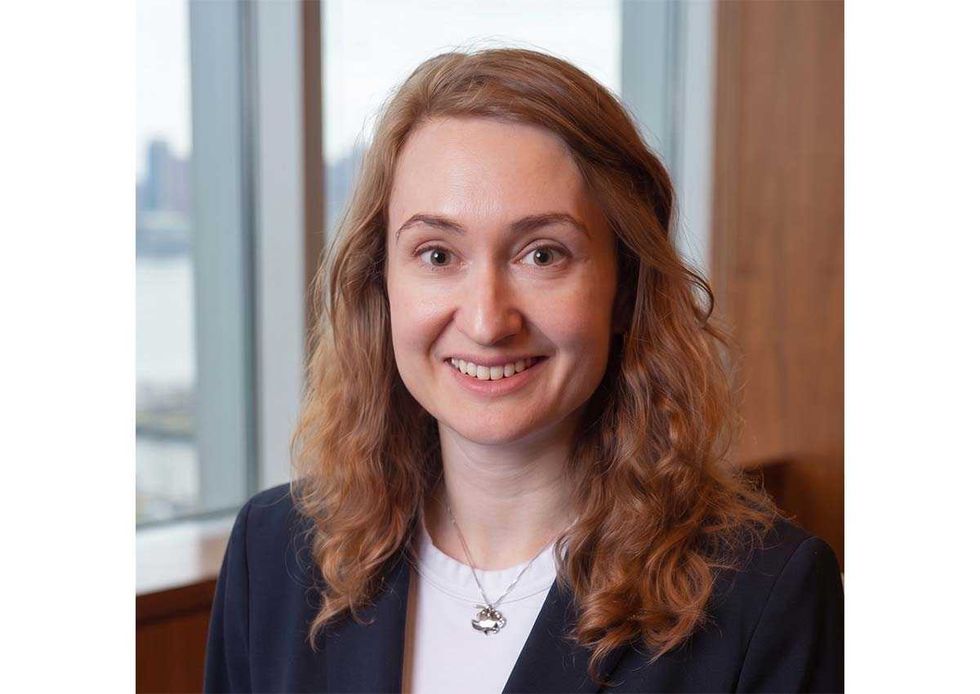
Marianna Vydrevich, manager of operations, research, and network optimization, GAF North America
Vydrevich has been building those skills for more than 13 years of international experience in end-to-end supply chain modeling. In her current role, Vydrevich’s responsibilities include building complex models to improve GAF’s supply chain network; evaluating manufacturing capacity, capability upgrades, and distribution strategies; and translating these technical insights into actionable strategies for the executive team.
Q: What is your proudest professional achievement, and why?
A: More than any personal milestone, I’m most proud of the people I’ve mentored and coached. I genuinely live by the motto, “We rise by lifting others.” Nothing beats the thrill of watching a student finally nail that internship after a string of rejections, or seeing an early-career professional snag a leadership role. I might not talk to my former mentees much once they leave the nest, but whenever I spot their “I am thrilled to announce …” posts on LinkedIn, I get hit with a wave of pride that is almost uncomfortably motherly.
Q: What is one supply chain project or initiative you’ve worked on that you found to be particularly memorable?
A: I’ve modeled the optimal location for a lot of new facilities, but GAF’s new asphalt shingle manufacturing facility in Kansas, which is currently being constructed, definitely stands out.
Finding the perfect spot for a massive process manufacturing plant is an incredibly complex puzzle. If you are just placing a warehouse, you are mostly looking backward: You rely on historical order patterns, current freight costs, and existing distances. But with a manufacturing plant, my work was all about engineering the supply chain of the future. Our team couldn’t just ask, “Where are our customers right now?” We had to build comprehensive models that anticipated what our entire supplier network would look like five to 10 years down the road.
My role centered on overlaying a massive amount of forward-looking data onto our long-term distribution strategy. The new plant is the strategic intersection where our inbound materials, manufacturing capabilities, and outbound customer reach align.
Q: What advice would you give someone just entering the supply chain profession?
A: Get your hands dirty and learn the business with your boots on the ground. Early in your career, you need to be spending time on the shop floor of manufacturing plants and inside warehouses, following supervisors around and hanging onto their every word. It might not have the trendy vibe of a Manhattan high-rise, but that reality is the foundation of a successful supply chain career. Too many young professionals fall into the trap of analyzing data or trying to “improve” a process without having any actual perception of what that process looks like. You simply can’t optimize what you haven’t seen in action.
Beyond getting out of the office, I always warn new grads to avoid a couple of major career traps. The first is getting blinded by big, flashy household names. Sure, they look great on a résumé, but companies that have historically been slower to adopt new technologies actually offer way more opportunities to innovate, automate, and become a high-profile “tech star” right out of the gate.
Q: What advice do you have for companies looking to develop top supply chain talent?
A: If you want to develop top-tier supply chain talent, you need to embrace a data-driven approach, and this means forcing the people to take true ownership of the results. Here is what it looks like:
First, look at the people already walking your shop floor. Take the folks who already know exactly how the physical business runs. They are the ones who know the difference between a real bottleneck and a spreadsheet glitch! Upskill them in data and analytics. It’s often much easier to teach a warehouse veteran how to read a dashboard than it is to teach a data scientist how a supply chain actually functions.
For the tech-heavy talent you do bring in, mandate the boots-on-the-ground experience. Do not let your fresh grads sit in an office and build optimization models without ever seeing an unloading of a truck.
Finally, give this talent pool the keys to the tech car. If your company has historically been a bit sluggish in adopting new technologies, use that as a selling point! Give them high-profile projects to innovate and bridge the gap between the clunky legacy systems and modern AI. But here is where the “ownership” piece kicks in: Don’t let them just hand over a dashboard and walk away. Make them responsible for vetting the AI models and proving that their digital solution actually works in the physical world.
Q: What are the biggest changes you’ve seen in your supply chains during your time in the industry?
A: There are two main changes that I’ve witnessed over the last 13+ years. First is the rapid evolution of how we actually use data. I’ve seen firsthand the industry moving from descriptive analytics, to diagnostic, and now into predictive. True prescriptive analytics is something we haven’t quite cracked. Because of this, the very purpose of our technology has changed. A dashboard gives you a photo of history; it just shows you what happened. Thanks to the AI revolution automating full-day tasks into minutes, the new dashboard goes way further, explicitly showing you the improvements your new data-driven processes are generating.
The second change is the gap between the companies fully embracing this new reality and the ones getting left in the dust.
Q: What hasn’t changed?
A: The laws of gravity and the fact that the business world still runs on Excel—and frankly, I’m only 100% certain about the Excel part.
But in all seriousness, the fundamental truth is this: No amount of technology can compensate for the knowledge of the humans actually using it. Real-world decision-making is still messy, and ironically, data consolidation is still the longest, most painful part of any project. We always assumed that by the time we reached “the future,” our data would magically live in one perfect, unified place. We thought we’d be spending our days debating the nuances of modeling techniques and comparing predictive algorithms.
Instead, here we are in 2026: We have LLMs [large language models] happily doing all that high-level algorithm comparison for us, while humans are still stuck wrangling the raw data. Why? Because there is rarely a data dictionary out there detailed or accurate enough that you can just hand it to an LLM and say, “Go run with this.” Furthermore, pulling data from a dozen different silos inevitably requires hunting down various stakeholders and explaining exactly what it is you need. Good luck sending an AI agent to go navigate corporate silos or convince a protective manager to hand over their data!
The irony is hilarious. But the silver lining hasn’t changed, either: Once you finally get that data into one place and [get around] the human bottlenecks, there is nothing to prevent you from becoming 10 times more productive.
Drew Wilkerson

Drew Wilkerson, chief executive officer and chairman, RXO
Drew Wilkerson has spent his entire professional career focused on various facets of the freight brokerage business. He began his career nearly 20 years ago at C.H. Robinson and has since worked in sales, operations, customer support, and executive capacities. He joined less-than-truckload carrier XPO in 2012 to lead operations at the company’s flagship truck brokerage hub in Charlotte, North Carolina. Over the next 10 years, he progressed through the ranks at XPO, first serving as regional vice president, then as president of XPO’s North American brokerage business, and then as president of XPO’s North American transportation division. Wilkerson was named chief executive officer of RXO, an asset-light freight brokerage and transportation technology company, when it was spun off from XPO in 2022. He became chairman of the RXO board of directors in 2025.
Q: What led you to pursue a career in the transportation and freight industry?
A: After graduating from college, I knew I wanted to work with people and help solve problems for customers. At the suggestion of a friend, I visited C.H. Robinson to see the business firsthand and was immediately hooked.
Q: What would you say are the biggest challenges currently facing the brokerage business?
A: There are significant structural changes happening now that will reshape the brokerage industry, including regulation and AI. It’s a critical time; the decisions and investments we make today will set us up for long-term growth.
Q: Which of your skills have served you best when it comes to managing your company?
A: My greatest strength is my ability to build great teams and strong relationships based on trust. That begins with transparency, which encourages team members to engage with me directly about their careers or ways to improve the company. This helps our company continuously evolve to meet the needs of our employees, customers, network of carriers, and investors.
Q: You led RXO through the Coyote Logistics acquisition. What lessons did you learn from that process?
A: Really, the whole RXO team led us through the acquisition—I was a member of that team. The Coyote acquisition taught us that focusing our integration on people, customers, and technology was the best way to ensure long-term success. Maintaining a “people-first” mindset allowed us to retain top talent. Staying close to our customers and ensuring they knew who they were doing business with was key. And the technology integration was critical—it was a big change for people, but quickly getting everyone on one technology platform helped us unlock the power of our much larger scale.
Q: As a manager, what keeps you up at night, and what keeps you going back to work each day?
A: I often think about the importance of choosing the right people for our organization and ensuring we protect our unique company culture as we grow. What drives me to return each day is my family and the desire to build a legacy of treating people with respect and helping our customers succeed.
Q: How will transportation change over the next 10 years?
A: I predict rapid consolidation at the top of the industry, as well as brokerages continuing to take a larger share of the overall for-hire trucking market. Large, scaled players like RXO are positioned to win over the long term. In addition, technology like generative AI will become even more integrated, moving beyond pricing algorithms to streamlining back-office functions and enhancing real-time customer visibility.
Q: What advice would you give to someone just entering the supply chain profession?
A: I recommend being willing to jump in and learn the industry from the ground up, just as I did. Success in this field comes from building strong relationships, so always be transparent and honest, and treat every individual with respect.
Q: What one attribute would you point to as the key to your success?
A: One thing I consistently tell the RXO team is that everything is an opportunity, and we need to capitalize on every opportunity we have to drive growth for the company. One of the key ways we do that is by maintaining strong relationships with our customers and our network of carriers. Our deep relationships are a major differentiator for RXO.
