


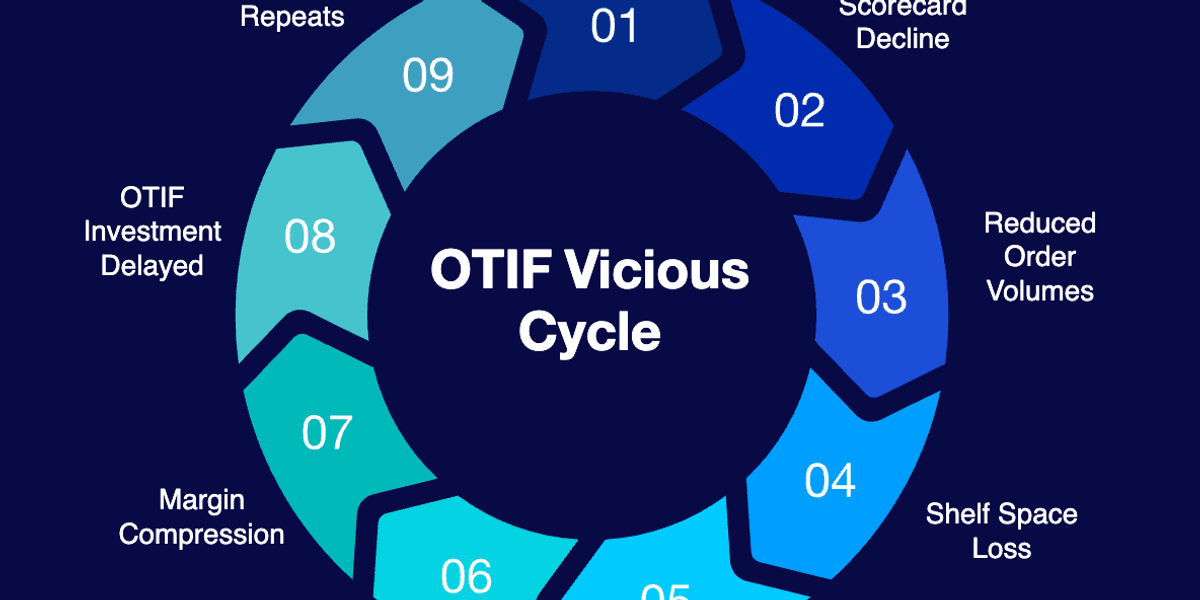
Failures to meet On‑Time, In‑Full (OTIF) performance targets impose approximately $100 billion in annual economic impact on North American consumer packaged goods (CPG) and food & beverage manufacturers, according to analysis from Cleo, a supply chain orchestration solution provider.
Roughly 90% of that impact comes from indirect costs, including lost sales, reduced shelf presence, excess inventory, and manufacturing inefficiencies, Chicago-based Cleo said in a report titled “The $100 Billion Supply Chain Penalty: OTIF’s Total Economic Impact.”
The problem stems from a significant management blind spot, Cleo said—while companies track retailer deductions and delivery metrics, the broader consequences of OTIF failures often remain disconnected from executive decision-making.
For example, inaccurate demand forecasts, late purchase order transmission, and promotional spikes can strain production and logistics capacity. But addressing such failures requires coordination across planning, order management, manufacturing, and transportation. Companies can follow several approaches to prevent the problem, including tactical compliance management, logistics technology, supply chain intelligence, retailer collaboration, and supply chain orchestration.
“A missed delivery can cost a manufacturer its next order, its shelf space, and ultimately its standing with a retailer. The chargeback captures only a fraction of that damage,” said Mahesh Rajasekharan, President and CEO of Cleo. “The deeper problem is fragmented accountability: logistics tracks delivery performance, finance tracks deductions, and sales tracks lost business, while the connections between them go unaddressed. CEOs need to make OTIF a shared business priority, with clear ownership of its full financial impact.”
