


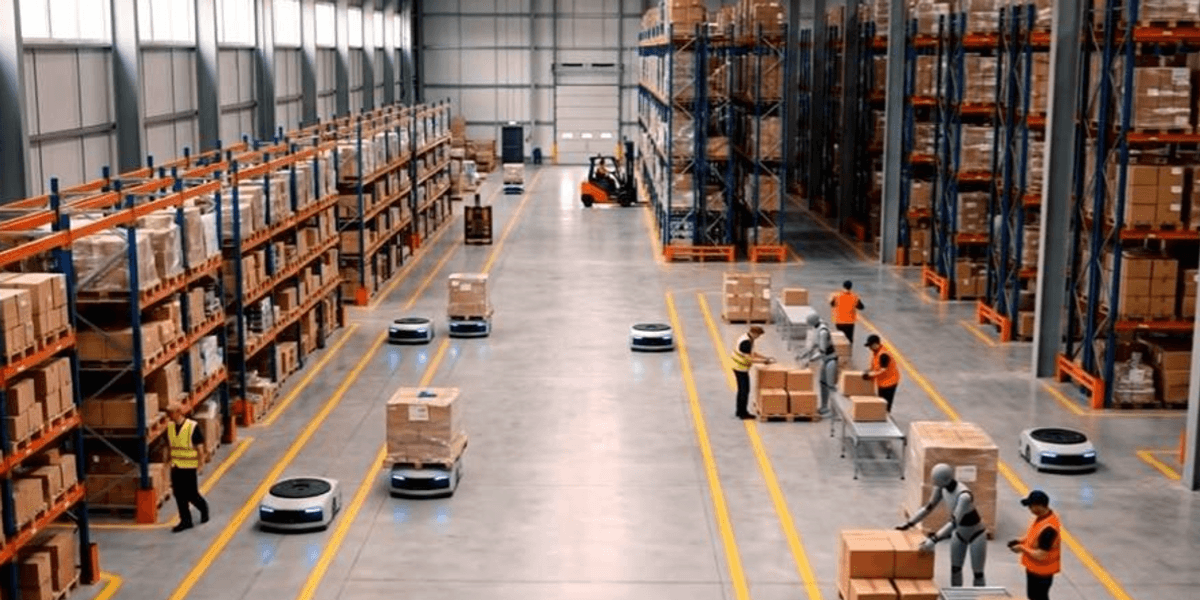
Accenture will collaborate with a German certification organization to accelerate the installation of physical AI platforms in automated factories and warehouses, the consulting firm said today.
By working with TUV SUD, which is a testing, inspection, and certification organization, Accenture said it can now help companies safely deploy physical AI equipment such as autonomous mobile robots (AMRs) alongside human workers faster. Specifically, the partners’ “Physical AI Safety Suite” will allow clients to navigate the intricate web of standards for adopting physical AI-enabled automation solutions.
Established industry standards are important because they provide the basis for ensuring that automated facilities are designed and operated safely. An example is ISO 3691-4, which specifies safety requirements for driverless industrial trucks and systems, including AMRs. But such a process can take several weeks for a medium-sized production plant to follow the standard process of iterative coordination, validation, and acceptance of safety concepts.
Now, the Physical AI Safety Suite partially digitizes the manual assessment of facilities, equipment, and preparation of certification packages, using digital twins and AI-powered simulations. TÜV SÜD estimates that the digital process could bring production online up to 30% sooner.
“Physical AI enables robotic systems to become increasingly adaptive while also paving the way for an independent, evidence-based digital certification process,” said Patrick Vollmer, CEO and Chairman of the Board at TÜV SÜD AG. “Through our Physical AI Safety Suite, which leverages simulation-generated evidence, we can support compliance-readiness much earlier in the engineering lifecycle without compromising the rigor safety standards require. Assessing automation concepts before the first robot is deployed reduces uncertainty in live operations and helps drive higher levels of safety, efficiency and performance across production and logistics.”
Accenture defines physical AI as a mix of technologies, including digital twins, simulations, sensors, robots and AI models, which enables robots and machines to sense, decide, act and improve constantly under changing conditions and operate more autonomously in real environments. The firm recently established a Center of Excellence that incubates, builds, scales, and deploys physical AI solutions for warehouses and production facilities.
