

American Classical Music at 250 — Take Five: The Disconnect Between Scholars and Orchestras

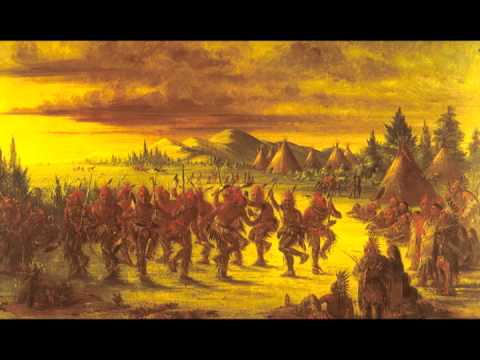
Beginning with my “New York Times” piece on July 4, this is the fifth in a series of articles pondering the state of classical music in the US on the occasion of our 250th birthday. Above: Peter Bogdanoff’s visual presentation for the Largo and Scherzo of Dvorak’s “New World” Symphony, premiered by the Brooklyn Philharmonic in 1994 and since widely deployed by American orchestras (but never the biggest ones).
Have you ever wondered why American museums engage scholars on staff and orchestras do not? I can offer a number of pertinent observations.
For many years, I regularly attended both the annual national conferences of the Society for American Music and of the League of American Orchestras. Practically no one else did – the only other name that comes to mind being Susan Key, who oversaw the San Francisco Symphony’s “Keeping Score” series.
I stumbled into my dual career by happenstance. When I ended my tenure as a New York Times music critic in quest of something hands-on, I found myself curating a series of Schubert “symposiums” for New York’s 92nd Street Y. At the same time, I undertook the first of many books – Understanding Toscanini (1987) – studying the institutional history of American orchestras and opera companies in relation to our composers, and to the culture at large. I came to know lots of people in both camps: performers and administrators in classical music; scholars of American music and history. I absorbed with disappointment and frustration that the two camps remained alien to one another.
When I took over the Brooklyn Philharmonic at BAM, our first festival celebrated the centenary of Dvorak’s New World Symphony (ignored at Lincoln Center by the orchestra that premiered it in 1893). As a budding cultural historian sans pedigree, I happened regularly to read musicological journals and so was keenly aware that Michael Beckerman had discovered something about Dvorak’s symphony that American orchestras needed to know – that many passages, and even an entire movement, were fundamentally indebted to Henry Wadsworth Longfellow’s The Song of Hiawatha. Given that this is the most beloved symphony ever composed on American soil, setting what was once the most popular work of American literature, Beckerman’s articles on the Largo and Scherzo deserved maximum immediate exposure.
Obviously, I could not undertake a suitable celebration without Mike himself. I also invited Adrienne Fried Block, the biographer of Amy Beach, whose Gaelic Symphony – a response to Dvorak – we also performed. And John Mack Faragher, a distinguished historian of the American West. And Samuel Floyd, who ran Chicago’s Center for Black Music. And Robert Winter, who was creating an interactive Dvorak/America CD-Rom (remember those?) at UCLA. Our performers included a distinguished African-American tenor, Thomas Young, performing and discussing the high achievements (then little acknowledged) of Dvorak’s Black assistant, Harry Burleigh. Supported by the NEH, our “From the New World” festival included a “visual presentation” for the New World Symphony by Peter Bogdanoff, a six-hour Sunday afternoon “Interplay,” and a 57-page program book. (For more on the 1990s BPO festivals and linkage to scholarship, click here.)
I’ve worked closely with scholars ever since, curating festivals for dozens of orchestras. When Larry Tamburri engaged me to create a series of annual three-week thematic “Winter Festival” for the New Jersey Symphony, the many participating scholars (for a Richard Strauss festival exploring Strauss the man) included Hans Vaget and Michael Kater, both of whom shared with New Jersey high school students their memories of growing up in Nazi Germany. During my tenure as Executive Director of DC’s PostClassical Ensemble, our various festivals of Russian music included the pianists Alexander Toradze and Vladimir Feltsman, discussing musical life in Soviet Russia, and the Shostakovich authority Solomon Volkov.
Over the 15-year history of Music Unwound, the orchestral consortium I direct with NEH support, the most frequent topics have been “Dvorak and America,” “Kurt Weill’s America,” “Copland and Mexico“ (a Silvestre Revueltas festival in disguise), and “Charles Ives’ America” – undertakings inconceivable without a battery of experts who know more than I do about the topics at hand. In effect, I’ve acquired a cumulative braintrust whose major participants include the Lou Harrison gamelan scholar Bill Alves, the Ives scholar F. Peter Burkholder, and the Weill scholar Kim Kowalke. Moving outside Music History, I’ve relied on the art historian Tim Barringer (who understands the relationship between Frederic Church and Dvorak’s New World landscapes), the historian John Tutino (who can contextualize Revueltas via the Mexican Revolution), the historians Allen Guelzo and Alan Lessoff, whose knowledge of the Civil War and the Gilded Age invaluably contextualize Ives’s importance.
During the years I advised Klaus Heymann on his indispensable “American Classics” CD series on Naxos, I engaged the music historians Wiley Hitchcock and Wayne Shirley to help out. Naxos’s remarkable commitment to Ives was one outcome of Wiley’s participation. Wayne – who knows more American music than anyone else of my acquaintance – eventually produced a new critical edition of Porgy and Bess. The Metropolitan Opera used it when reviving Gershwin’s opera in 2019. But, for whatever reason, Wayne was not a public presence on that occasion.
It bears stressing that, unlike American orchestras, American musical scholarship got a delayed start. The prime movers were European-born students of European music. Incredibly, the first music historian to exclusively study American music was the late Richard Crawford, whose first book came out in 1968. Rich was one of the prime movers of the Society for American Music, originally the Sonneck Society. He and others stressed maintaining a big tent (I discovered myself invited in without having had to ask). Their collegiality was a signature. They also insisted on maintaining the broadest possible purview of the topic at hand.
All that has changed now. Too many young scholars are ideologues guarding silos. Screens have cheapened inquiry. Too many dissertations and books nowadays amass information with insufficient context – by which I mean: a copious picture of American music, of America itself. And then there is cancel culture. In 2021 I undertook a film about Black classical music (a topic I began pursuing in Brooklyn in the 1990s) and discovered that certain scholars would participate only if certain others did and certain others did not. I don’t remember that kind of insularity in the days of the Sonneck Society. Rich Crawford, Wiley Hitchcock, and others commanding a long view of American music seemingly have no successors today — the very people American orchestras need to employ. Crucially: compared to art museums, our orchestras have failed adequately to curate the American past. Right now, the big discovery in twentieth century symphonic music, it seems to me (and I am not alone), isn’t Florence Price; it’s William Levi Dawson’s Negro Folk Symphony of 1932, right up there with anything by Aaron Copland or Roy Harris. How is it possible that the New York Philharmonic has yet to program it?
As for the trajectory of orchestras – more than museums, they became “midcult” institutions during the interwar decades. The focus on celebrity conductors and instrumentalists – what I have called the culture of performance” – penalized the creative act. Composers took a back seat. What Virgil Thomson termed the “music appreciation racket,” driven by commercial interests, created a network of popularizing books and pedagogues purposely remote from scholarly discourse. A typical advisory to the lay listener read: “You can enjoy a Beethoven symphony without being able to read notes, without knowing who Beethoven was, when he lived, or what he tried to express.” (See in my Understanding Toscanini for countless such examples.)
In other words: the insularity of our orchestras and musical scholars was and remains mutually reinforcing. Back in the day, I co-curated, with Alan Lessoff, a joint session of the Society for American Music and the Society for Historians of the Gilded Age and Progressive Era. The idea was to jump-start a conversation. It led nowhere.
I now find myself Scholar-in-Residence for the South Dakota Symphony – the most innovative American orchestra I know. It was innovative long before I got there. Its signature initiative, driven by Music Director Delta David Gier, is the Lakota Music Project. It links the orchestra to Indian reservations. It pursues music as an instrument for mutual understanding. My contribution has been to seize this achievement and contextualize it. When not engaged in a form of genocide, Americans have notably discovered profound inspiration in Native America. Dvorak’s New World Symphony and Longfellow’s Hiawatha are part of that story. So is Arthur Farwell, who “took up Dvorak’s challenge” and founded an Indianists movement in music. Though Farwell is mainly cancelled, he’s not only a vital historical figure but a formidable composer, the closest thing to an American Bela Bartok. The Dakota String Quartet made the world premiere recording of Farwell’s incandescent Hako Quartet, for Naxos, in 2021. The forthcoming Lakota Music Project festival in Sioux Falls, this November, scans two centuries of American experience and partners four universities.
A previous article in this series investigated the loss of tradition in symphonic performance – something hard to remedy. Recourse to scholarship – a means of expanding the communal footprint of an orchestra, of enhancing institutional impact, of refining institutional identity — is an easier fix.
