


America may be too divided and distracted to joyfully celebrate the 250th anniversary of the Declaration of Independence. After all, the democracy set in motion by the Declaration is at unprecedented risk. It’s a rocky year of war, inflation, billionaire hutzpah, and a wobbly economy.
This fraught moment made me think of the last time America celebrated the Declaration, in 1976—commemorations that are little remembered but for the sight of the billowing sails of tall ships gliding into New York harbor.
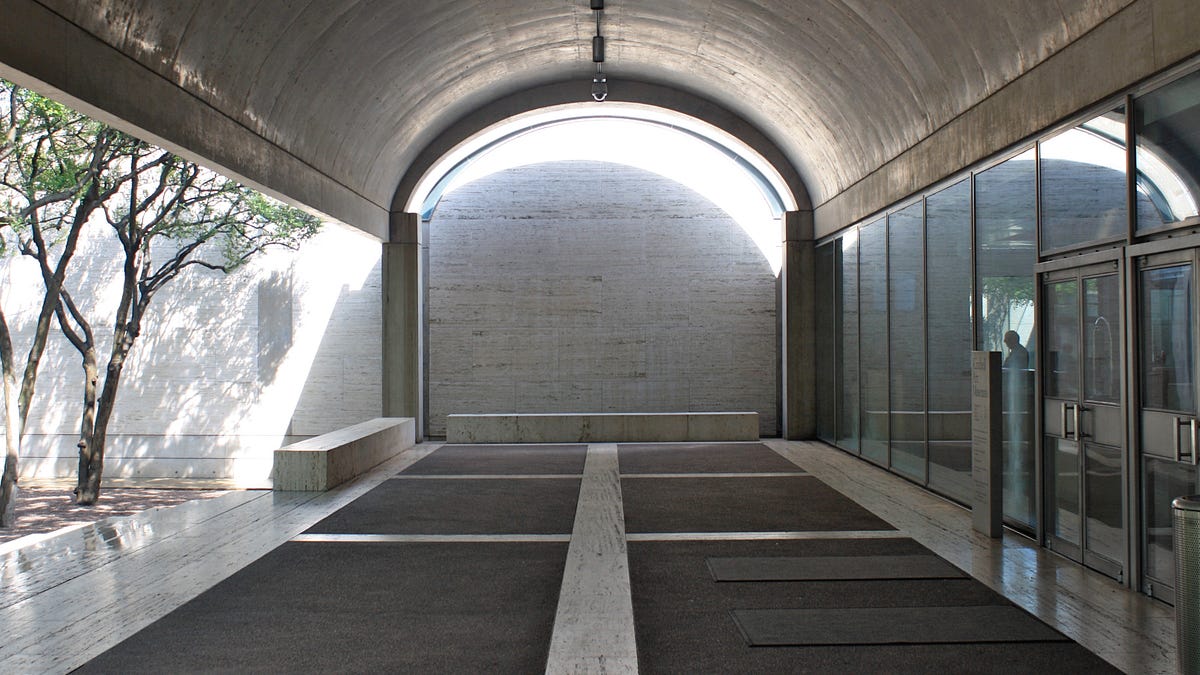
Philadelphia, as the cradle of American independence, was supposed to be the center of attention 50 years ago. From the beginning, deliberations involved arguably the most important architect of the late 20th century, Louis I. Kahn. His values and insights were idealistic for their time, as the Declaration signers’ were in theirs. Compared to the corruption, politicization and toxic grandiosity of this year’s Washington DC “celebrations,” Louis Kahn’s thinking is a tonic—and makes even more sense now.
The runup to the Bicentennial was also an uncertain and transitory time. The Vietnam War had ended ignominiously at the cost of some 58,000 American lives. People were dealing with high inflation while incomes stagnated, known then as stagflation. (Sound familiar?) President Richard Nixon would resign in 1974 once his impeachment seemed inevitable.
Philadelphia began planning for the bicentennial in the 1960s, but moved ahead slowly given the pessimistic national mood. The city’s civic leadership saw salvation in a Worlds Fair extravaganza, but Kahn counseled against an assortment of bombastic buildings that would fall into disuse after the fair closed. Instead he argued that architecture should play a minimalist role as an armature for what he conceived of as a global convening of citizens and great minds.
The idea was to co-create the institutions that would meet America’s needs as it entered its third century. Philadelphia in the 19th and 20th centuries had created great institutions—places of learning, justice, culture, and governance devoted to bettering the lot of people. Kahn believed in their transformative potential even as long-established elites faced growing opposition for prosecuting a war that could not be won and only fitfully acceding to Black demands for equal access to American freedom (followed by equality demands by women and other minorities).
Among the opportunities Kahn’s approach offered was to include people who did not benefit from the Declaration’s freedom promise, in a city in which Black was the color of more than one third of the population.
Though Kahn’s vision may have sounded overly abstract and high minded, it appealed to business and civic leaders because promises of money, especially from the federal government, were not translating into hard cash in strained economic times. Kahn’s aspirational forum seemed far less costly to realize.
Kahn’s schemes for several sites are not well documented—available to us as scratchy, underdeveloped sketches—but they suggest a variety of physical and urbanistic tactics aimed at enhancing the city as fundamentally a place of convening and encountering people. Architecture’s job was to enhance those wisdom-sharing interactions. Of course the city as a forum is as old as ancient Greek agoras, but today’s fragmented and compartmentalized cities and suburbs too rarely learn the ancient wisdom. Kahn put it front and center.
His earliest idea was to close streets to cars in the oldest part of the city, between the Delaware riverfront and the Independence Mall greensward. He proposed to borrow churches, synagogues, and Quaker meeting places as venues for international assemblies—a small “u” United Nations.
That setting didn’t work and Kahn pursued other forms on various sites that he or the Bicentennial Committee of Philadelphia thought they could obtain. “Kahn’s insistence that the Bicentennial be a forum for discussion and meeting would prevail in all subsequent proposals,” wrote Marc Philippe Vincent in the catalog for the 1992 exhibition “Louis I. Kahn and the Realm of Architecture,” organized by the Museum of Contemporary Art, Los Angeles (my prime Bicentennial source, FYI).
For a riverside project on the site of today’s Penn’s Landing, Kahn sketched an enormous tent that would shelter a flexibly organized beehive of activities. Another site at the confluence of the Schuylkill and Delaware Rivers—utterly isolated from the city by massive industrial tracts and crisscrossed by highways and a rail line—inspired an introverted scheme. He designed a long pedestrian street parallel to a canal lined on both sides by installations and modest pavilions that would spill into the street.
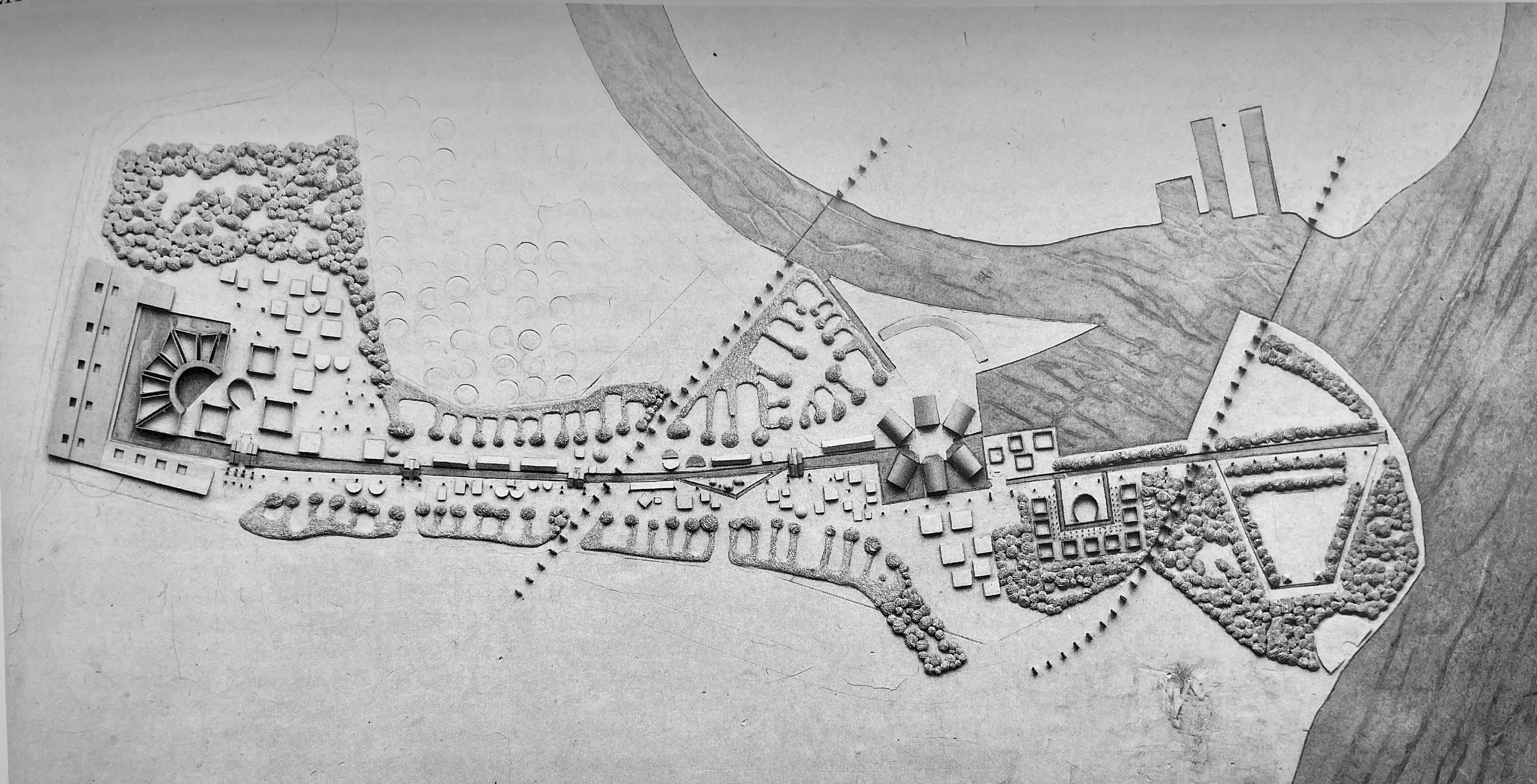
It would culminate with large structures at either end. A “Hall of Expressions” would host performance and exhibition venues. Thematic halls of water, land, and air would highlight global nature and scientific advancements.
In a more refined version, the street would be called the Forum of the Availabilities. (Kahn’s poetic rhetoric could be gnomic but it evoked possibilities, which were thin on the ground in those post-Vietnam War days.)
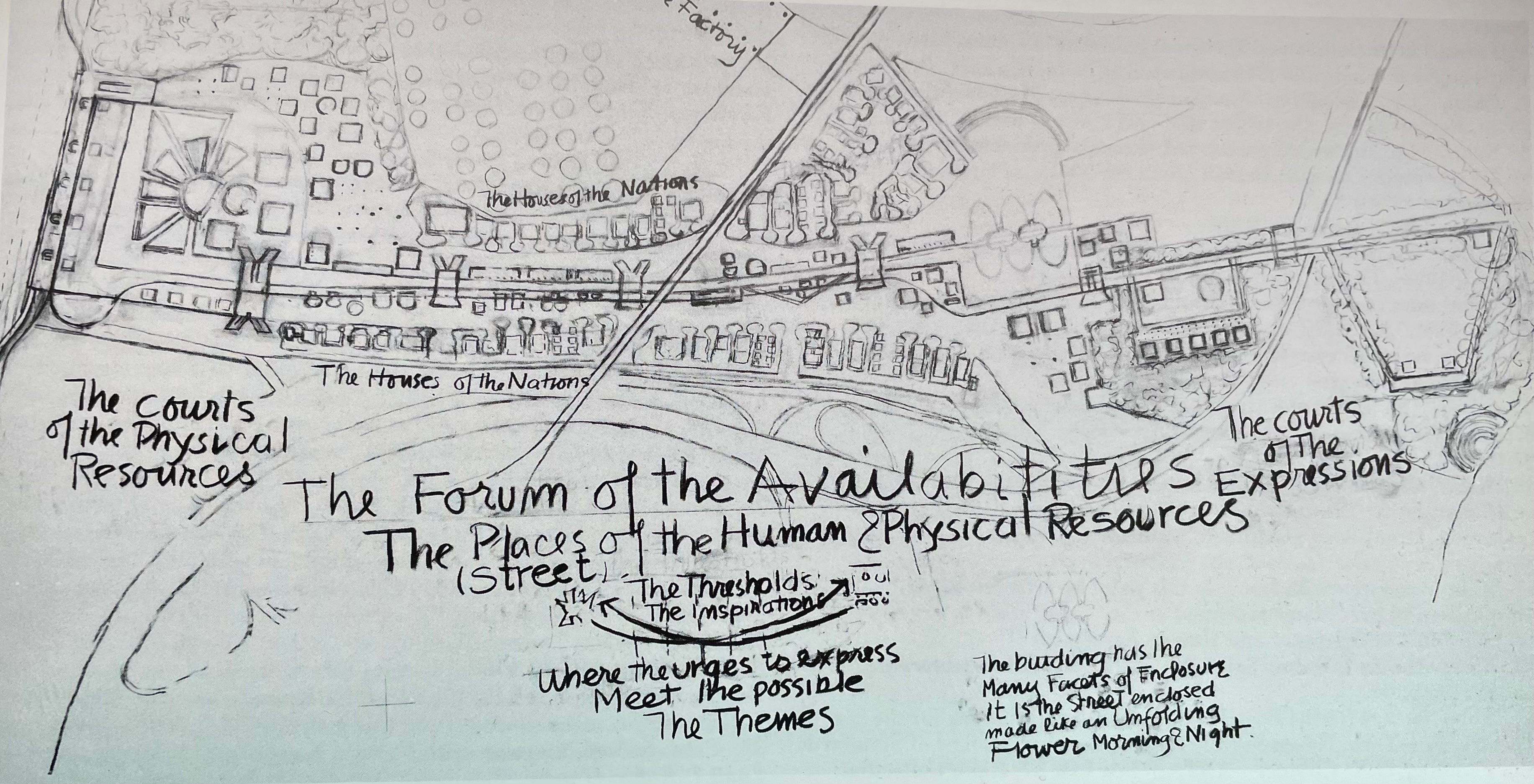
Kahn’s streets, courts, and forums celebrated interaction, debate, and conversation over grand national or commercial statements. All would have urged active participation by visitors in a “search for greater mutual understanding,” according to Vincent.
Philadelphia leadership did not coalesce around the plan sufficiently to convince the federal Bicentennial Commission of its viability. Congress widely dispersed $250 million that had originally been set aside for Philadelphia.
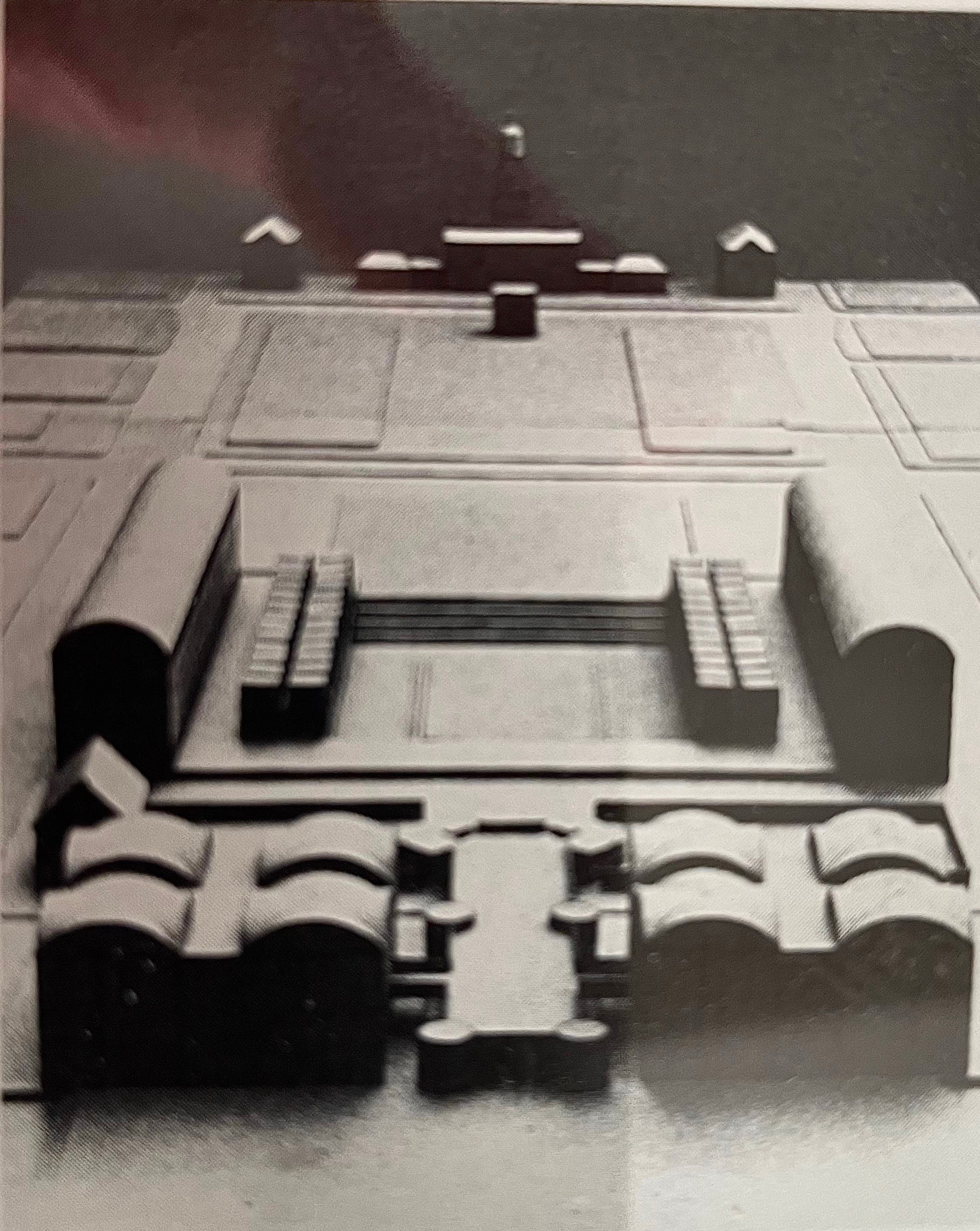
Mayor Frank Rizzo formed a committee to figure out a local celebration, focused on Independence Mall, a relatively intimate and central lawn that fronts Independence Hall, where the Declaration was signed by the second Continental Congress in 1776. Here Kahn would propose a line of “community houses” along the edges of the Mall, opening onto the greensward, which would become a place of gathering and sociability.
At one end a grouping of barrel-vaulted structures that suggest a hierarchy of small to large organizations would form a “Congress of Institutions” that he hoped would trace the evolution of institutions as the enduring backbone of American aspirations, and host conclaves that would define their role in the future.
This plan, too, would fizzle and Philadelphia’s most Kahnian Bicentennial legacy would be a diminutive crystalline enclosure for the Liberty Bell, fronting Independence Hall, designed by Kahn Protegé Romaldo Giurgola. It put people into intimate proximity to the Bell and glowed through glass at night.
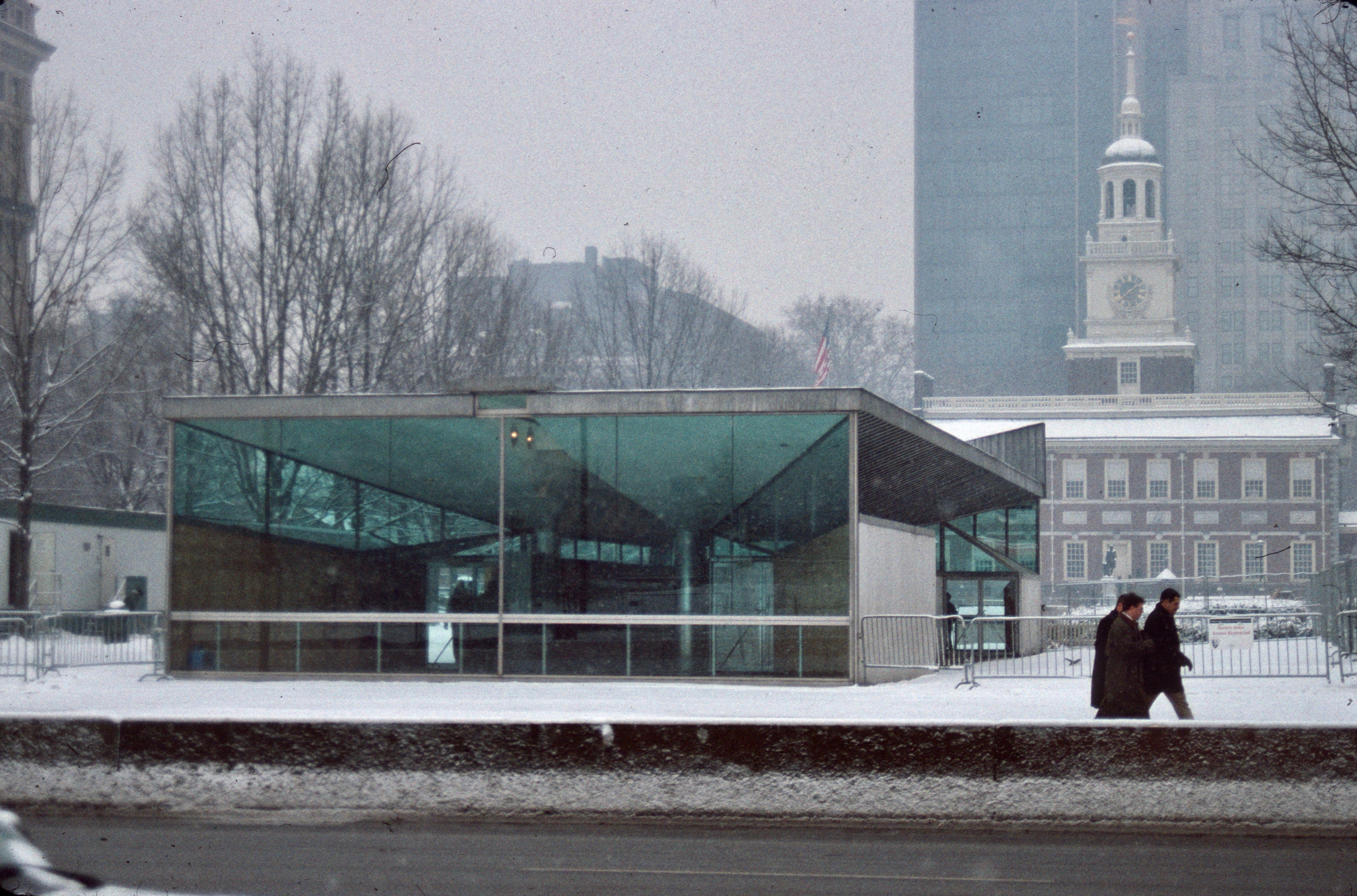
Kahn’s idealism, optimism and personal magnetism kept this unique celebratory conception alive even as leadership struggled to put sufficient financial and logistical bones on the plan to persuade government and exposition committees to support it.
Advocacy for a Philadelphia celebration faced plenty of distractions.
The Bicentennial coincided with a catastrophic time for cities. The industrial hubs of the Northeast and Midwest that had for decades created fabulous wealth, began hemorrhaging people to white flight as they lost their economic engines in a wave of deindustrialization. As Americans began forsaking unreliable Fords and Chryslers for spunky Volkswagen Beatles and Toyota Coronas, factories that made things began to seem antiquated. (Philadelphia was once the Detroit of locomotives and also built Packards.) Wall Street grew impatient with the massive capital investments industry required and their pesky unionized workforces.
Fully 45 percent of Philadelphia’s jobs were in manufacturing in the 1950s. (Nowadays the percentage is in the single digits.) By the late 1970s northeast corridor passenger trains entered Philadelphia through a moonscape of rubble-strewn, broken-windowed abandoned factories.
Most of the big industrial cities were then governed by political machines that were much more concerned about staying in power than undertaking the kind of deep soul searching necessary to adapt to a future made bleak by an exodus subsidized by freeway building. Mortgages were readily obtained in new subdivisions but next to impossible to get in the dense, sturdy redbrick neighborhoods that were “redlined” by federal policy. Cities were forced take over bankrupt private bus and rail companies.
Dramatic population losses ensued, hardening poverty in low-income Black communities where residents were soon deemed to be an irredeemable “underclass.”Gerald Ford famously told New York—staring down bankruptcy in 1975—to “drop dead,” as a New York Daily News headline put it.
In the 1970s and 1980s white-collar jobs were not replacing blue-collar ones. Philadelphia would gradually lose many of the Center City professionals who worked in its cluster of insurers; pharmaceuticals would largely decamp for suburbs. Once one of the wealthiest companies in America, the Pennsylvania Railroad skidded into bankruptcy in the early 1970s and was consolidated into Conrail, a freight-railroad camel assembled by the Federal government, with Amtrak picking up its passenger service.
Philadelphia, home to more than 2 million people in 1950 would lose 400,000 residents between 1960 and 1980.
In later decades, Philadelphia and other cities would turn themselves around, and the spirit of Kahn’s plan would suffuse enhancements on Independence Mall.
A Constitution Center would by added by Harry Cobb of I. M. Pei and Partners that would somewhat ambivalently close the axial vista up the mall in the same position Kahn had planned for his Congress of Institutions. Giurgola’s jewel box was ultimately deemed too small to accommodate visitors and too vulnerable to vandalism, and was replaced by a skinny red brick building by the Pennsylvania-based Bohlin Cywinski Jackson. It defers to Independence Hall by running along the side of the Mall as Kahn’s schemes suggested. The Bell is now more comfortable to visit but lacks the prominence and immediacy of Giurgola’s structure. A visitor center by Kallman, McKinnell and Wood links the Liberty Bell to the Constitution Center.
These institutions are each self contained, though, and leave the Mall itself as an afterthought. Its redesign by the landscape firm Olin is a lawn looking for a reason to be. The ensemble lacks the civic energy and the urge to participate that Kahn tried to realize in his designs.
Fast forward 50 years to the vanity commercial spectacle that has made a mess of Washington’s Monumental Core—the most powerfully symbolic landscape in America. The squandered possibilities of Philadephia’s Bicentennial celebration pale in comparison.
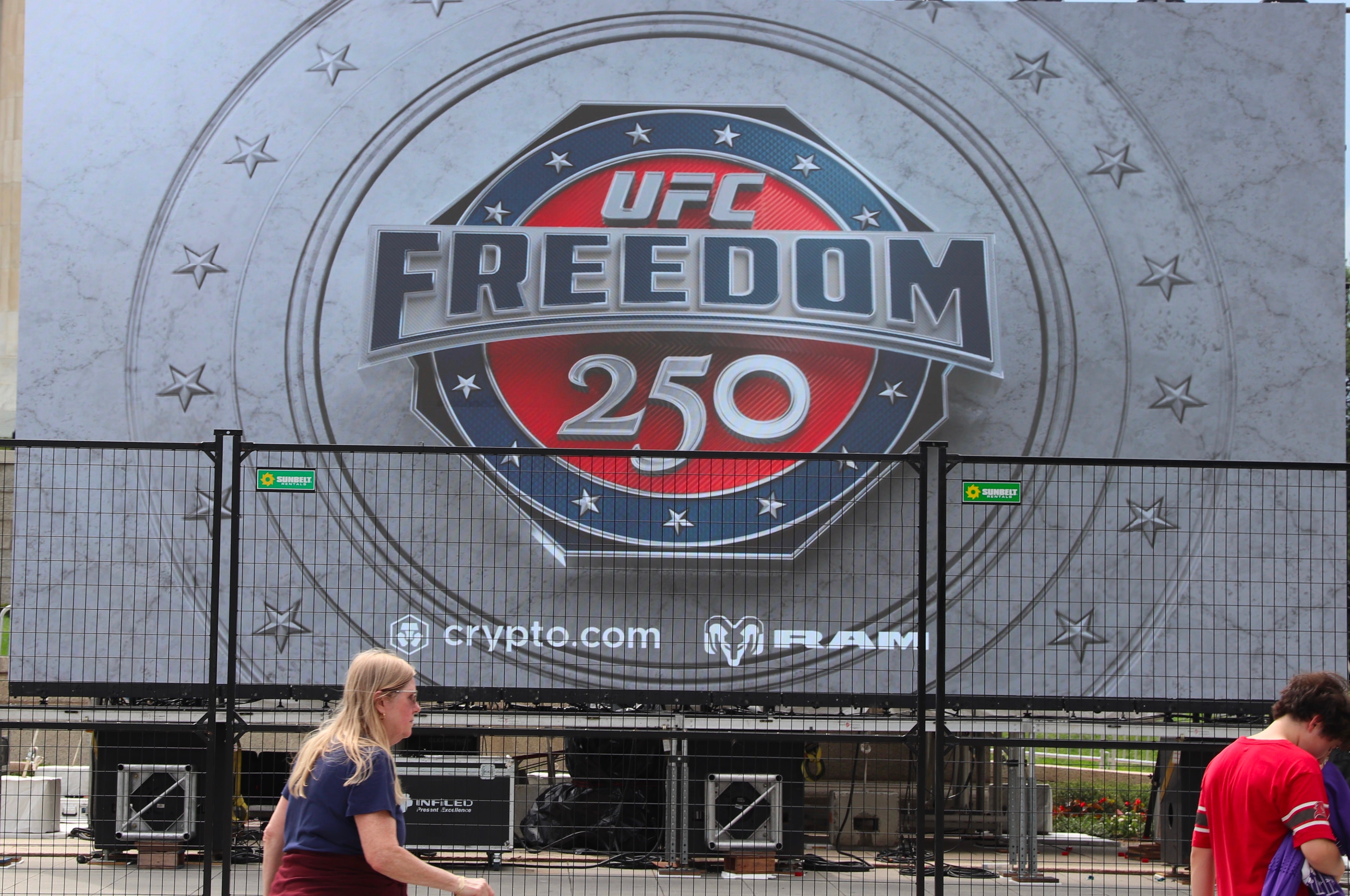
The Lincoln Memorial and a vast territory around the White House were conscripted as TV backdrops to somehow legitimize the fake sport of ultimate fighting. UFC, which has cultivated a close relationship to Trump for years will cash in (as will Trump, who holds company stock and has other financial relationships with the company).


Opaque construction fences are everywhere but none of the frenzy of statue gilding, fountain repairs, and ballroom building bears any relationship to the significance of the Declaration of Independence. Official Washington in 2026 is not contemplating the legacy of America’s founding or considering how and why people have united around its principals. It is not debating how it has shaped American identity and inspired much of the world to adopt the contentious and difficult job of self-governance.
The garish commercial celebrations are, instead, an unmistakable physical manifestation of undisguised corruption, and the wielding of unrestrained power by unprecedented wealth.
As Philadelphia teetered in the 1970s, Kahn saw institutions as the glue that he hoped would assure the city’s rebirth though he did not live to see it. (He died in 1974).
He also did not live to witness an era of institutional destruction instigated by political operatives and masterminded by the Heritage Foundation, including the capture of universities, museums, and courts, to name a few. Vital institutions, he knew, needed to be rejuvenated and reinvented. It is unusual for an architect to also be a social visionary, but our appalling times have made his insight and aspiration more urgent than ever.
