


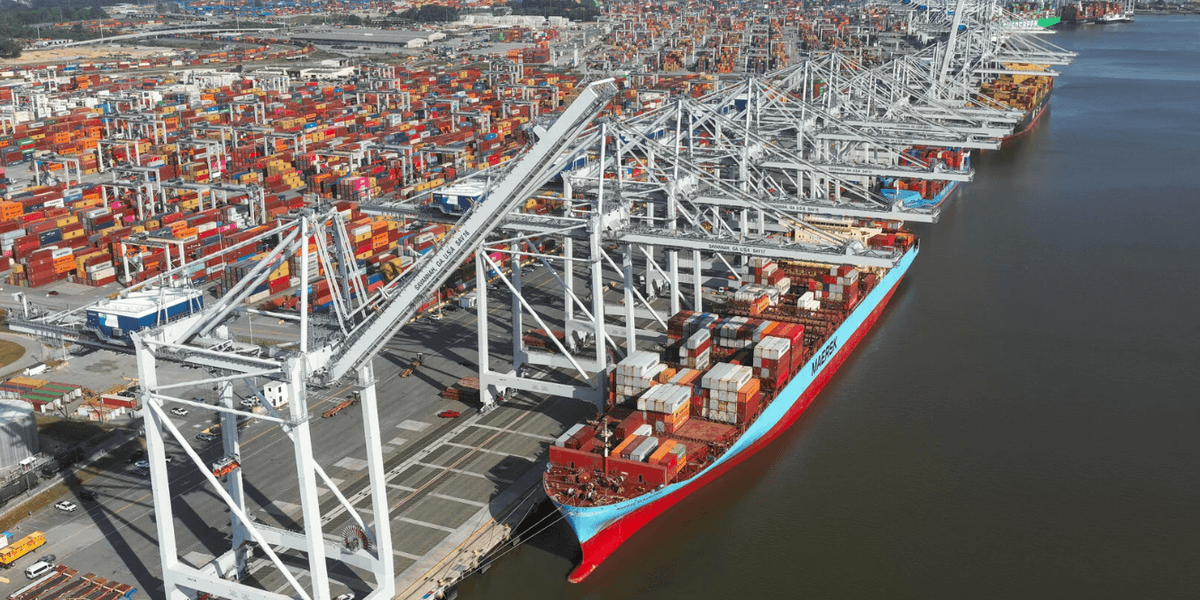
Maritime cargo moving from India to the U.S. east coast has begun moving faster in recent weeks as some shipping lines begin testing a return to the Suez Canal routing instead of detouring around the southern end of Africa to avoid missile threats in the Red Sea, according to the Georgia Ports Authority (GPA).
The extended route became necessary late in 2023 amid attacks on passing ships conducted by local rebels, as regional violence spread in reaction to the war between Israel and Hamas. The risk of missile strikes pushed maritime insurance providers to hike their rates, and container lines responded by passing those new charges on to shippers.
However, Indian cargo is now reaching the Port of Savannah 10 to 14 days faster than it has since those events unfolded. And port officials said the improved supply chain velocity means faster inventory fulfillment and lower inventory carrying costs for cargo owners.
Specifically, GPA said that Maersk has shifted its MECL service from routing around the Cape of Good Hope back to the Suez Canal, cutting the transit time from Nhava Sheva, India, to Savannah to 28 days. The Maersk Denver made the ocean carrier’s first new westbound sailing via the Suez last month, reaching Savannah on August 9.
And ocean carrier CMA CGM is also in the process of returning its INDAMEX service via the Suez Canal. The move will reduce transit time from Nhava Sheva to Savannah by five days and require two fewer vessels to maintain weekly frequency.
“We are glad to see ocean carriers resuming Red Sea transits using the Suez Canal, the fastest and most economical way to link Asia, South and Southeast Asia and the Middle East to the U.S. market,” said GPA Chief Commercial Officer Flavio Batista. “Cargo owners have made significant investments to diversify manufacturing to countries in Southeast Asia and the Indian subcontinent. Now they will be able to enjoy the full benefit of that manufacturing shift with shorter lead times and a more predictable supply chain.”
For companies moving goods from India and other international markets, faster ocean transit is only one part of the logistics equation. GPA said companies are increasingly seeking logistics partners that can position inventory closer to customers and respond to demand with greater speed and flexibility.
