


Retailers are deploying multiple carriers to deliver their packages, delivering lightning-fast delivery times this winter as peak season 2024 is off to the strongest start for e-commerce parcel handling since Covid-19, according to industry statistics from supply chain visibility platform provider Project44.
That success comes as the last mile peak season ramps up, spanning November to January as the year’s highest annual volumes are driven by holiday shopping, returns, and events like Black Friday and Cyber Monday.
Proejct44 measures retailers’ and e-tailers’ performance in managing that rush with a metric called “delivery time,” which comprises fulfillment time—from order placement to shipment readiness, including picking, packing, and upstream transit—and transit time, which is the journey from the warehouse to the customer.
And in November 2024, the average delivery time was just 3.7 days—a 27% improvement from November 2023 and a 33% improvement from November 2022. That reduction shows a long-term trend where delivery times have decreased as online shopping grows and customer expectations rise, the report said. That move has been largely a reaction to Amazon’s standardization of 2-day shipping, which has reshaped the market, pushing companies to optimize processes and enhance satisfaction.
Speed isn’t the only metric that matters, as customer satisfaction and retention also hinge on on-time performance—the accuracy of the initial ETA provided at order placement. Therefore, building and maintaining a healthy e-commerce customer base requires both delivery speed and delivery predictability, Project44 said.
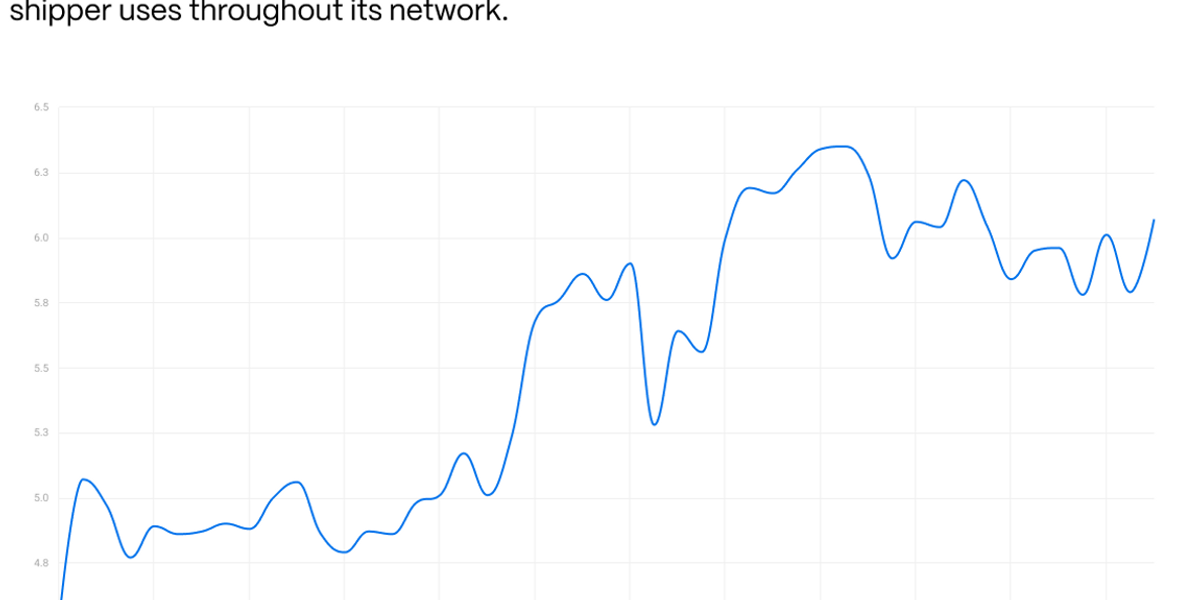
To deliver that performance—while mitigating shipping risks and increasing capacity—shippers increasingly use multiple carriers, the firm said. Counting by the average number of carriers used per account, carrier diversification has risen by two carriers per account since 2021, with a 5% increase between October and November 2024 as shippers expand their networks for peak season. According to Project44, this trend is fueled by the growing availability of smaller carriers like OnTrac, Deliver-it, and Veho, alongside established players such as UPS, FedEx, DHL, and USPS.
To be sure, customers still file complaints about last-mile delivery performance, but complaints about delayed deliveries have dropped 8% since 2022 and are 1% lower than in 2023, Project44 said. The top complaints are: delivered but missing (28%), delayed (28%), carrier complaint (17%), damaged (14%), customer service (%), returned to sender (4%), and incorrect items delivered (4%).
