


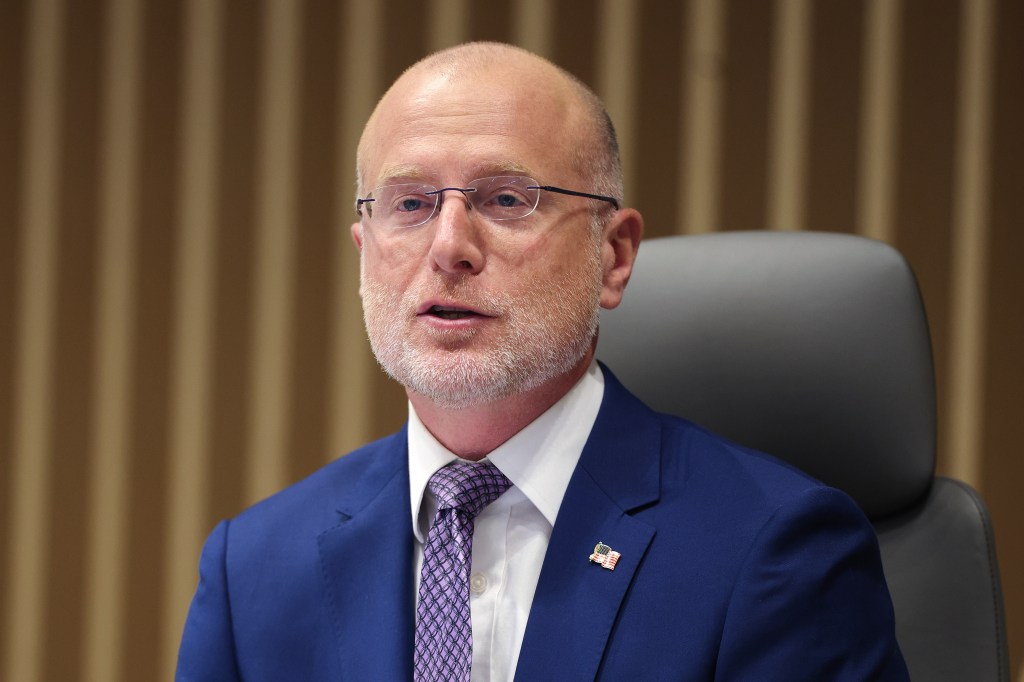
UPDATED: The FCC has launched a new inquiry into the TV ratings system, including whether issues of gender identity are being included in children’s programming without flagging that content to parents.
The proceeding announced Wednesday is the latest scrutiny that the agency’s chairman, Brendan Carr, has placed on program content. In responding to Donald Trump‘s attacks on the media over their coverage of the war in Iran, among other things, Carr has warned broadcasters of their public interest obligations, even though First Amendment advocates note that the FCC’s authority is limited.
Carr posted on X, that “recently, parents have raised concerns with the industry’s approach—including with ratings creep. Specifically, they argue that New York & Hollywood programmers are promoting controversial issues in kids programming without providing any transparency or disclosures to parents.”
“This undermines the whole point of the law and the ratings system parents rely on. The FCC is now seeking comment on whether the industry’s approach provides parents with the types of information and disclosures relevant to them today.”
Congress passed a 1996 law that led to the establishment of a voluntary TV ratings system, as well as the “v-chip” installed in sets so that parents could block objectionable content. They include a host of different ratings ranging from TV-Y for programs appropriate for all children and TV-MA for mature audiences. The system is used by broadcasters, which are regulated by the FCC, and by cable, satellite and streamers, which do not have the same oversight. The order also doesn’t address children’s use of social media, although lawmakers for years have been proposing privacy and other legislation that has largely stalled out.
The FCC’s new proceeding asks for public comment on the transparency of the TV Oversight Management Board, which oversees the ratings, and the accuracy of the guidelines.
But the FCC’s Media Bureau also singled out concerns over content that features transgender and non-binary topics.
In its public notice (read it here), the Media Bureau stated:
“Recently, parents have raised concerns that controversial gender identity issues are being included or promoted in children’s programs without providing any disclosure or transparency to parents. Specifically, the industry guidelines that parents rely on are rating shows with transgender and gender non-binary programming as appropriate for children and young children, and doing so without providing this information to parents, thereby undermining the ability of parents to make informed choices for their families. Consistent with Congress’s vision for the ratings system, we seek comment on whether the industry’s approach is continuing to provide the information that is relevant to parents today.”
Among the questions put out for public comment are, “Are parents aware that children watching programs rated TV-Y, TV-Y7 and TV-G may contain the discussion or promotion of gender identity themes? Should such programming be rated differently or contain relevant descriptions so that parents can make informed decisions?”
The FCC also is seeking public input on whether there is disparity in ratings for different platforms, including whether streaming services are “more broadly interpreting what is allowable in categories intended for audiences under TV- Y14.”
Public comments are due on May 22, and reply comments on June 22. A spokesperson for the ratings board did not immediately return a request for comment.
Carr has been an ally of Daniel Suhr, the president of the conservative legal organization Center for American Rights. Suhr said in a statement, “The national TV networks and big tech companies are conspiring to indoctrinate our kids in woke ideology through media, and they’re doing it behind the backs of parents. Thankfully, President Trump’s FCC is stepping in to make sure parents are empowered with the information they need to ensure their family’s media choices fit with their values.”
Anna Gomez, the role Democrat on the commission, said in a statement, “American families are worried about affordability, access, and rising costs, not whether the TV ratings system has enough warnings about gender identity. The FCC’s own record shows the existing system is working fine. The most recent annual report found only 11 pieces of public correspondence relevant to the board’s work, and spot checks turned up just two instances where a rating actually needed to be changed. This is a solution in search of a problem, and another example of this Commission prioritizing culture war politics over the real issues that affect consumers every day.”
