


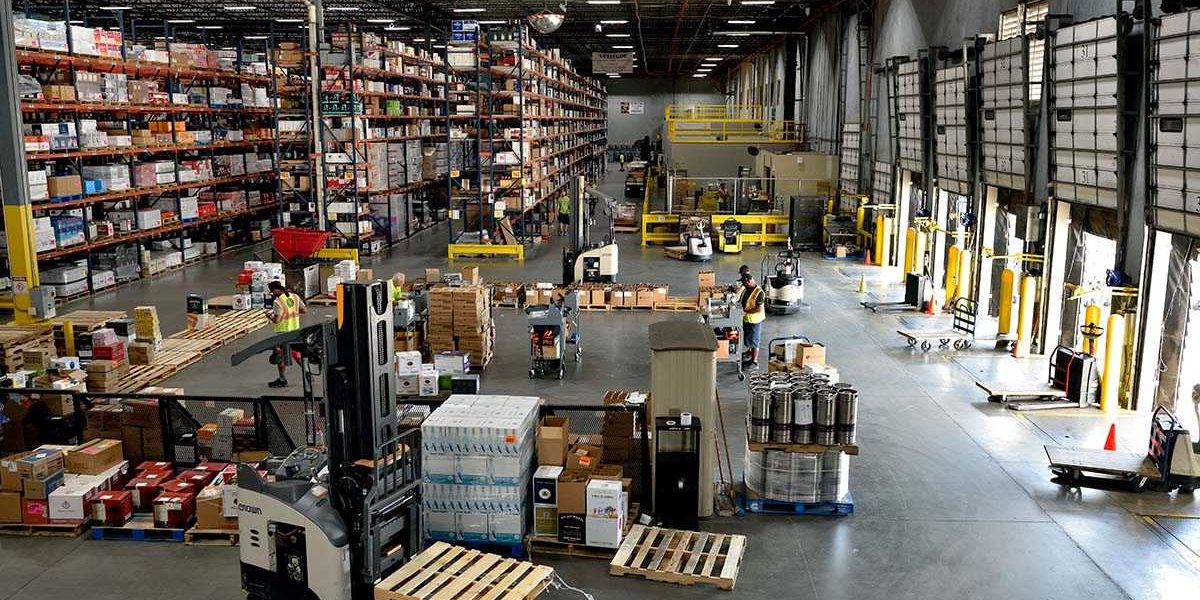
Karli Sage has a passion for solving real-world problems in highly complex supply chains. As the vice president of supply chain management, technology, and engineering for Southern Glazer’s Wine & Spirits, she has helped to propel the prominent alcohol beverage distributor into the digital, robotic age—leading initiatives to implement advanced warehouse automation, inventory-counting drones, collaborative robots, and decision intelligence software.
Yet for Sage, it’s never about implementing technology for technology’s sake or for being on the leading edge of some new trend. Instead, she believes that technology should always serve employees, helping them to respond to actual challenges within the company’s supply chain.
In the following Q&A, Sage discusses her career path and approach to tech implementations as well as what we can all do to encourage more women in leadership positions in supply chain.
Karli Sage, vice president of supply chain management, technology, and engineering, Southern Glazer’s Wine & Spirits
Q: What initially drew you to supply chain as a career?
A: If I’m being honest, I didn’t fall in love with supply chain right away. Early in my career, I found myself working in a warehouse environment, and at first, it simply felt like a job. What started to change things for me was realizing how much I enjoyed being the person who connected things, translating between the systems, the processes, and the teams doing the work.
Over time, what started as a job turned into something much more interesting. I became fascinated with how complex the systems are and how the smallest changes can make them better.
Looking back now, I think that’s what really drew me in: the opportunity to solve real problems, get challenged every day, and see the impact of those solutions immediately.
Q: What keeps you passionate about the profession?
A: One thing I’ve learned about supply chain is that it never really lets you get comfortable. Just when you think you’ve figured something out, the industry changes, and suddenly you’re solving a completely new problem. It’s both challenging and rewarding, and the opportunity to continue learning is what draws me in.
Q: Can you describe your own career path?
A: When I graduated college, I didn’t have a perfectly mapped-out plan. I had a degree, a job offer from a 3PL [third-party logistics service provider], and bills that were about to start appearing—so I took the job.
Looking back, my path feels like a mix of preparation and luck. Maybe preparation creates the luck—I’m still not sure. What I do know is that even when I didn’t know exactly what I wanted to do, I always felt like I was meant to do something big.
In one of my early interviews, someone asked about my ambitions, and I said, completely seriously, “I want to rule the world.” I’m sure they laughed after I left, but they still gave me the job.
At the same time, I always knew I wanted a family. And I realized early on that if I wanted both—a big career and a full life—I needed to build the kind of trust that gives you flexibility. The kind of trust where people know you’ll deliver, no matter where you are, so I worked—a lot. For a long time, my identity became work. I inserted myself into projects, raised my hand for things no one asked me to do, and tried to learn everything I could about how systems and operations function. I think that drive came from wanting to build something—not just a career, but a life that would give my future family opportunities I couldn’t yet imagine.
Over time, those small opportunities turned into bigger ones, and that path eventually led me to where I am today: the vice president of supply chain management, technology, and engineering at Southern Glazer’s Wine & Spirits.
Q: I understand that in that role, you really focus on promoting “human-centered innovation.” Can you explain what human-centered innovation means to you?
A: Human-centered innovation really comes down to remembering who the technology is actually for. In supply chain, it’s easy to get excited about new systems or automation, but if the people using those tools every day struggle to work with them, then the innovation missed the point. Human-centered innovation means starting there. It means designing technology that supports people, instead of forcing people to adapt to the technology.
When you get that balance right, change stops feeling like a disruption and starts becoming a natural part of how the day-to-day evolves.
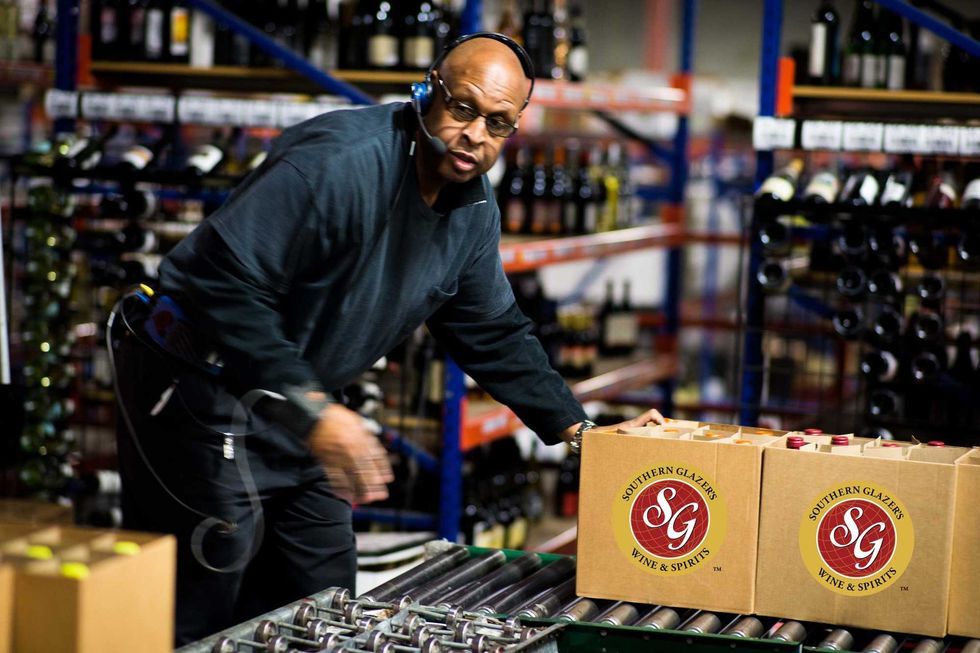
Photo courtesy of Southern Glazer’s Wine & Spirits
Q: What technologies are you most excited about?
A: One area I’m really interested in right now is how decision intelligence is starting to change supply chain operations.
Instead of someone having to constantly watch a screen and react to problems, these systems analyze what’s happening across the operation and dynamically make changes to better the business automatically.
Looking further out, I’m also fascinated by what advances like quantum computing could eventually mean for logistics. Many supply chain problems—things like routing, inventory placement, or network design—involve massive numbers of possible variables. Quantum computing has the potential to solve those kinds of optimization challenges in ways we simply can’t today. We’re still early in that journey, but the possibilities are incredibly exciting.
Q: Could you talk a little about what companies can do to encourage more women to take leadership roles in supply chain?
A: One interesting reality about supply chain is that women are already a major part of the workforce. In the last few years, it’s come out that women make up about 41% of supply chain professionals, but they still hold fewer than 30% of executive leadership roles. So the talent is clearly there. The challenge is creating a runway for them.
One of the most effective things companies can do is make sure women are included in high-impact projects early in their careers, things like operational transformations, technology initiatives, and cross-functional programs. Those experiences build both confidence and credibility.
Mentorship and sponsorship also matter. And those relationships don’t have to come only from other women. Some of the most impactful mentors are leaders who simply recognize potential and create opportunities for people to grow.
Sometimes it starts with something simple—encouraging someone to raise their hand, take on a challenge, or step into a role they might not have considered before.
Q: What advice would you give leaders who want to mentor others?
A: Most of us can point to someone who gave us an opportunity before we were completely sure we were ready for it. That’s really what mentoring is about.
It starts with recognizing something in someone else—curiosity, potential, a willingness to learn—and helping them see it in themselves.
Sometimes that means sharing experience. Sometimes it means asking the right questions. And sometimes, it simply means reminding someone that they’re capable of more than they realize.
Q: What advice would you give someone just starting out in supply chain?
A: Listen. Observe. Learn the work. Spend time understanding how operations actually run. Watch how the people who have been there 10, 20, or 30 years solve problems. Ask questions.
Early in your career, it’s easy to focus on titles, salary, or where you think you should end up. But when you focus too much on those things, you can miss the experience you’re gaining right in front of you. You have decades ahead of you to figure out where your career will go.
What matters most in the beginning is being present, learning from the people around you, and becoming really good at the work in front of you. If you do that well, the next opportunities tend to reveal themselves naturally.
