


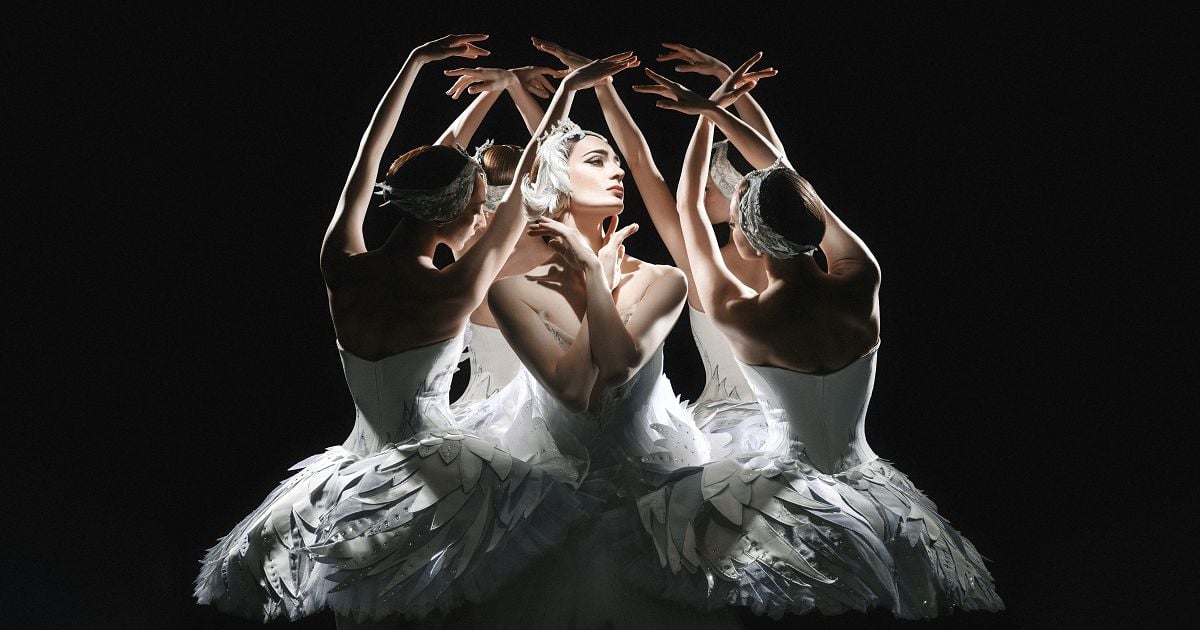
| Lily Hyde spoke with Nina Ananiashvili, director of the State Ballet of Georgia, about the company’s 12-performance run of Swan Lake in London. |
Nina Ananiashvili needs no introduction. An icon of the Bolshoi Ballet, the Georgian dancer made her way to ballet through figure skating and quickly gained the attention of the Moscow Choreographic Institute. She joined the Bolshoi after graduation and, just one year into her tenure, danced the role of Odette/Odile in Swan Lake for the first time.
A ballerina in the purest sense of the word, Ananiashvili thrived not just within the Bolshoi, where she was promoted to the rank of principal dancer, but also in other companies across the world, where she established herself as a star in guest performances.
In 2004, she was personally invited by Georgia’s newly elected President, Mikheil Saakashvili, to become the artistic director of the State Ballet of Georgia, and for over twenty years, Ananiashvili has overseen the company’s development. Today, it is an international tour de force, known for its exquisite classical technique.
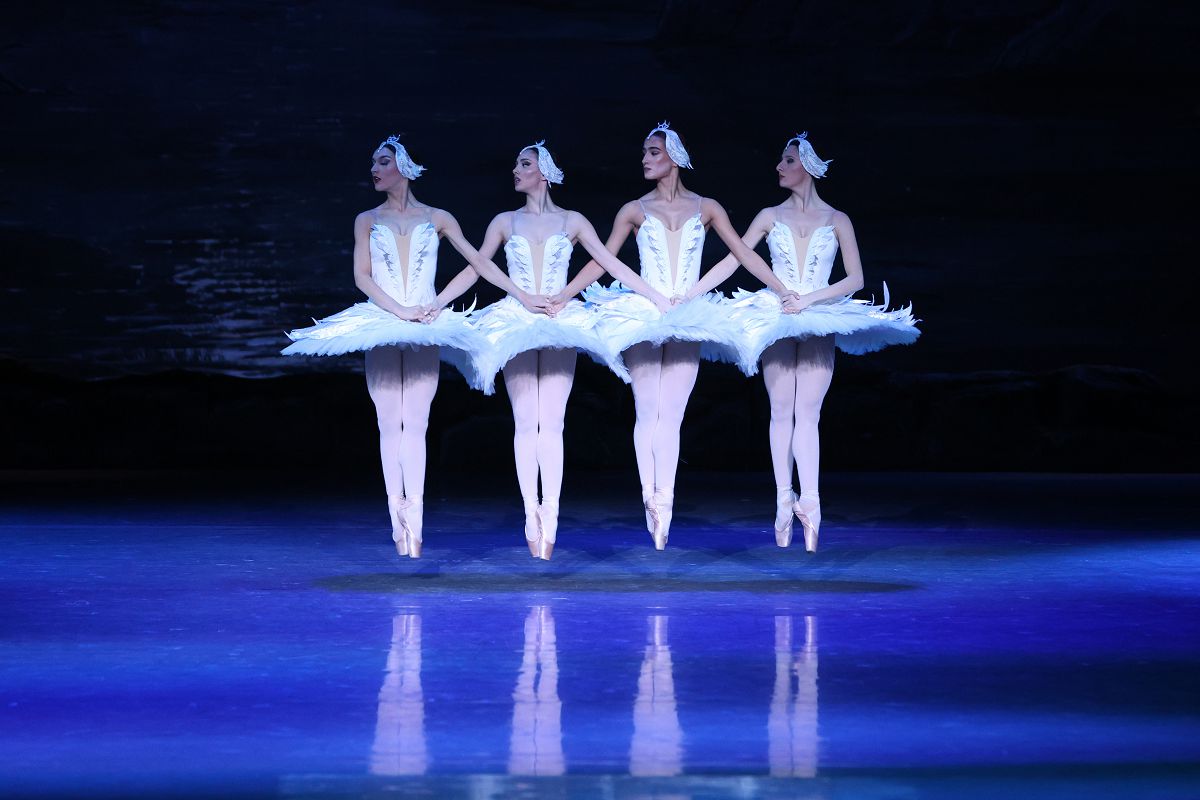
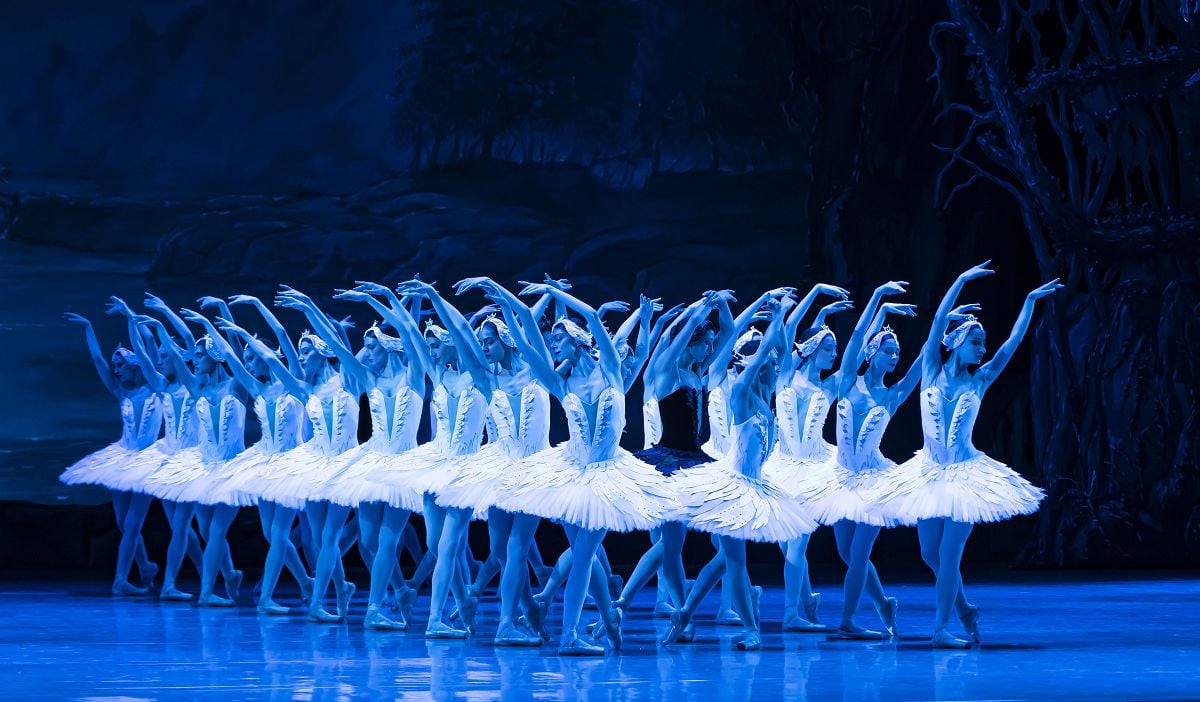
Now, just two years after the company’s inaugural London season, Ananiashvili and the State Ballet of Georgia return to the city with a new production of Swan Lake.
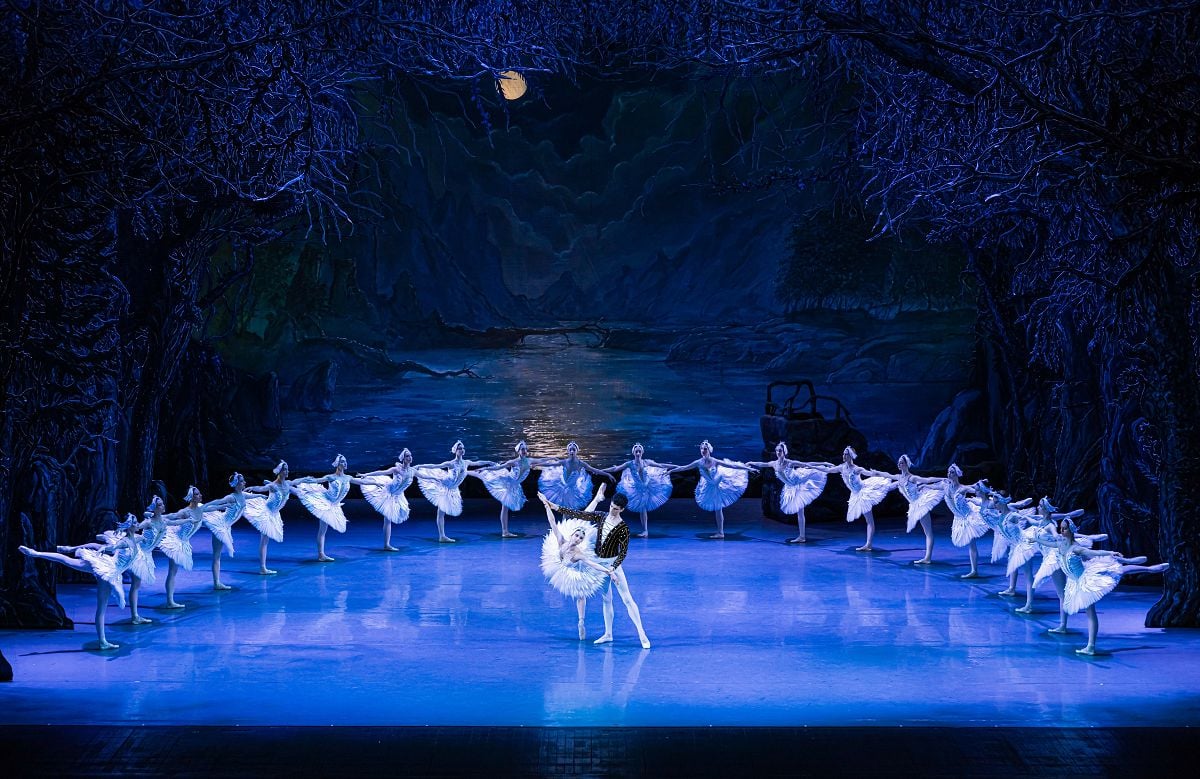
It’s only been two years since the State Ballet of Georgia had a sold-out run of Swan Lake in London. What do you and the company love about performing here?
The news from our producers that they wanted us to return to London with a new production of Swan Lake came as a complete surprise! We had already finalised our plans for the summer break and for preparing a new production for the upcoming season, but without a moment’s hesitation, we agreed, performing miracles of logistical and scheduling acrobatics to make it all possible.
After all, it’s London! A city whose theatrical tradition spans nearly 500 years; one of the world’s true theatrical capitals, with perhaps the most knowledgeable ballet audiences and critics anywhere, outstanding technical crews in every theatre, and magnificent orchestras… Not to mention that a significant part of my own happy career has been closely connected with London and with the great British choreographers, ballet masters, and artists.
The company is now bringing a new production of Swan Lake to London. What are the most significant changes that audiences can look forward to?
Our previous production had served us very well for 22 years and had toured nearly every city from San Francisco to Tokyo. So it was time for a change.
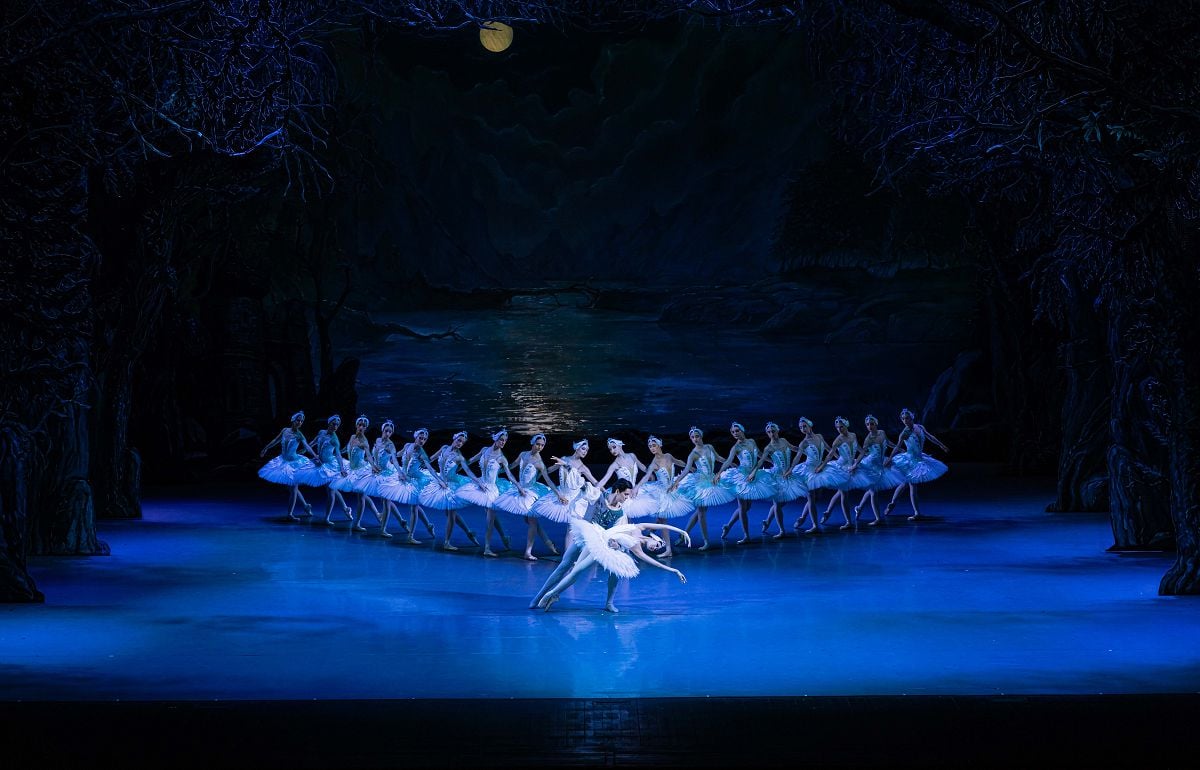
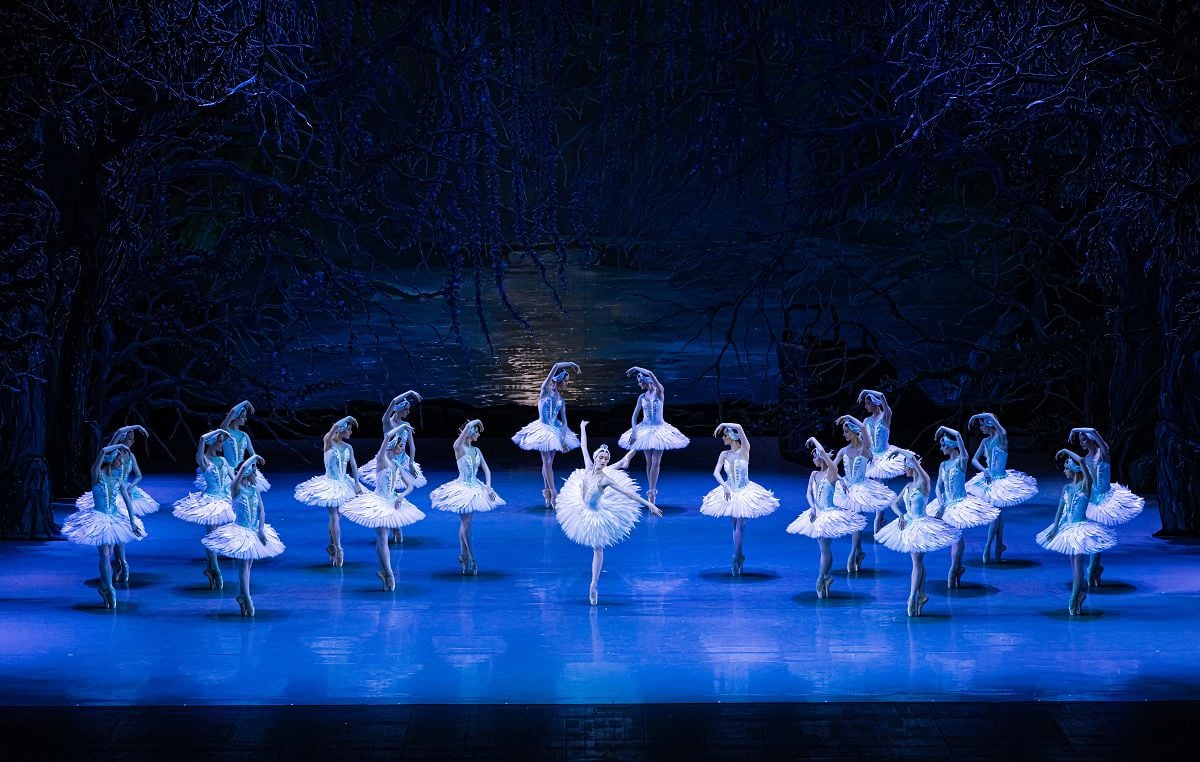
First of all, I asked Kirill Gassilin and David Monavardisashvili to create costumes and scenery that would be as faithful as possible to Germany of the fourteenth and fifteenth centuries. They both dived into historical archives, and, in my humble opinion, the result is nothing short of splendid. I’m now afraid they may leave the theatre and start teaching the history of material culture at a university!
I also wanted to bring more elements of fairy tale into the production. In our turbulent and often terrible times, a little escapism is something audiences may well welcome.
Finally, I went back to my notebooks and revisited everything that Raissa Struchkova, Marina Semyonova, Rimma Karelskaya, Nikolay Fadeichev, and Ben Stevenson told me and taught me about the choreographic details and nuances of earlier productions.

You’ve danced so many versions of Swan Lake during your career. Do you have a favourite?
The one I never danced — Frederick Ashton‘s. I’ve seen everything of it that was available, and my dear late friend Anthony Russell-Roberts and I often spoke about this masterpiece.
Are there any aspects of those productions that you’ve tried to incorporate into this new version?
Yes, above all from the pre-war Bolshoi productions, though not exclusively. You know, a great deal of the future lies in the past… As one genius wrote: “The past isn’t dead. It isn’t even past.”
Are there any elements of the story that you’ve explored in greater depth?
Yes, to emphasise the fairy-tale aspect a little more.
You’ve spoken about rejuvenating the choreography for this production. What are some of the changes you’ve made?
To answer that question properly, I’d need much more space! Suffice it to say that we have restored some sequences of steps that had gradually been lost or softened over time.
The ending of Swan Lake is one of the most widely interpreted endings in the ballet repertoire. Can you give us any hints about how this production ends?
With love and hope — two things we seem to have less and less of these days.
Odette/Odile was one of your signature roles as a principal ballerina. Were there any particular decisions about these characters that shaped your performances?
For me, the key has always been to make Odette the embodiment of pure femininity, sorrow, refinement, and forgiveness — but never weakness. She is not a simplistic cardboard figure fluttering her arms; in many ways, she is a poetic metaphor for a woman.
Odile, by contrast, should be explosive, feminine, bold, daring and wicked — but never vulgar. You know, without steam coming out of her nostrils.
Did you have a favourite of the two roles?
No, no. One simply cannot exist without the other. Even when I performed only Odette or only Odile at gala performances, I was always left with a strange sense of incompleteness.
And did you have a favourite Siegfried?
Every ballerina does! Here are my beloved Siegfrieds, more or less in chronological order: Alexei Fadeechev, Andris Liepa, Julio Bocca, Sergei Filin, and Andrei Uvarov.
You first danced Odette/Odile as a teenager. How did your interpretation change as you matured both as a dancer and as a woman?
Quite honestly, I’ve never analysed it in precise terms. It all happens subconsciously, doesn’t it? There is such a difference between the feelings and understanding of a nineteen-year-old girl and those of a married woman — and later, of a mother.


Is there any particular advice you’ve given your principal dancers about these roles?
Apart from the countless professional, technical, and theatrical notes, I always tell them that our art is built on the ethics of daily, hard, and often painful work, regardless of how much talent one possesses. In the end, everyone receives what they have earned — or what they have chosen to settle for.
In addition to the dancers of the State Ballet of Georgia, you’ve invited exciting guest artists, such as Chloe Misseldine from American Ballet Theatre [ABT] and Oleg Ligai from Lithuanian National Opera and Ballet Theatre. What drew you to these dancers?
Chloe belongs to the first generation of children of my colleagues from ABT — ABT has always been, and remains, a family in many ways — and I have followed her success as though she were my own daughter. Chloe is a star, blessed with every quality an outstanding ballerina should possess, and I believe she will become a true superstar as soon as ABT resumes performing internationally.
Oleg joined our company shortly after the war in Ukraine began and quickly became a valued member of our roster. We try to stay in touch with him and with all our former dancers because we are a family company as well.
You’ve now been the company’s Artistic Director for more than twenty years. What have been the greatest challenges?
Representing my Fatherland, Georgia, and carrying on my shoulders the responsibility for so many immensely gifted young artists.
And what have been your proudest achievements as Artistic Director?
That we are appreciated and sought after far beyond Georgia because of our artistic integrity and the quality of our work.
What are you and the company looking forward to next?
The same things every ballet company looks forward to: another season, performances at our 175-year-old theatre, a couple of new productions, tours to Italy, the USA, Canada, Turkey, and several other countries… and perhaps, finally, finding a resident choreographer, whether from within our own ranks or from abroad. That would represent another significant step in our artistic development.
The State Ballet of Georgia will perform Swan Lake at the London Coliseum from 17 to 26 July 2026.
Related
Lily Hyde is a cultural and dance writer based in London. Her writing has appeared in The Fence and The Creative Independent, and she runs the cultural newsletter, Falling Upwards. She is currently writing her first novel.
