


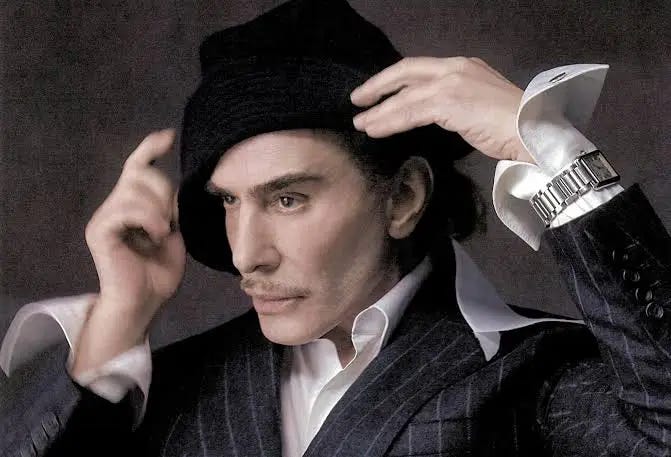
This morning John Galliano withdrew from his own Met retrospective. “John Galliano: Horizons” was announced in July as the Costume Institute’s spring 2027 show.
Not soon thereafter, the New York Times reported the backlash. A major donor called for cancellation, followed by the politicians. Three days later Galliano announced on his Instagram that “it is best for the exhibition not to take place at this time.”
The Met for it’s part never cancelled the show. It let the pressure build until the artist cancelled himself, then praised his bravery.
Anna Wintour called his decision courageous, I for one, have mixed feelings.
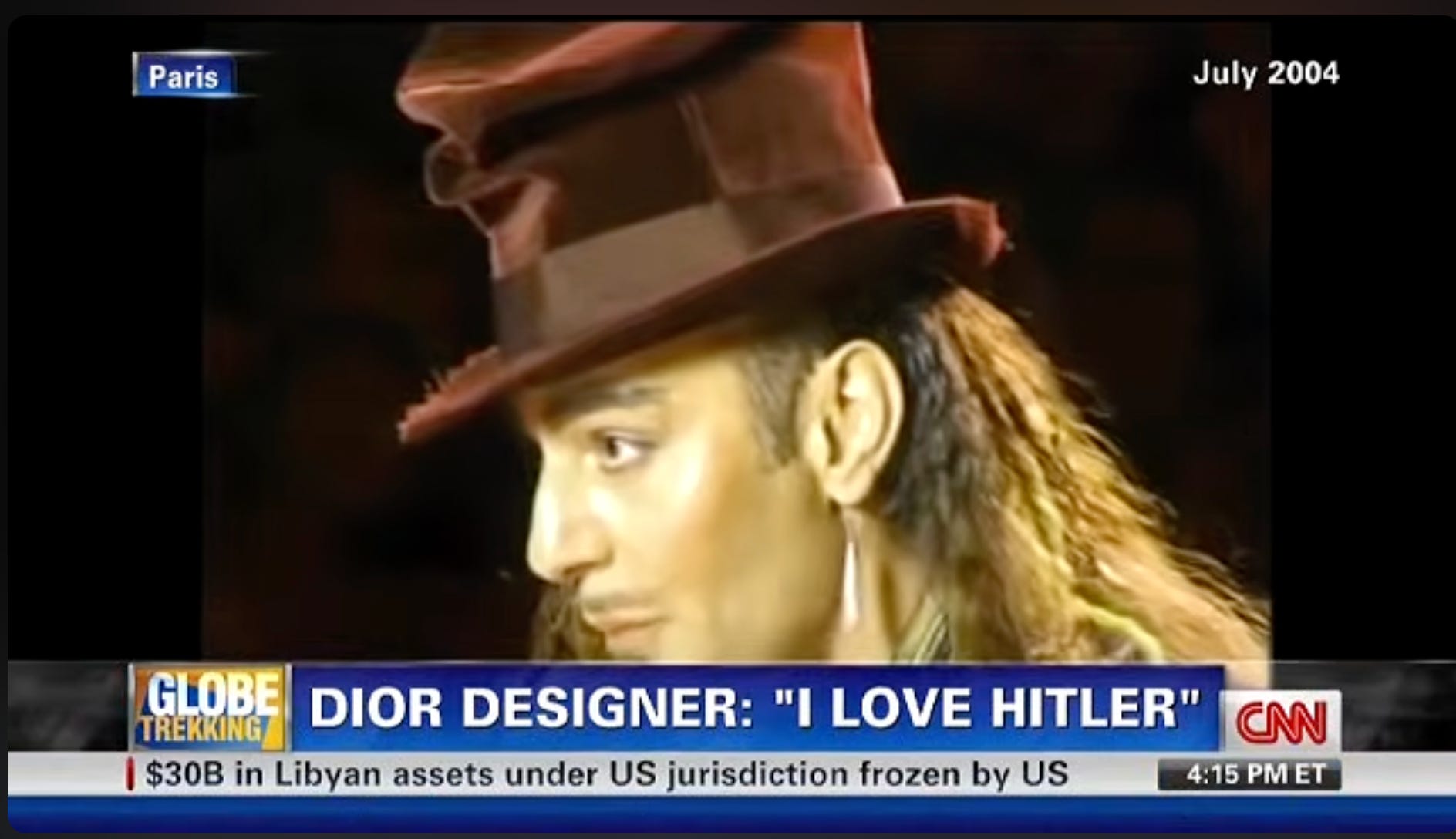
Start with the facts. Galliano said some absolutely horrible things. In 2011 he was caught on video in a Paris café saying he loved Hitler. A French court convicted him of hate speech. Dior fired him. France stripped his Legion of Honour.
Also true: he is one of the most important designers of the last fifty years. He was the first British designer ever to lead a French couture house. His fifteen years at Dior that defined an era, and unlike most disgraced men, he did the work to repair his image. He went to rehab, sought public accountability. Even the ADL endorsed the redemption arc.
Galliano’s story is complex and frankly the verdict is out; and that is exactly the kind of subject our museums can’t tell. Museum exhibitions have two speeds: celebrate or cancel. They were either going to celebrate Galliano or not, there wasn’t room or capacity to tell a more nuanced story.
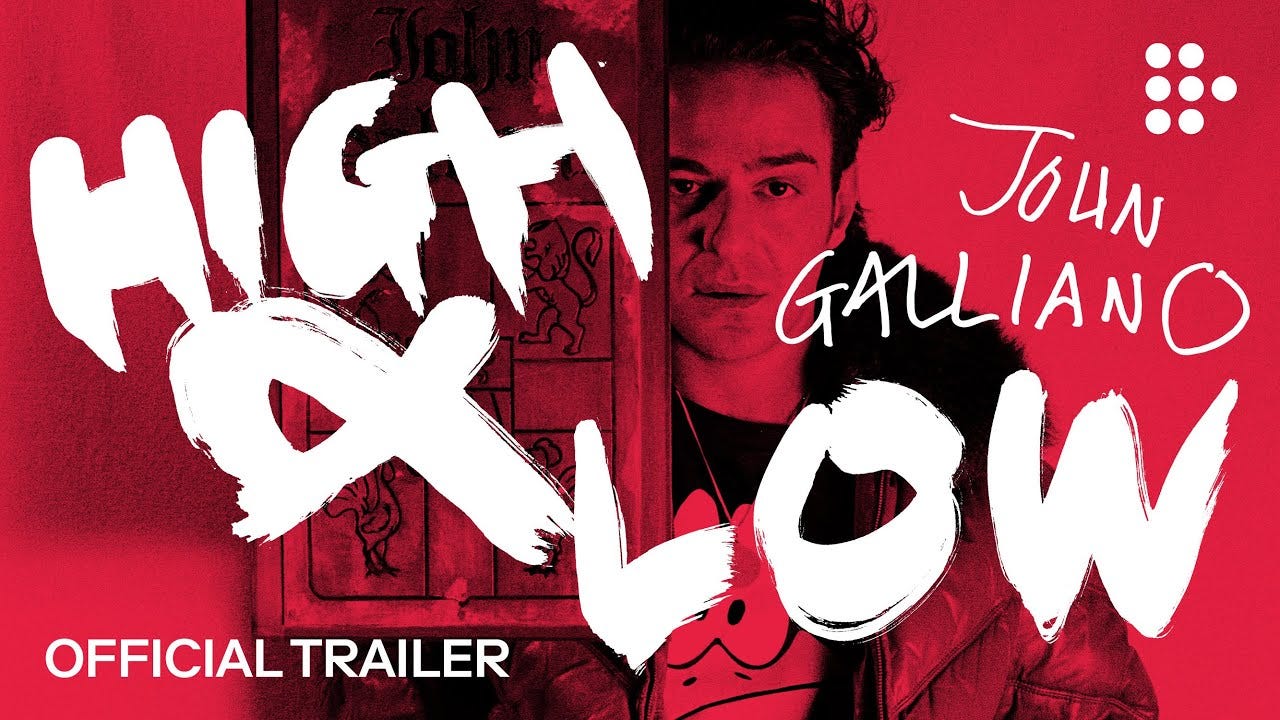
Other mediums have that gear, in fact that’s where they exist. Take Kevin Macdonald’s documentary “High & Low,” which covers Galliano’s life and legacy. The filmmakers get Galliano on camera and they interrogate him. They play the rant and show the runway shows, they interview the people he abused. His collaborators testify to the genius and the chaos he created and Macdonald never resolves the contradiction for the viewer. The film played festivals, got reviewed, streamed everywhere. Nobody demanded it be pulled, because a documentary about a person is assumed to be critical. Why museums can’t do this is what’s interesting to me.
So is this a limitation of the medium? Is it impossible to tell a complex story in an exhibition?
I’d like to say, “no.”
And yet, at the Met there are three structural reasons nobody will build it. The Costume Institute is the Met’s only curatorial department that has to fund itself. The gala is its budget, a record $31 million last year. And donors, as this week proved, hold and will exert a veto. The retrospective and the party are one product. You cannot throw a $31 million party around an ambivalent or complex exhibition. Nobody buys a table at a reckoning.
I’ve felt the same gravity in my own work. The Museum of the American Revolution genuinely tried to complicate the story. It elevated women, Oneida allies, enslaved and free Black soldiers, but the centerpiece of the experience is George Washington’s war tent, and the big picture remains the heroic story of the founding.
And more than once we’ve passed on RFPs from a presidential library and historical site because the brief was such a simple celebration of legacy that there was no version of the project we could honestly build.
Here is the exhibition I’d want to build. Steal the structure from documentary film. I’d show the gowns and keep the full spectacle. The work is beautiful and important. But I’d also include the context, the café footage, the court transcript, the statement Dior put out when they fired him. I’d include the people he hurt on camera, and the people who let him back in, contradicting each other.
I’d also include Galliano in his own words, which are not always consistent. I’d present the atonement and leave the hard question open. I’d let Galliano present as complex and contradictory. Let it be a little messy.
None of this is radical. A decent documentary editor makes these moves every week, usually with less material than the Met had. When documentarians don’t do this, they are called out. What it actually requires is narrative craft and institutional nerve. I truly don’t think the medium is the problem.
But let’s be real, this won’t happen and it ladders up to how museums are funded. Museums are designed to honor, not critique. Donors underwrite celebration. Nobody endows a wing to say “it’s complicated.” That’s why the critical museum barely exists as a category. I’d rather build a Howard Zinn People’s History Museum than rehash a heroic retelling of our glorious past, but I have no idea how that gets funded.
Which brings me back to Galliano, because he was the perfect test case, and that is what makes this week so deflating. Not a monster hiding from his past but a convicted man who spent fifteen years publicly atoning, whose atonement the ADL formally accepted, with the rants on tape, the reckoning already filmed, and the subject willing to stand in the room. If a museum can’t hold that story, it is stuck in “honor mode.”
The Met had a chance to prove the medium can do what film already did with the same man. Instead the donors flinched, the artist withdrew, and the institution called it courage. Two speeds. Celebrate or cancel. Galliano got canceled.
