


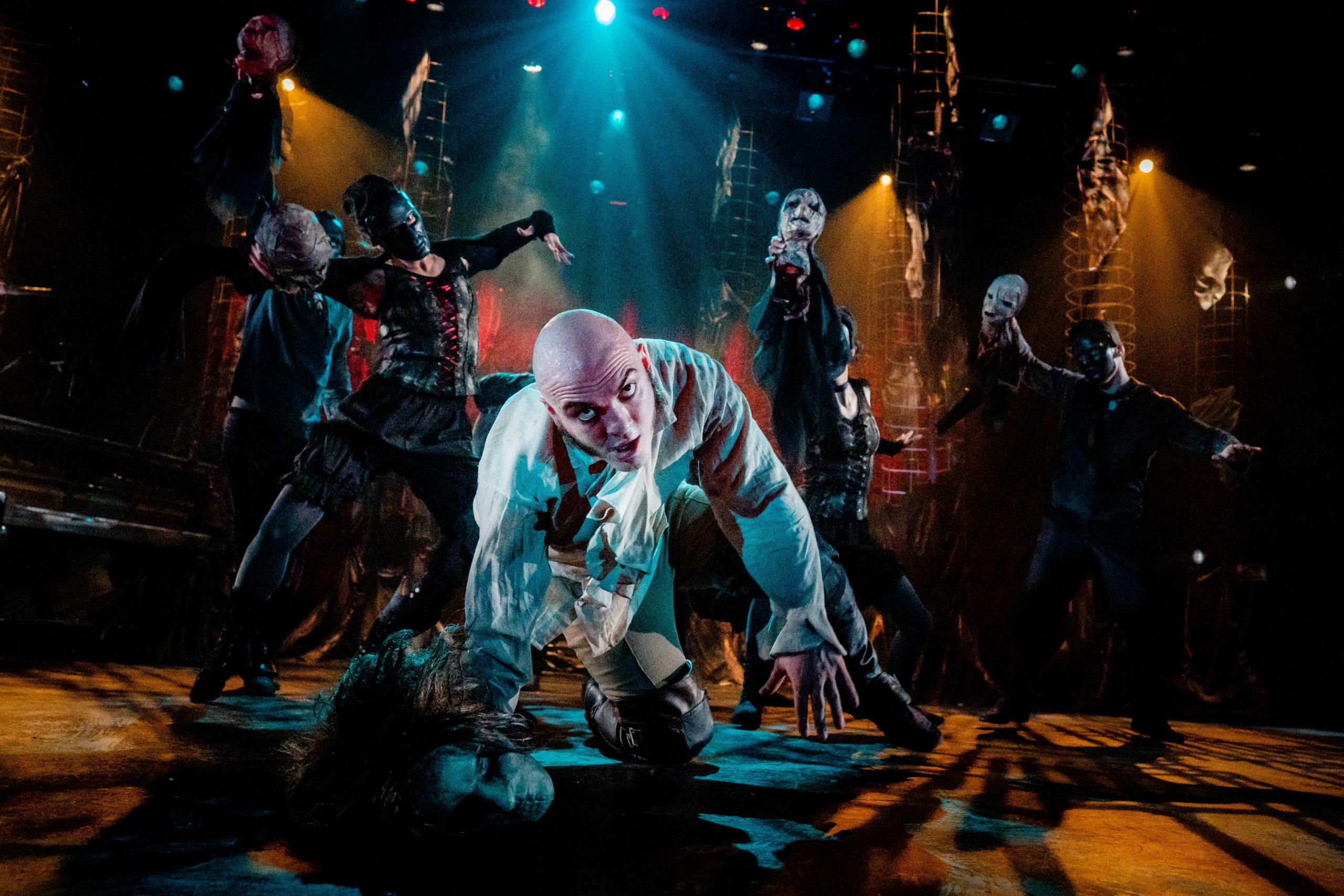
Putting together a theater season is like three-dimensional chess, a game of calendaring, budgeting, and logistics nonprofits play long before the lights go up on their first show. Three years ago, City Paper spoke to area theaters about gaming out their 2023–24 season at a time when pandemic-era financial relief was drying up but audience turnout was nowhere near pre-pandemic levels. One source called it the hardest season he had ever planned.
Fast-forward to the nascent 2026–27 season, and by some metrics, the field is making a slow but steady recovery. At Round House Theatre in Bethesda, the ground hasn’t felt this firm in years. “We have reached the point now, I feel, that we can start to accurately predict sales post-pandemic,” says managing director Ed Zakreski. His days relying on pre-2020 data in a post-2022 world appear to be over.
Likewise, Signature Theatre in Shirlington can point to big recent hits: Last season’s Fiddler on the Roof and Pippin were the company’s highest-grossing, best-attended shows ever. Yet managing director Maggie Boland knows better than to plan for more of the same. “To assume that every show we put in that Thanksgiving to Christmas time slot is gonna perform the way Fiddler did, or every show that we run in the spring is gonna perform like Pippin did, that would be me not doing my job,” she says.
While season planning is never a sure bet, Zakreski and Boland count their institutions among the lucky ones. When Round House had a $20,000 grant pulled by the National Endowment of the Arts as part of a wide-ranging clawback in May 2025, staff reached out to their audience and immediately started bringing in donations. By the end of their annual gala later that month, Round House had turned that $20,000 loss into a $180,000 gain. Post-pandemic, other, often smaller companies have not been so lucky: 4615 Theatre Company, for example, closed in December 2023.
But even the lucky ones have had to make sacrifices. Since 2023, Round House, among others, has eliminated full-time positions to balance the books. And the demise of Source Theatre in 2025 put pressure on small local companies to find new venues. Across the country, theaters are banking on surefire hits like Les Misérables (Olney Theatre Center will produce it this fall) to bring in money and exploring mergers to maximize resources.
Whatever their circumstances, at the end of the day, all theaters have to program a season that affirms their mission. Each has to do it while working within its limitations—or joining forces with others to do something greater.
On Missions, Management, and Milestones
For some, the mission question is easy to answer. Grupo de Artistas LatinoAmericanos, otherwise known as GALA Hispanic Theatre, for example, was founded to serve the city’s large Latino population. For artistic director Gustavo Ott, that built-in audience is an asset in a landscape where so many others are trying to find their place.
That GALA’s primary audience overlaps with the primary target of the Trump administration’s immigration crackdown is lost on no one. Fear and anger have seeped into the company’s “words of the season” exercise, in which Ott and his team settle on key terms to guide their selections. Among the words offered up this round: attacked, persecuted, betrayed.
This season responds to that prompt by staging what Ott calls “a confrontation between the traditional and the new.” It includes two of Ott’s own works: the world premiere of Garbo: El Actor Que Salvó El Mundo, about a real-life double agent thwarting Nazis in World War II, and Ott’s adaptation of Gabriel García Márquez’s novella El Coronel No Tiene Quien le Escriba. Also in the lineup: Pancho Villa and the Children of the Revolution by Antonio Zúñiga, and Francisco Pedreira and Elena Zago’s La Odisea Contada Como Sea, a pair of “GALita” plays for young audiences that Ott proudly counts as the most political entries of the 2026–27 calendar.
This season will also introduce the Nueva Era: New Play Festival, featuring readings of new works in English and Spanish by Latino playwrights from around the country. When City Paper spoke with Ott, the submission window had been open for 24 hours and they’d already received 30 entries. “We didn’t expect that many, I’m going to be honest with you,” he says with a laugh. GALA plans to make the festival a regular season feature.
While GALA exists to serve a community, Shakespeare Theatre Company and Folger Theatre exist ostensibly to serve a legacy—a task they’re approaching in radically different ways. As in recent seasons, STC is once again putting a star of the screen, rather than the Bard himself, front and center: This month, Brian Cox headlines Oliver Cotton’s drama The Score. Of course, William Shakespeare has his obligatory two plays (A Midsummer Night’s Dream and Romeo and Juliet), with Vanessa Severo’s Frida … A Self-Portrait and Lorraine Hansberry’s A Raisin in the Sun also on the docket.
Folger, on the other hand, is keeping it strictly Shakespeare this season with Measure for Measure, Hamlet, and The Comedy of Errors. According to a statement from the Folger Shakespeare Library, it’s part of an effort by Library director Farah Karim-Cooper, Ph.D., to “[re-center] Shakespeare on the stage of Folger Theatre” and “promote how Shakespeare and the humanities are the best possible tools for creative thinking and critical literacy.”
The move is something of a departure from Folger’s recent seasons, which featured new plays inspired by Shakespeare’s work among productions of the classics. According to the statement, conversations about the shift between the theater’s artistic director Karen Ann Daniels and Karim-Cooper began soon after the later’s arrival in late 2024. Planning for 2026–27 season was finalized by Beth Emelson, serving as interim director of artistic programs while Daniels is on leave.
Far from cleaving to a particular group or creator, Round House positions itself as “a theater for all.” For artistic director Ryan Rilette, that mission correlates directly to where it’s based. “There are four cities within … Montgomery County that are the most diverse in the entire nation,” he says. “One of the things that’s really important is that everyone can see themselves on our stage. Period.”
Opening the season is Ma Rainey’s Black Bottom by August Wilson (“America’s Shakespeare,” says Rilette), co-produced with Olney. Also included are Alex Lin’s Chinese Republicans, the world premiere of Beth Hyland’s Baby Shower Katie (directed by Jessica Fisch as part of the Bonnie Hammerschlag National Capital New Play Festival), and Sean Daniels’ autobiographical piece The White Chip.
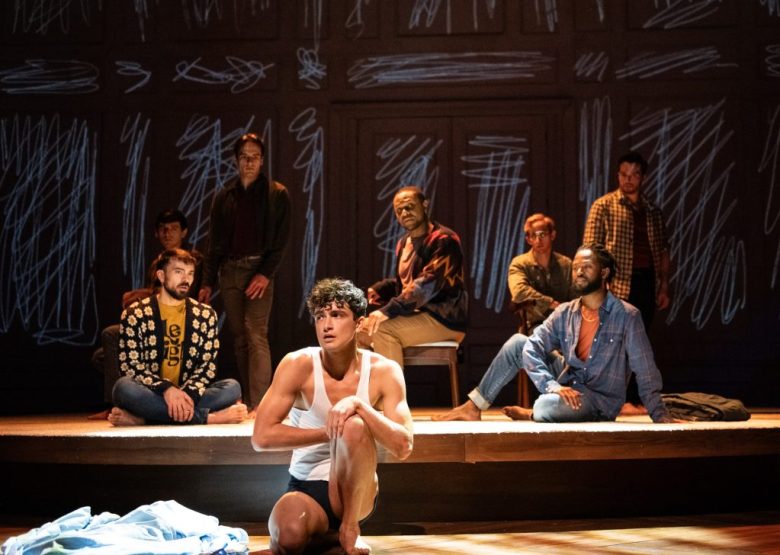
It’s a special year for Round House as it celebrates its 50th season. Rilette has used it as an opportunity to recall stars from the theater’s past and embrace unexpected connections. For its production of Leslye Headland’s dark holiday comedy Cult of Love, he coaxed onetime company member Jane Beard out of retirement. Daniels, meanwhile, grew up going to Round House as a child—something even Rilette didn’t know.
Zakreski is quite familiar with this territory, having been on staff for major anniversaries at the Kennedy Center, STC, and the Bach Consort. Rather than banking on lavish productions, he instead came up with 50 for 50, a series of free previews, education programs, backstage tours, and readings of plays from Round House’s backlog designed to welcome audiences in with a low barrier to entry. While the company had to raise nearly half a million dollars to pull it off, Zakreski sees it as an investment in community, something he thinks will distinguish which companies thrive over the next 20 years.
By co-producing its opener with Olney, Round House is leaning on a proven partnership with its Montgomery County neighbor. The pair joined forces most recently when they co-produced Fela! to close the 2022–23 season and Ink to open the 2023–24 season. This reciprocal model, in which they partner on two productions—one hosted by each theater—is rare in an American landscape filled with co-productions. According to Zakreski, this method has consistently resulted in a cross-pollination of subscribers and donors, benefiting both theaters.
Two other area theaters are trying something similar: Signature Theatre and Shakespeare Theatre Company, which will co-produce Stephen Sondheim and James Goldman’s musical Follies next spring. Signature’s 26–27 season opened with Merrily We Roll Along, another Sondheim piece, before continuing with a mix of musicals like the world premiere of Benjamin Scheuer’s one-man show A Mountain for Elodie and the satire Urinetown, and plays including John Leguizamo’s Latin History for Morons and Ngozi Anyanwu’s The Monsters.
It’s no surprise Signature’s lineup is packed with musicals and bookended by Sondheim. “He was a writer who championed the expansiveness of what we do,” says artistic director Matthew Gardiner, who honors the theater’s association with the legendary composer by programming seasons that showcase the breadth and depth of musical theater rather than churning out crowd-pleasing hits like what he calls a “musical theater barn.”
Most players in the theater world will tell you that musicals are expensive to produce but tend to pull in crowds and therefore money. While Signature specializes in musicals, the largest of its two stages, the MAX, only sits between 275 and 300 people, and its packed season calendar makes extending a run virtually impossible. That means there’s a cap on how many butts it can put in seats; with last season hitting an impressive average occupancy of 93 percent, the company had to find another place to stage Follies in order to pull in a big enough audience to offset the cost of a massive cast of 30 actors. Enter STC’s Sidney Harman Hall, which seats more than 750.
Signature’s stages accommodate a variety of seating arrangements—great for artistic innovation but challenging when it comes to predicting sales. Theaters with fixed seating can deploy heat maps to determine which tickets sell when and for what price; that’s not the case at Signature, where the map changes show to show. That, combined with its limited inventory of seats, means the only surefire way to increase earned income is to increase ticket prices, which in turn means if Signature wants to maintain financially accessible seats, including its $25 student tickets, it has to fundraise to do it.
Artistic Leadership, Body, and Soul
Leveraging contributed income in the form of grants and donations is how theaters maintain a measure of accessibility, not to mention chase big ambitions. Few are showing more ambition than Woolly Mammoth Theatre Company, which will kick off new artistic director Reggie D. White’s first full season with a slate of world premieres. It opens with Steve Yockey’s Venus before debuting works from Max Posner, Kate Cortesi, Matt Schatz, and a.k. payne.
Premiering a play means not only gambling on an unknown quantity but often committing funds to prerehearsal development. While White does not expect every play to arrive in perfect shape—as a mentor once told him, “a play is never finished, just abandoned”—he worked with each playwright to determine what support they required (often some version of a workshop or just paid time to write).
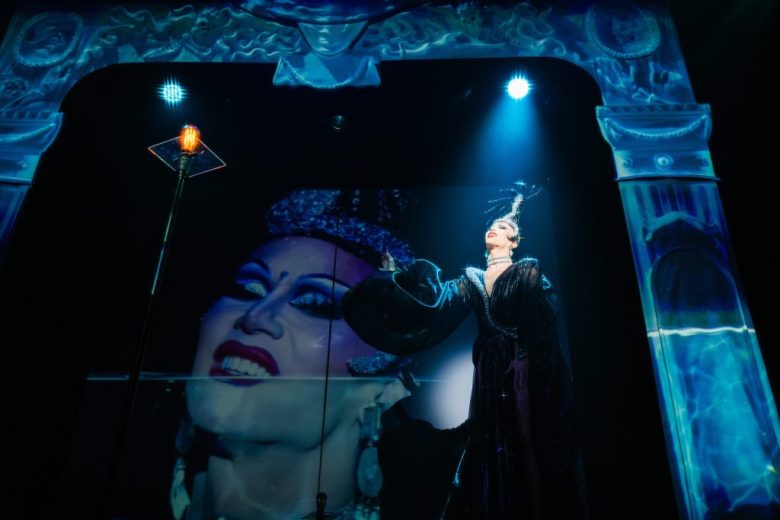
One playwright, however, made a special request: a few extra weeks of rehearsal, with all the labor that entails, to “try something extraordinary,” says White, not naming which show. “I really believed in the idea. After I cried to see how much this thing was gonna cost, we went out and we found the funding for it.”
Though planning and fundraising for a full season while settling into the role has made what would have been 12-hour days into 17-hour days, White is glad to not have to wait around to show his vision. Most artistic directors, he explains, don’t get the chance to helm their first season, but instead oversee a run planned by their predecessor. “The invariable question [when you’re introducing yourself] is, what kind of art excites you?” he says. “It’s nice that I don’t have to say ‘stick around for 18 months.’ I get to say, ‘Come see it next week.’”
For all the aesthetic and communal qualities that may be associated with a theater, no one has more power over its output than the artistic director. (White describes his job as interpreting Woolly’s mission through his very body and soul.) The bond between institution and artistic leader is meant to be tight, which means navigating change can be fraught.
This year, two of D.C.’s most renowned theaters are facing the challenge of securing new leadership. After 17 years, Studio Theatre’s David Muse will depart at the end of the 26–27 season, which features plays by the likes of James Ijames, Sanaz Toossi, and Joshua Harmon, all of whom previously had hits at Studio under his tenure. Muse’s departure is a move so big it was announced two years in advance.
Across town, Arena Stage will soon begin its search for a new artistic director following the abrupt resignation of Hana S. Sharif in June. Sharif described her departure from her self-professed dream job as a difference in vision between her and the board of directors, but it quickly became the subject of intense controversy, inspiring critiques of everything from the persistent failure of predominately White institutions to support artistic leaders of color to Sharif’s aptitude and alleged toxicity.
Regardless of the causes, Sharif and Arena parted ways with the upcoming season seemingly unfinished. The first few entries, introduced under the moniker “Act One,” feature the world premiere of Step Afrika!’s The Fruits of Our Labor, Benjamin Halstead and Nikko Benson’s Nikola: A New Musical, a just-announced run of Eric Bentley’s Are You Now Or Have You Ever Been?, and Branden Jacobs-Jenkins’ Tony-winning hit Purpose. There’s no word on when the unveiling of the season’s second half will happen. Both Sharif and Arena leadership declined to comment for this article.
One leader who has no plans of stepping away soon is Paata Tsikurishvili, founder and artistic director of Synetic Theater. The Arlington-based company is molded in its founder’s image: a physical theater collective with dozens of athletic, visually spectacular, almost entirely nonverbal shows in its repertoire.
Like Round House, Synetic is celebrating a milestone anniversary. Its 25th season opened in August with a brief remount of The Immigrant, based on the film by Charlie Chaplin. Tsikurishvili, an immigrant from Georgia, described the piece “like layering my personal story under Chaplin’s skin.” The company will return to Chaplin’s catalog with a new adaptation of The Gold Rush, present a “newly imagined” Pinocchio, and remount its versions of Sleepy Hollow (at Olney) and The Snow Maiden.
Unlike “conventional” theaters, which typically stage new productions of different shows every season, Synetic regularly dips into its repertoire. This is partly because developing new work in their model is time-consuming (8 to 10 weeks, compared with 4 to 5 for a remount) and depends on having at least a majority of a cast already trained in the company’s physically demanding style.
Synetic’s method also requires access to space where cast members can train, rehearse, and perform. After being removed from its longtime home in Crystal City in 2024, the company now uses Arlington civic facilities, including Thomas Jefferson Community Theatre. Despite enjoying the community theater’s size and the depth of its stage, Synetic has made a point in recent seasons of workshopping and presenting at other venues, including Theater J and STC.
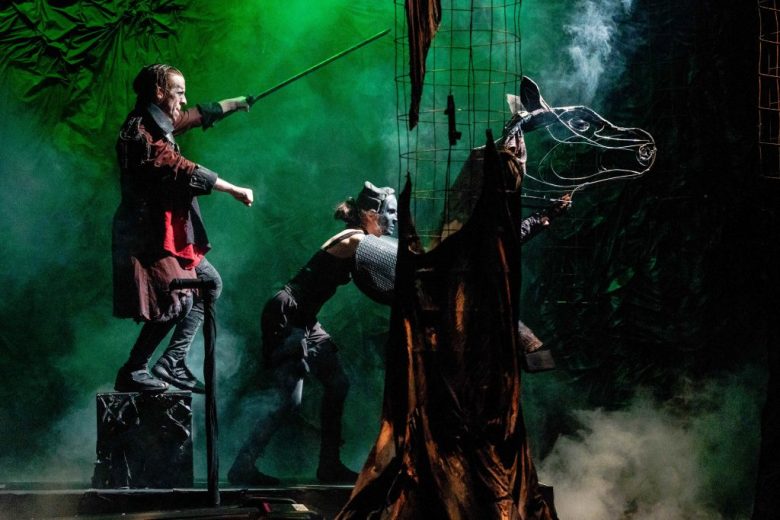
“One of the things that we found is we have great partners,” says managing director Ben Cunis. “When we focus on what we do best and the core identity of the company, great things tend to happen, and we tend to bring the best of our work to our partners.”
Safety in Numbers
Partnerships are also a key tenet of Spooky Action Theater’s season, which includes three productions: Hannah Khalil’s Hakawatis: Women of the Arabian Nights, presented in association with Solas Nua; Michael Pemberton and Andrea Pemberton’s Shakespearean musical adaptation Father Lear, co-produced with Avant Bard; and Gaby FeBland’s puppet play The Undercity, presented in association with La MaMa.
While a Shakespearean adaptation is something of a departure for Spooky Action, the co-production of Father Lear is an example of what artistic director Elizabeth Dinkova likes to see in a partnership. “I think that we are starting to prove within the context of D.C.—and it is one of my passions to prove this—that we can be connectors of resources and organizations in ways that are surprising, and that allow us to do things that are much bigger and much more ambitious than we might be able to do if we were alone,” she explains.
Spooky Action is a great example of the “sharing is caring” ethos that has helped theaters large and small ride out a recent wave of economic challenges. That extends to its home in the basement of the Universalist National Memorial Church, where it’s been since 2010. The company took on the cost and labor of converting the space into a black box theater after taking up residence in exchange for first access to the production calendar. Over the years, the company has formed a strong relationship with the church (their pastor is a season regular) and other organizations that use the space, including food bank Food for All.
Under Dinkova’s leadership, Spooky Action has also sought to fill the calendar with work by other cultural organizations. Their venue is zoned for only 96 performances a year, and according to Dinkova, it finally hit that mark last season. The hope is that demand will help make a case to rezone the space for more performances in future.
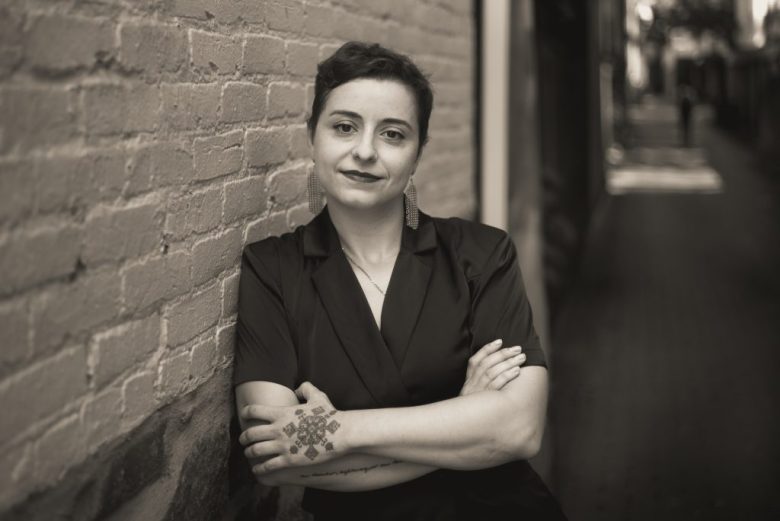
Since taking over at Spooky Action, Dinkova, who hails from Bulgaria, has also worked to create space for immigrants like herself—with all the risks that entails. When immigration crackdowns started making news last year, Spooky Action was among the first theaters in D.C. to implement policies and procedures for responding to raids. The theater also has an immigration lawyer on its board who has offered pro bono consultations to artists and helped the company develop its response plans.
Dinkova counts herself lucky to have a green card and to be from a country that’s “not on any lists.” She knows that doesn’t apply to everyone: “We do what we can to continue to be a space of artistic truth-telling, while also taking whatever precautions we can and being very transparent about content with the folks we’re working with, so that they can make their own choices about whether they might be willing to take the risk of working on political content under this regime.”
For all the risks, personal and institutional, that season planning involves, theaters typically undertake it because they have something to share: a truth that needs telling, a singular artistic vision, a spate of new voices, a much-needed stage for everyone. For some, it’s enough just to share space together, especially in times of trouble.
“You can feel the fear of our community, and the idea that when they go to the theater, to our theater, they feel a little bit more confident that nothing’s going to happen there,” says GALA’s Ott. “I can’t assure them that nothing is going to happen there, but I share the idea that over here, suddenly, when we close the door, we feel that we can say whatever we want, and we are together.”
Correction: This piece has been updated with the correct author of The Undercity, and the dates of Synetic’s original Sleepy Hollow production. Actor Mitch Hebert is no longer in Cult of Love.
