

Noida International Airport Nears Take-Off as Indian Interim CEO Appointed; Flights to 17 Cities Likely Soon – Indian PSU

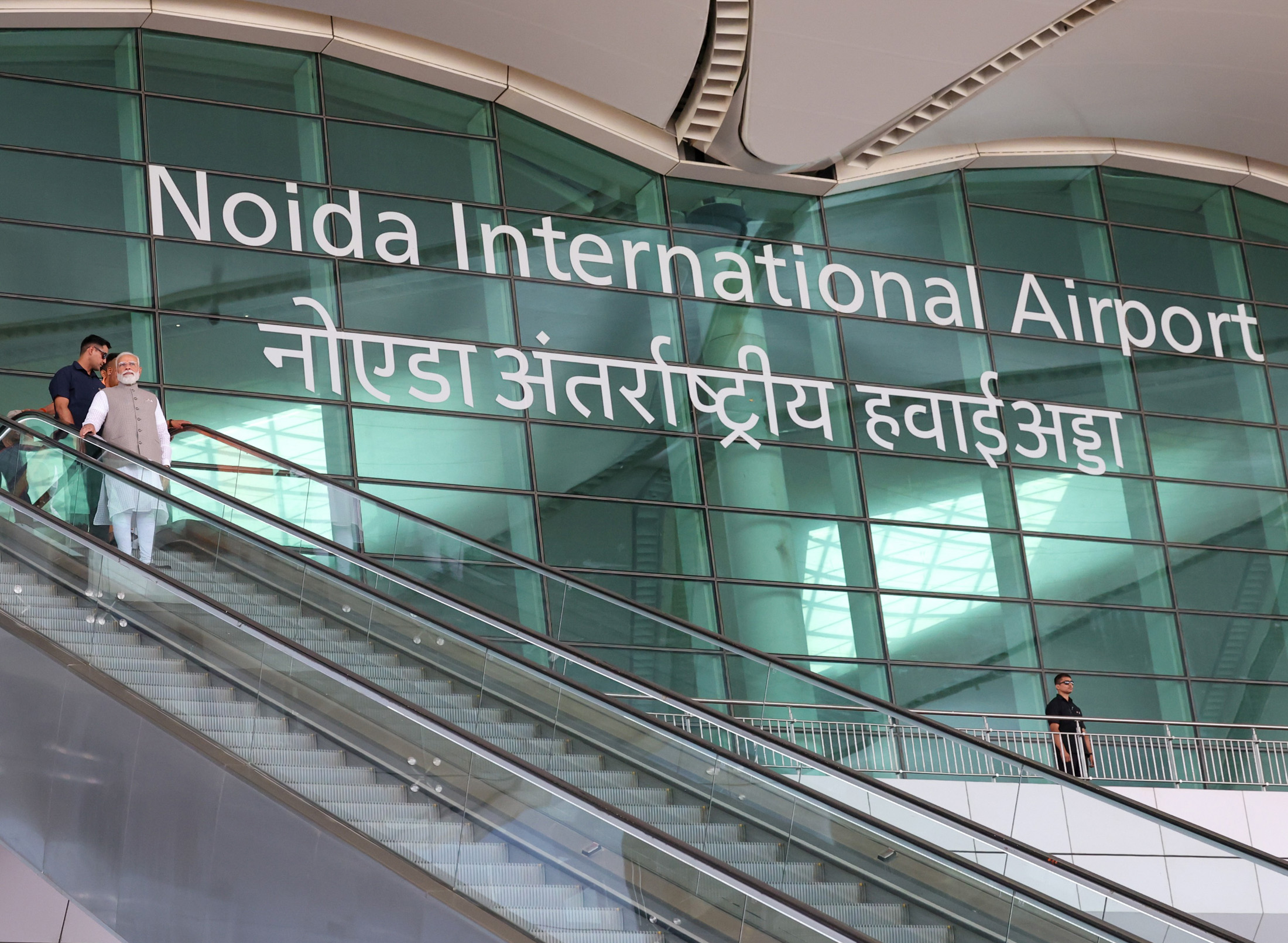
In a crucial administrative move that could accelerate the launch of commercial flight operations, Noida International Airport has appointed Indian national Nitu Samra as Interim Chief Executive Officer (CEO) with immediate effect, clearing a key regulatory hurdle that had delayed the airport’s final security clearance from the Bureau of Civil Aviation Security (BCAS).

Samra, who has been serving as Chief Financial Officer since October 2021, will hold charge until the Board appoints a full-time CEO. The appointment assumes significance as BCAS norms require the chief executive of an operational airport in India to be an Indian citizen. The absence of such compliance had emerged as one of the major reasons behind the delay in issuance of final operational security approval.
Airport officials are now hopeful that with the leadership restructuring completed, the pending BCAS clearance may be granted shortly, paving the way for commencement of passenger flight services from the much-awaited Jewar airport.
Domestic Flights First, Connectivity to 17 Cities on Cards
According to the airport’s initial route development plan, Noida International Airport is expected to begin operations with connectivity to nearly 17 cities, with domestic flights likely to be rolled out in the first phase.
Key domestic destinations include Mumbai, Bengaluru, Hyderabad, Lucknow, Dehradun and Hubballi, while international services are planned to destinations such as Zurich, Singapore and Dubai as the airport scales up its network. The original operational blueprint envisaged around 30 aircraft movements in the opening phase, including 25 domestic, three international and two cargo services.
This will mark the formal entry of Noida International Airport as North India’s second major civil aviation gateway after Delhi, significantly easing traffic pressure on Indira Gandhi International Airport.
DXN Positioned as Strategic Alternative Airport for Delhi-NCR
Developed at Jewar in Gautam Buddha Nagar district with IATA code DXN, Noida International Airport is being positioned as a strategic greenfield aviation hub for Delhi-NCR and western Uttar Pradesh.
The airport’s Phase-I infrastructure has been designed to handle 30 flights per hour, supported by 28 aircraft parking stands, while the dedicated cargo complex will have an annual handling capacity of approximately 2.5 lakh tonnes, underlining its role not merely as a passenger airport but also as an emerging freight and logistics centre.
Terminal-1 alone spans nearly 1.38 lakh square metres and houses 48 check-in counters, equipped with integrated passenger processing systems, security screening and baggage handling infrastructure.
MRO Ecosystem Under Development; Akasa Air Partnership in Place
In a move aimed at creating a full-fledged aviation services ecosystem, over 40 acres have been earmarked for Maintenance, Repair and Overhaul (MRO) facilities within the airport zone.
Noida International Airport has already entered into an agreement with Akasa Air for development of an MRO facility, a step expected to generate long-term employment, technical servicing capabilities and aviation engineering investment in the Yamuna Expressway region.
The MRO component is strategically important as India is currently seeking to reduce dependence on overseas aircraft maintenance destinations and build indigenous aviation servicing infrastructure.
Bullet Train to Cut Delhi-Airport Travel to 21 Minutes
Parallel to airport development, the proposed Delhi–Varanasi High-Speed Rail Corridor is set to transform regional access to the airport.
Two bullet train stations have been proposed in Gautam Buddha Nagar district — one at Noida Sector-148 and another directly at Noida International Airport. Once operational, the corridor will connect Delhi to the airport in just 21 minutes over a distance of around 62 kilometres.
Officials of the National High Speed Rail Corporation Limited (NHSRCL) have already initiated alignment consultations with Yamuna Expressway Industrial Development Authority (YEIDA) to integrate the corridor with Master Plan 2041 and existing utility infrastructure.
The airport station is planned as an underground terminal integrated with the Ground Transportation Centre, enabling seamless interchange between air, road and rail passengers.
800-Km High-Speed Corridor to Add New Rail Spine to Western UP
The Delhi–Varanasi High-Speed Rail Corridor, estimated at around 800 kilometres, will pass through Gautam Buddha Nagar, Mathura, Agra, Etawah, Lucknow, Rae Bareli, Prayagraj and Bhadohi.
For Gautam Buddha Nagar, the corridor is expected to provide the region with a long-missing direct rail mobility backbone, especially for Noida, Greater Noida and YEIDA sectors which presently rely heavily on road-based transit despite rapid industrial expansion.
With regulatory compliance now falling into place, aviation infrastructure nearing readiness, cargo and MRO capacities under development and high-speed rail integration advancing simultaneously, Noida International Airport is fast shaping into one of India’s most ambitious multimodal transport and economic infrastructure projects.
