


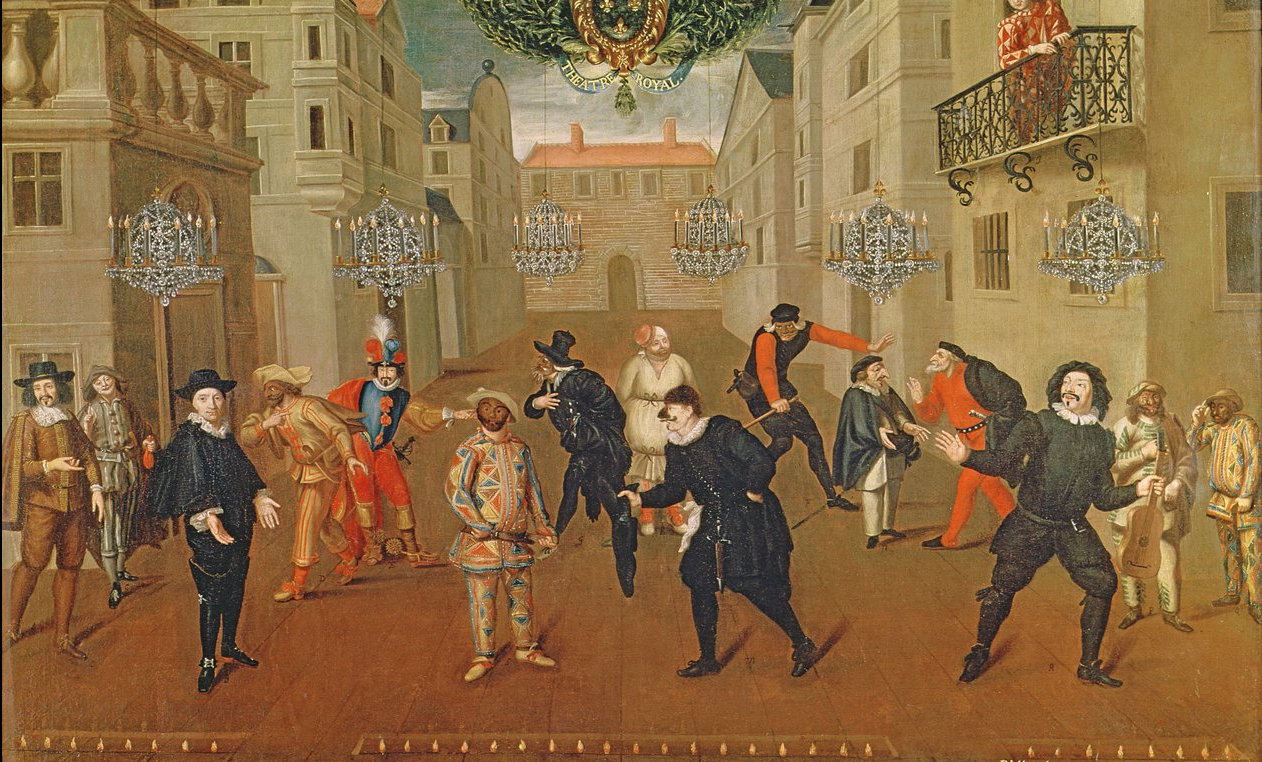
The pedant quickly became one of the most popular caricatures on the stage. By 1600, almost fifty new plays featured a pedant — some by authors who, like Bibbiena, were not averse to a bit of playful satire and controversy: Pietro Aretino (1492–1556), Ludovico Dolce (1508–1568), and Giordano Bruno (1548–1600). But more conventional moralizers also embraced the type, such as Lodovico Dolce (1508–1568), Sforza Oddi (1540–1611), and Bernardino Pino (ca. 1525–1601). In addition to these erudite comic plays, pedantic figures also gained a foothold in the improvised, farcical plays of the commedia dell’arte, performed by professional acting companies. Based on concise scenarios, with recurrent sketches and recognizable props, their comedy relied on stock characters including a pompous scholar, known as “il dottore” or the “old man Graziano”. He was presented as a jurist from the university town of Bologna, and his language was even more extreme than that of his pedantic counterparts of erudite comedy: an incomprehensible gibberish that ridiculed the sound of Latin and made ample use of the potential for funny homonyms. Graziano’s garbled Latin was also used by actors off stage, as a form of riddle, in playful correspondence with their patrons.
