


Get the best of Vancouver in your inbox, every Tuesday and Thursday. Sign up for our free newsletter.
For a city that has produced plenty of world-class dance talent, Vancouver has long lacked one thing: a professional ballet company of its own.
That changes this week with the debut of Ballet Vancouver, a new company led by artistic director Joshua Beamish. Its inaugural program, After the Rain and Other Works, runs April 23 to 25 at the Vancouver Playhouse, mixing big-name international choreography with work tied more closely to this city, its artists, and its particular sense of place.
Beamish knows that launching a new arts institution in Vancouver is no small feat. After 20 years leading his own company, Joshua Beamish/MOVETHECOMPANY, stepping into Ballet Vancouver has meant entering familiar territory with a very different set of stakes.
“One thing that’s been challenging for me is that I ran an organization for 20 years,” he shares with the Straight. “And then moving into this new company and having to experience kind of a new wave of doubt.”
Still, the case for Ballet Vancouver is a compelling one. Vancouver has an international reputation for contemporary dance, but Beamish notes that it has been more than a decade since the city had a company regularly performing en pointe, and even longer since there was any real local home for classical and neoclassical ballet.
For a metro area this size, that absence feels odd.
“It’s interesting, given the size of our population, for probably one of the largest population centres in all of North America, to not have had this kind of traditional staple of this form,” he says.
That gap is part of what Ballet Vancouver is trying to address, but Beamish is equally interested in what kind of company can be built here now, in this city, rather than simply importing an old model. For him, that means making work that reflects Vancouver while also giving audiences a sense of ballet’s broader possibilities.
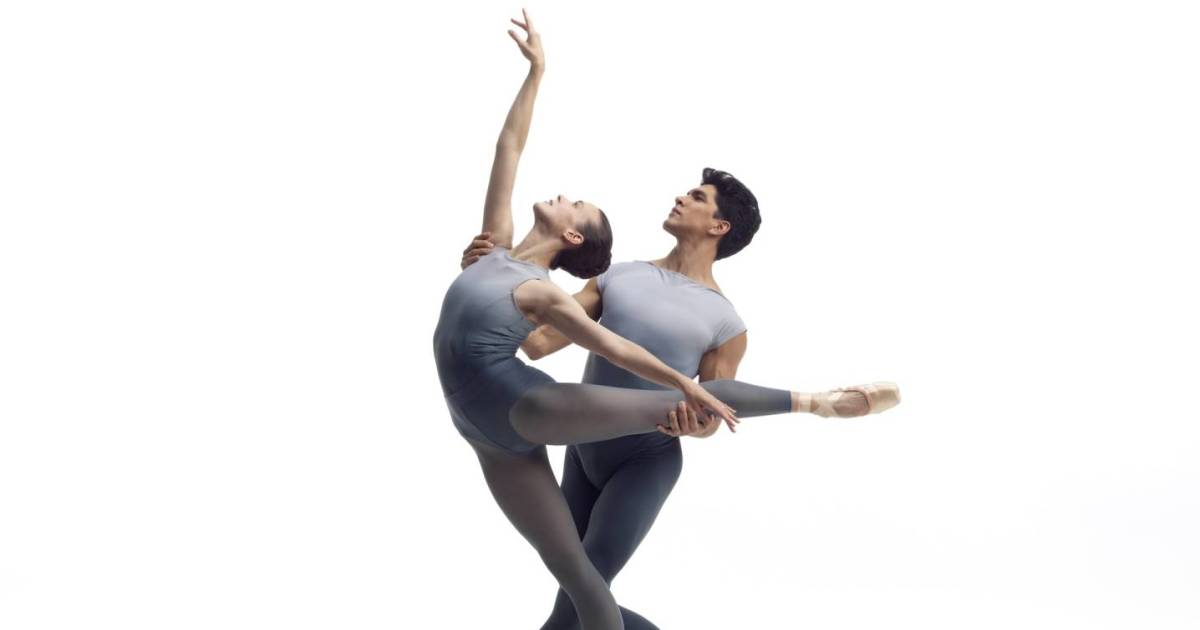
The debut program captures that balancing act. It includes the Vancouver premiere of Christopher Wheeldon’s After the Rain, alongside Wen Wei Wang’s Swan, Annabelle Lopez Ochoa’s Redemption, and the world premiere of Winterbourne, created with Gitxsan designer Yolonda Skelton and set to music by Cree composer Cris Derksen.
That local-global mix also reflects the reality of ballet in Vancouver. There is no deep bench of unemployed international-level ballet dancers idling around the city, nor a huge ecosystem of choreographers regularly creating for pointe-trained dancers. For now, Ballet Vancouver is building with the talent it has here, while also bringing in artists from elsewhere to help set the bar.
For Beamish, that is less contradiction than strategy: show audiences what this company can be, then build the infrastructure to grow more of it from within.
In some ways, After the Rain is a precise example of that approach. Wheeldon’s ballet is internationally known, but Beamish says it also felt apt for Vancouver. The piece’s first half has a stormy drive to it, while the second feels like a release.
“It’s almost like a storm,” he says. “And then the second movement is like this breath of fresh air, like the morning after when the sun comes out. We know that in Vancouver, that feeling of when we’ve been through rain and grey for days on end, and then suddenly it breaks. I really feel like the ballet captures that.”
The more explicitly place-based work in the program is Winterbourne, which Beamish describes as one of the most meaningful processes of his career. Rather than treating design as something added after the choreography was already imagined, he says the piece grew out of Skelton’s work and Derksen’s score from the beginning.
“This was really about Yolonda’s work and Cris’s music,” he says. “I had no preconceived notions about what I was going to make as a choreographer.”
That process also extended beyond the studio. Skelton worked with young dancers in Ballet Vancouver’s summer intensive, sharing the meanings and responsibilities carried in the garments she creates. Beamish also brought company dancers to Vancouver Indigenous Fashion Week so they could experience her work in its own context before wearing it themselves.
More broadly, Beamish sees Ballet Vancouver as a chance to rethink what ballet can look like here: rooted in tradition, yes, but not sealed off from the city around it.
“This is how ballet is made on Indigenous lands with Indigenous collaborators, or how it can be,” he says.
Just as important is the company’s role as a homecoming point for dancers who trained in Vancouver and then had to leave to build careers elsewhere. Beamish is quick to say that leaving is not a failure, or even necessarily a bad thing. But he wants Ballet Vancouver to create a world where it is no longer a one-way trip.
“You work your whole life, you should go perform at Lincoln Center in New York City if that’s what drives you,” he says. “But then it shouldn’t be that you have to do that at the expense of ever being able to perform at home.”
That idea is already shaping the company’s first season. The debut program brings back artists including Patrick Frenette, who trained at Goh Ballet and is now a soloist with American Ballet Theatre, and Benjamin Freemantle, a Port Moody-trained dancer who became a principal with San Francisco Ballet.
And after years of ballet talent leaving town to find bigger stages, Ballet Vancouver’s arrival feels like a bid to build one here.
After the Rain and Other Works opens April 23 at the Vancouver Playhouse. Tickets available here.
