


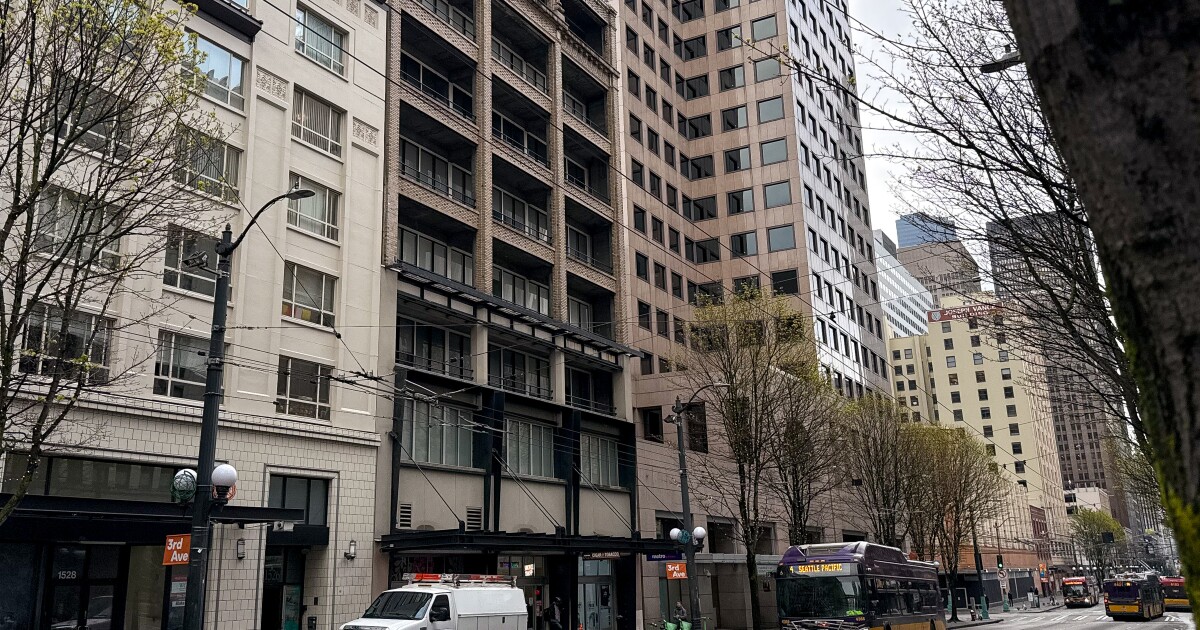
A nonprofit in Seattle is converting parts of a 116-year-old office building into space for artists to live and work. The project takes advantage of a new rule passed by the City of Seattle that provides incentives to build more housing units below market value.
Base Camp Community, which is affiliated with Base Camp Studios, bought the eight-story Gibraltar Tower at 1518 Third Ave. for $2.8 million. It plans to renovate some of the empty offices to sell as affordable housing units and reserve the remaining areas for studio space.
All this is happening through the city’s Office to Residential Conversion Program, which allows developers to take empty commercial buildings and turn them into living spaces. The program gives developers a tax deferral as long as 10% of the units in the building are sold or rented below market value. The program was established to help the city catch up with a housing shortage.
The Puget Sound Business Journal first reported the purchase.
When construction is complete, the building will have up to 16 residential units reserved for people who earn up to 80% of the area median income, which is $88,000 for a single person, according to the city.
Nick Ferderer, founder of Base Camp Studios, said those units will be one and two bedrooms with separate space for work.
“Let’s say it’s one of the two bedrooms, we hope it’s right around 900 square feet with a balcony,” he said. “You can walk out your doorway to the hallway, take two steps and then hang a left into your working studio, which is about 500 square feet.”
The housing units and studio space will be on the third through sixth floors. The nonprofit plans to keep retail residents on the ground floor levels, and Ferderer said the second floor would ideally be used as a space for residents to gather. The seventh and eighth floor would each house a unit to be sold at market value.
The downtown building is within walking distance of Pike Place Market and a light rail station.
“I like to say that, almost by definition, an artist is trained to see the world and then portray it back to us. So what better way to get eyes on the street than having artists in affordable spaces downtown,” Ferderer said.
The area around the building has seen better days. After the start of the pandemic, businesses vacated storefronts along Third Ave., making them targets for graffiti. The sidewalks in front of them became sites for open drug use.
“If you’ve been in the area, you know that it’s ripe for some positive change,” Ferderer said. “I’m excited to be part of that.”
The nonprofit is in the process of finding a bank to finance construction on the project. Ferderer said it could be completed in about two years.
