

Vizag Steel Plant: Repeated Cases of Accidents, Lost Lives and One Unanswered Question – Does Human Life Really Matter??? – Indian PSU

They say what is kept under wraps can remain hidden for a while, but truth cannot be concealed forever.
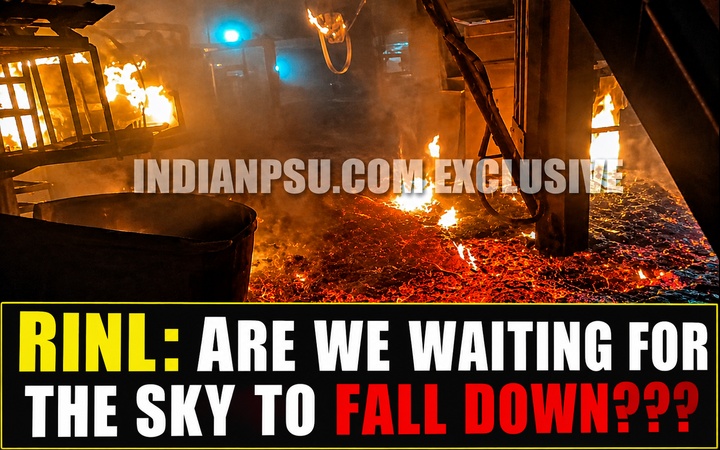
IndianPSU.com’s investigation indicates that serious incidents at the Steel Melting Shop (SMS) have allegedly occurred both before and after the June 8, 2026 explosion that claimed 10 lives.
The latest reported incident on August 22 raises an uncomfortable question:
How many warnings are required before safety becomes the first priority?
The chronology
June 4: An alleged ladle-related incident reportedly occurred at SMS-1 during secondary metallurgy/argon-rinsing operations. No lives were reportedly lost. IndianPSU has information indicating that blasted molten steel flooded onto a flat platform, which acted like an umbrella, with molten material subsequently remaining on a steel transport car.
June 8: A major SMS-1 explosion killed 10 employees. The Ministry of Steel constituted a three-member external enquiry committee headed by the Director-in-Charge of Bokaro Steel Plant, SAIL.
June 11: Another alleged eruption of slag and molten metal was reported during rinsing operations at an Argon Rinsing Station.
August 22: IndianPSU received information about another alleged SMS-1 incident during the A shift. It was reported that rejected material was being consumed.
The exact nature of the material, why it was used and under whose authority require confirmation from RINL.
The questions RINL must answer
If the June 8 tragedy resulted in revised SOPs and corrective measures, why are serious incidents allegedly continuing?
The investigation needs to establish whether the underlying problems involve:
- Ferro-alloy quality
- Ladle and refractory condition
- Process parameters
- Equipment and safety interlocks
- Maintenance
- Operating procedures
- Material consumption
- Supervision and accountability
Ferro-alloy quality under scrutiny
IndianPSU has examined information indicating unusually high silico-manganese consumption during the relevant period, followed by substantially lower consumption after changes in sourcing.
There are also allegations concerning excessive oxide/moisture content in supplied ferro-alloys.
These claims require verification through RINL’s laboratory, procurement and consumption records.
If established, key questions include:
Who approved the material? Who cleared the test results? Why was it accepted? What was the additional cost? Was the supplier investigated? Were officials in the approval chain examined?
Was June 4 a missed warning?
If the June 4 incident occurred as reported, it should be examined as a potential near-miss before the June 8 tragedy.
Molten steel reportedly flooding a platform and remaining on a steel transport car is not something that can simply be dismissed as a routine process deviation.
A near-miss is a warning.
And warnings must be acted upon before they become fatalities.
What about August 22?
The reported consumption of rejected material raises another critical question:
Was rejected material actually used in SMS-1? If so, why—and who authorised it?
RINL should make the relevant rejection, laboratory, approval, stock and consumption records available for scrutiny.
IndianPSU is not drawing a conclusion at this stage. The facts must be established.
Accountability cannot stop at the shop floor
RINL reportedly suspended 22 employees after the June 8 tragedy, while an external enquiry was ordered.
But accountability, if failures are established, must follow the entire chain:
procurement → quality control → engineering → maintenance → operations → consumption → supervision → management
Responsibility must correspond to authority.
IndianPSU demands answers
RINL and the Ministry of Steel should clarify:
- What are the final findings of the June 8 external enquiry?
- Were the June 4 and June 11 incidents investigated?
- What was the technical root cause?
- Were ferro-alloy quality deviations detected?
- What action was taken against the supplier and approval chain?
- What exactly happened on August 22?
- Was rejected material consumed, and if so, under whose approval?
- Have all critical SMS equipment and safety interlocks been independently inspected?
- Have corrective measures actually eliminated the risk of recurrence?
Independent investigation is essential
IndianPSU is not calling for a witch-hunt.
It is calling for an independent, evidence-based examination of:
- SMS and heat-wise production records
- Ferro-alloy purchase and laboratory reports
- Ladle and refractory histories
- Equipment and interlock logs
- Maintenance records
- CCTV and shift records
- Material rejection and consumption records
- Incident reports
- June 8 external enquiry findings
If negligence is established, action must follow.
If procurement or quality failures are established, responsibility must follow the approval chain.
If equipment deficiencies are found, they must be corrected.
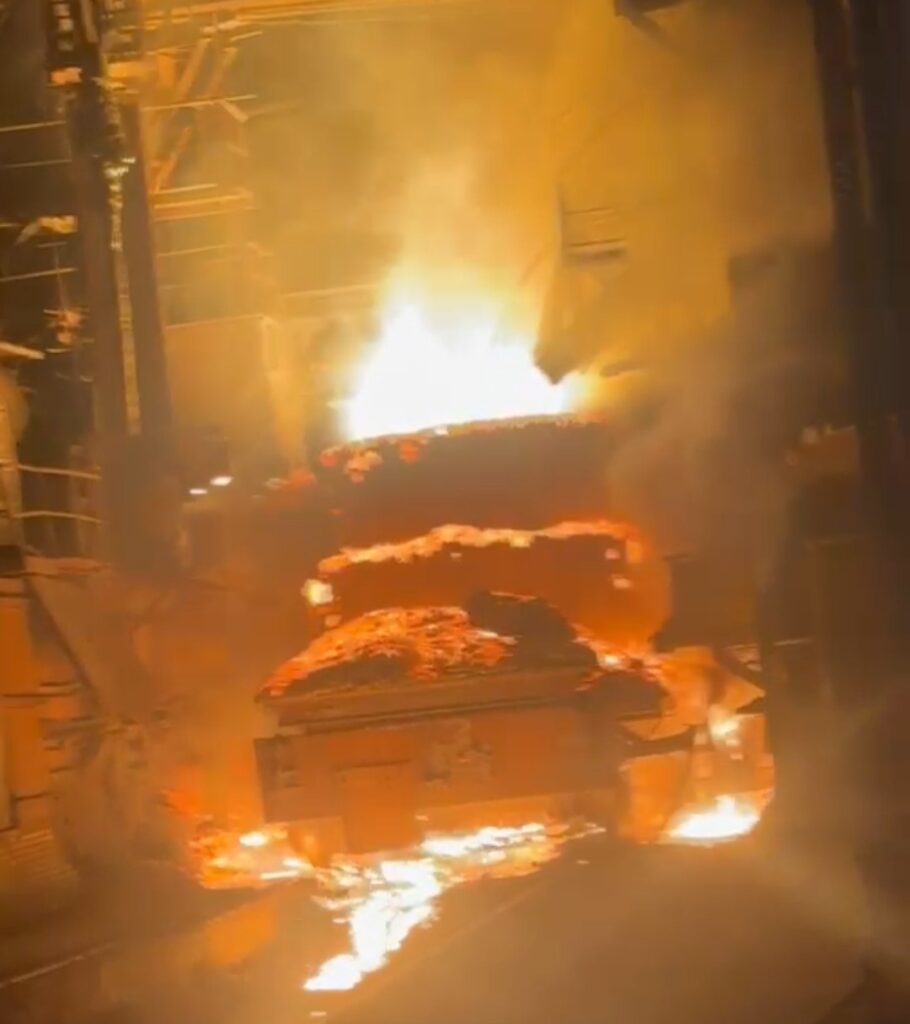
Complete mayhem can be seen here but no one seems to care for human life !!!
We keep on seeking the official response of RINL and the Ministry of Steel on the issues raised above. But the irony is that CMD RINL has blocked our calls and Secretary (Steel), very conveniently, chooses not to respond to our email queries.
We Report – You Decide…
