Support CleanTechnica’s work through a Substack subscription or on Stripe.
As the Middle East conflict sends energy prices surging, new analysis finds electric cars can significantly protect the EU economy and drivers.
This short briefing highlights the benefits of accelerating vehicle electrification in the context of the war in the Middle East. As co-legislators discuss the EU’s Automotive Package and decide on the trajectory for vehicle electrification in Europe, the emerging energy crisis should serve as a stark reminder that Europe’s only path to true strategic sovereignty lies in domestic clean power and technologies.
Key findings
Only electric cars and regulatory ambition can break us free from oil dependency:
- Cars alone cost the EU €67 billion in oil imports (2025). Cars consume around 1 billion barrels of imported oil annually, making road transport the largest driver of Europe’s oil dependency.
- Electric cars are already cutting oil imports. Nearly 8 million electric cars in the EU will save around 46 million barrels of oil in 2025, equivalent to €2.9 billion in avoided oil import costs.
- Weakening EU electrification targets would deepen oil dependency. A weaker automotive package could increase oil imports by 640 million barrels between 2026 and 2035, costing Europe €45 billion in additional oil import expenses compared to keeping strong EU vehicle targets with more ambition on corporate fleet electrification. This more ambitious scenario could avoid nearly 2.2 million barrels of oil imports over the next decade, saving around €150 billion in fuel costs.
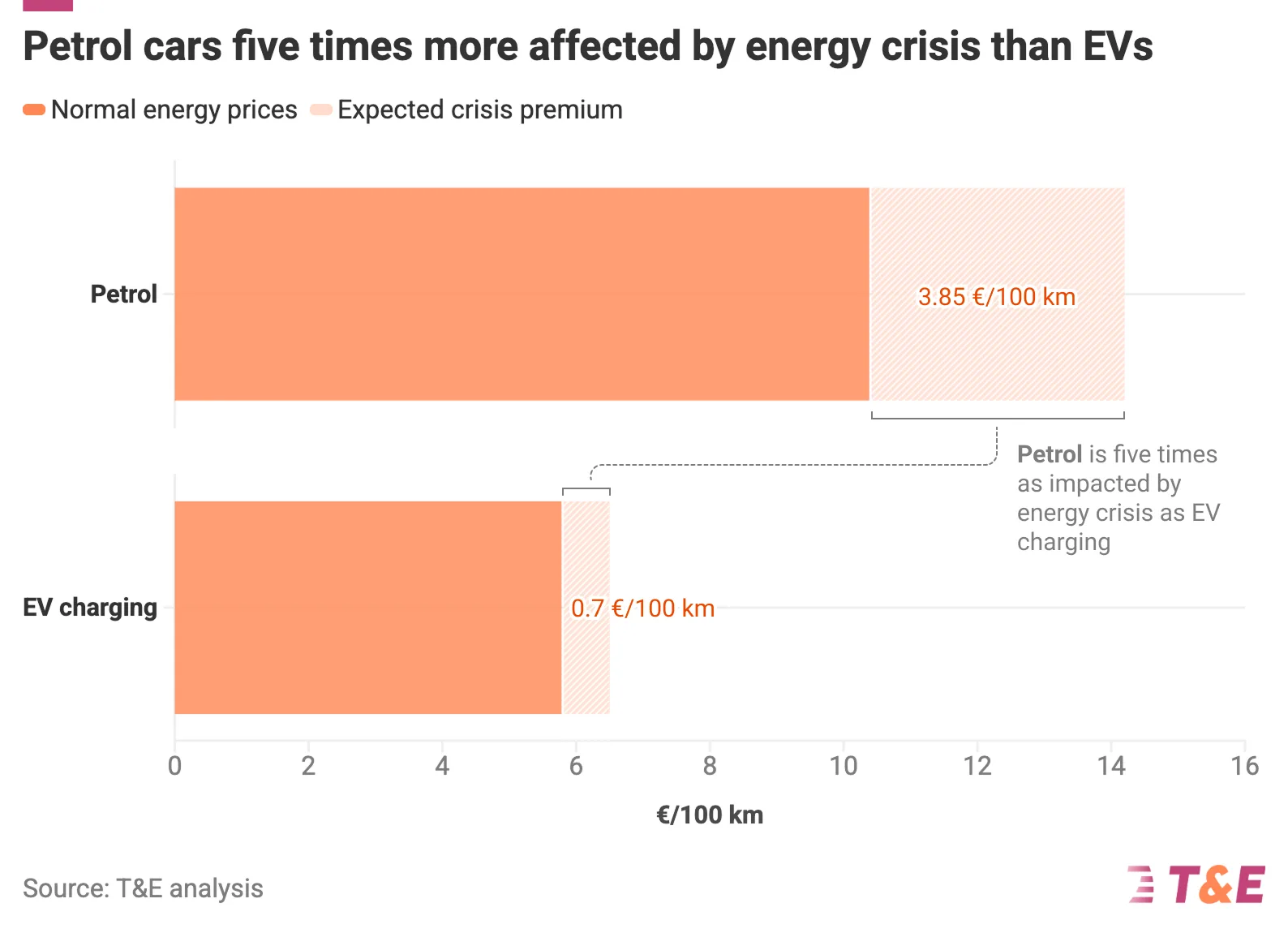
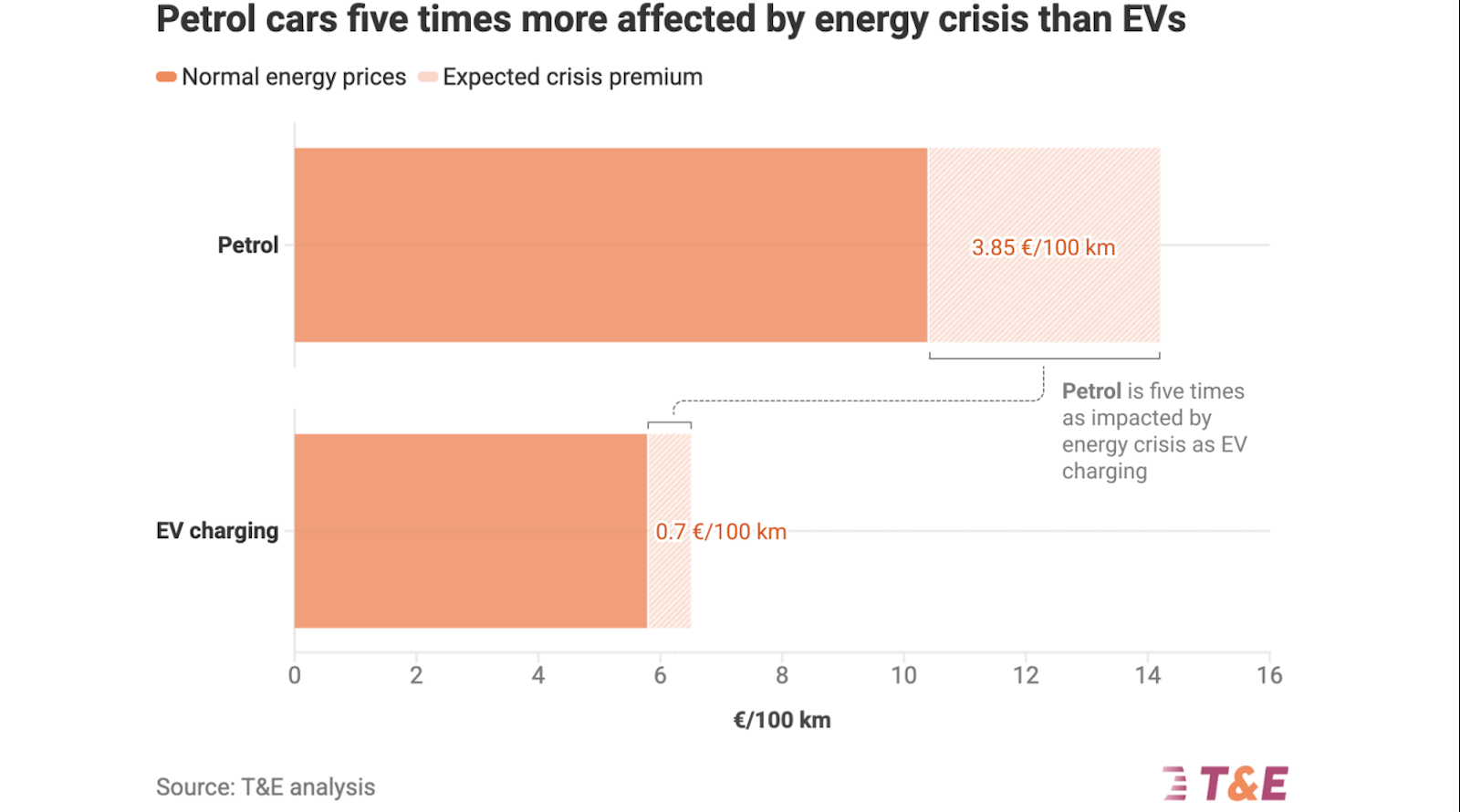
- Electric cars are expected to be far cheaper to drive during the coming energy crises. In these times of high oil prices, driving a petrol car is expected to cost around €140 per month, compared to €65 for an EV. The expected crisis premium would add €38 per month for petrol cars but only €7 for EVs, meaning petrol drivers are expected to be five times more exposed to energy price shocks. For higher mileage corporate cars, the crisis premiums are higher: €89 for petrol versus €16 for BEVs.
- Energy crises fuel fossil fuel profits and geopolitical adversaries at the expense of drivers. When oil prices exceeded $100 per barrel in 2022, European drivers paid €55 billion extra at the pump, while fossil fuel companies earned €104 billion in profits. Plus, continuing oil imports fund geopolitical adversaries. With US sanctions on Russian oil lifted, Europe will come under pressure to also lift its restrictions and send money to Putin, undermining our efforts in Ukraine and further threatening peace and democracy.
Recommendations
The EU needs to take bold action to transition away from fossil fuels and ensure that businesses and citizens across Europe benefit from stable and affordable energy prices. Reducing the amount of oil we consume and import is a win-win. It improves economic security, saves costs for drivers, reduces geopolitical uncertainties and decreases our climate impact. To achieve this the EU should do the following as part of the Automotive Package discussions:
- Reject any weakening of the 2030 car CO2 target ambition to secure rapid mass adoption of electric cars and investment certainty.
- Support the end of the sale of new petrol and diesel cars and vans by 2035 to ensure that the regulation remains aligned with the EU’s climate and industrial objectives.
- In the Clean Corporate Vehicles Regulation, set more ambitious electrification targets for large corporate fleets and remove plug-in-hybrids from the scope.
To find out more, download the full briefing.
Sign up for CleanTechnica’s Weekly Substack for Zach and Scott’s in-depth analyses and high level summaries, sign up for our daily newsletter, and follow us on Google News!
Have a tip for CleanTechnica? Want to advertise? Want to suggest a guest for our CleanTech Talk podcast? Contact us here.
Sign up for our daily newsletter for 15 new cleantech stories a day. Or sign up for our weekly one on top stories of the week if daily is too frequent.
CleanTechnica uses affiliate links. See our policy here.
CleanTechnica’s Comment Policy