


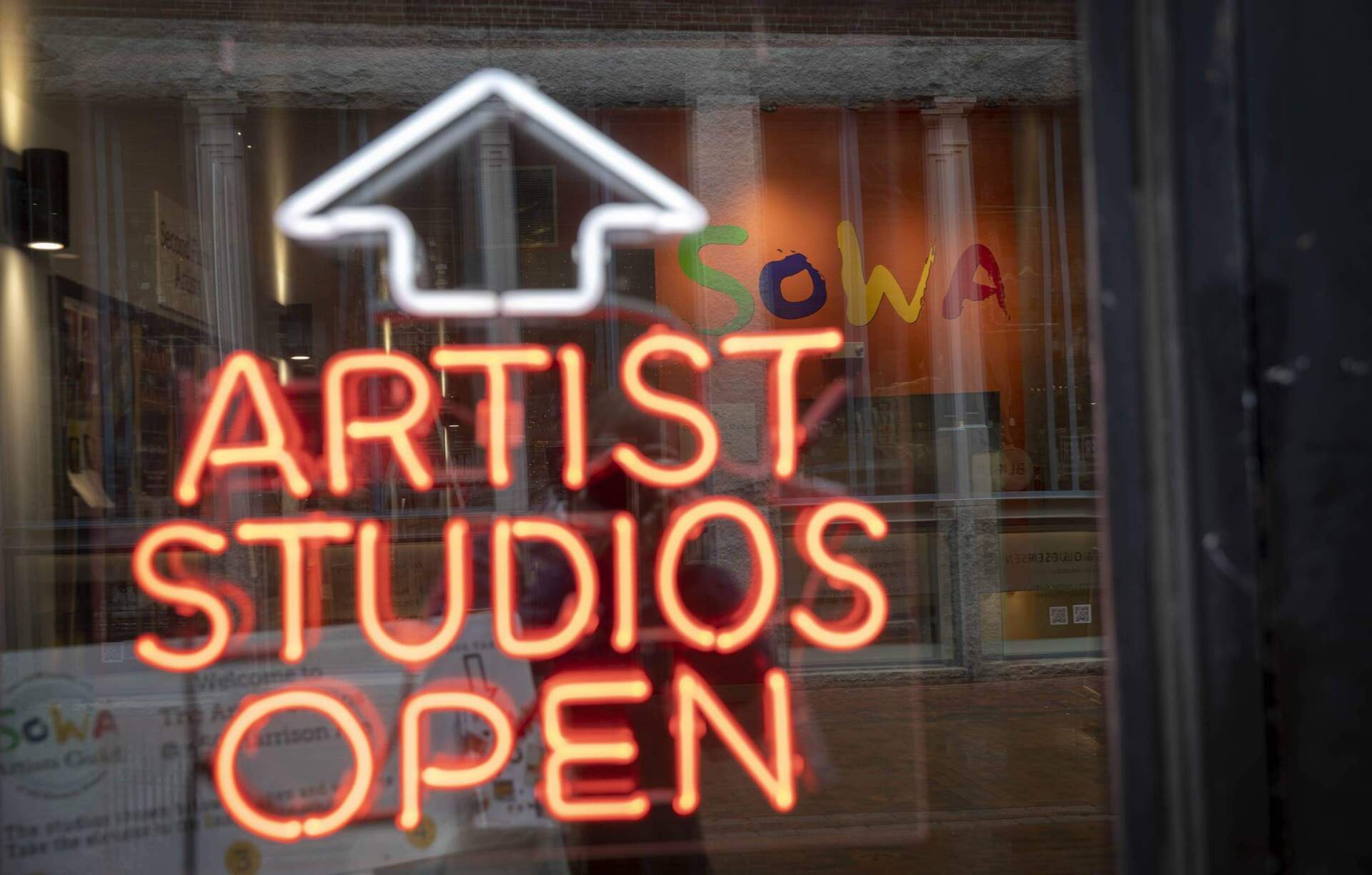
Arts advocates are rallying around legislation to protect arts spaces in Massachusetts.
The Creative Space Act would allow municipalities to establish a trust fund to acquire cultural spaces threatened by displacement. Advocates say the legislation would protect artist workspaces against the pressures of a tight real estate market.
Artist studios, rehearsal spaces and performance venues frequently contend with rent hikes and evictions as developers gobble up property across the state. In recent years, artists and musicians have protested the closure of the Sound Museum rehearsal complex in Brighton, the displacement of artists from the Piano Craft Guild studios in Boston’s South End, and the shuttering of the Green Street dance studios in Cambridge. While municipalities are sometimes able to step in – as the city of Somerville did recently when it helped a nonprofit purchase a longtime artist studio building – existing Massachusetts law does not allow local governments to establish cultural trust funds by right.
“ We cannot allow municipalities to wait until they have some special money to do an extra thing for the arts community anymore,” said Emily Ruddock, the executive director of the arts advocacy organization MASSCreative. “We have to stand up structures like land conservationists have, like we have for affordable housing, like we have for our schools, to make sure that artists are able to stay in their communities.”
Supporters are trying to get the legislation added to the economic development bond bill currently being considered in the State Legislature.
Massachusetts state Sen. Liz Miranda, who sponsored a standalone version of the Creative Space Act, said she would be “pushing” to get it added to the Senate’s economic bond bill, which is set to be debated on Wednesday, July 22, and Thursday, July 23.
Miranda pointed to the Humphreys Street Studios in Dorchester as the impetus for her support. The artist complex was threatened with displacement in 2019 when the property went up for sale. With the help of a mission-driven developer and the city of Boston, the artists were able to buy the building and preserve their studios.
“ I saw a lot of hope come out of that process, but also a lot of stress because it required years of organizing,” Miranda said. “It had to have great partnerships and very unique financing that most artist spaces and creative spaces don’t have the capacity for. So this bill, to me, is about making that easier to replicate across Massachusetts.”
The legislation does not require any taxpayer funds. Rather, it allows municipalities to “opt in” to establishing cultural land trusts, which they could finance through mechanisms like taxes or linkage fees on new development. A city could then use the trust to purchase and hold at-risk cultural assets, or help finance other efforts to preserve or build space for creative use.
Advocates compared the legislation to the state’s affordable housing trust fund model. The bill also establishes creative space land restrictions, similar to historic and conservation easements that protect against development on certain kinds of properties.
Housing advocates have criticized the use of environmental and historic restrictions to prevent new housing from being built. When asked if she had concerns that a creative land trust could compete with housing, Miranda said the two priorities went hand in hand.
“You can’t build just housing on top of housing and not build a community around that,” she said.
If passed, she hopes the legislation will help stem the exodus of young professionals from Massachusetts.
“ A lot of those young people, they’re not leaving just because they can’t afford the apartment. It’s not just because they don’t have late night service,” Miranda said. “It’s, ‘Do they have a theater that they can go to? Can they go see a play? Can they go to bars and restaurants? Can they build community?’”
Boston’s Chief of Arts and Culture Joseph Henry put his support of the bill in economic terms.
“The Creative Space Act would give municipalities a practical, fiscally neutral tool to protect the studios, rehearsal spaces, maker spaces, and cultural venues at risk of displacement that drive our creative economy,” Henry said in a statement. “If Boston wants to remain competitive, we need tools and flexibility to support the creative spaces that cultural organizations and workers depend upon.”
The Creative Space Act was first proposed in 2023, making its way to the Senate Committee on Ways and Means, where it languished. The same bill has again progressed as far as the Ways and Means committees in the Senate and the House. But advocates feel their best shot at getting the legislation passed is by attaching it to the economic development bond bill.
“Over the last two decades, there has been a precipitous loss of creative workspace, and more than 50% of that square footage loss has happened in the last 10 years,” Ruddock said. “So we can’t really afford to wait anymore. The crisis is here.”
