


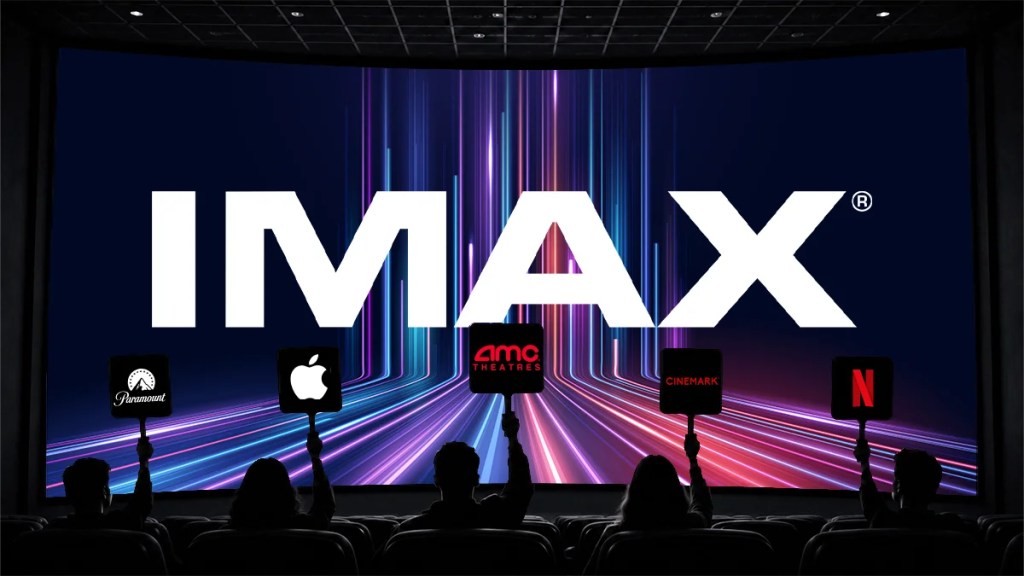
Imax is having a moment. Through the theater industry’s most turbulent periods, the premium format company has remained a rare pillar of stability for a box office that badly needed it. And now, it’s a selling point all its own.
Christopher Nolan’s “The Odyssey” this year will be the first movie ever shot entirely with Imax film cameras, a feat only accomplished by Nolan working with the Imax team to create custom equipment. Even the first collectible popcorn bucket for “The Odyssey” is an Imax camera.
With the box office enjoying its best numbers of the decade and Imax rapidly expanding its global footprint, the premium format company is in early discussions to gauge interest in a sale, an insider with knowledge of the matter told TheWrap.
Industry insiders have speculated that the deal interest was tied to the uncertain health of Imax CEO Rich Gelfond, who has been sidelined with pneumonia for the past few months and took a medical leave of absence in March. But Gelfond, who attended a J.P. Morgan-hosted investor conference via Zoom three weeks ago, has been back to work as of May 1.
“The timing of this sale reflects strength, not distress,” Qualia Legacy Advisors managing director Aaron Meyerson told TheWrap. “This isn’t a company looking for a rescue — it’s a company trying to capture maximum value at the moment when premium theatrical is one of the bright spots in the movie business.”
So who would buy the company, which has solid cash flow, little debt and strong demand among consumers and creatives alike?
Imax could potentially fetch around $50 per share depending on buyer interest, based on the low end of a 20% to 40% premium from its current trading value, said Lloyd Greif, CEO of the Los Angeles-based investment firm Greif & Co.
As of Monday’s close, Imax has a market cap of $2.15 billion. It also has $528.4 million in total liquidity, including $146 million in cash, $154.4 million in net debt and $300.3 million in total debt, per its latest earnings disclosure.
A key challenge will be finding a buyer who wouldn’t present a conflict of interest.
Experts told TheWrap that a key risk in one of Imax’s major partners like Universal Pictures or Warner Bros. acquiring the company is that other exhibitors or studios could shift their focus to other premium large format options – hurting the company network and flow of content.
A strategic buyer could clear regulatory scrutiny by committing to operate Imax as a wholly owned subsidiary with an independent management team, or the company could be bought by a private equity firm, avoiding conflict of interest entirely.

