


Egyptian authorities have concluded that an explosive device in the forward galley downed an Egyptair Airbus A320 that crashed into the Mediterranean Sea in 2016, claiming the lives of 66 people onboard the aircraft.
Disappearing from the radar
The Egyptair A320, registered as SU-GCC, was operating flight MS804 from Paris Charles De Gaulle Airport (CDG) to Cairo International Airport (CAI) on May 18, 2016.
Having departed the French capital at 21:21 UTC, the aircraft, carrying 66 crew members and passengers, entered Greek airspace two hours later, where it was cleared to proceed forward and enter Egyptian airspace, according to the final report published by Egyptian Aircraft Accident Investigation Directorate (EAAID) on October 29.
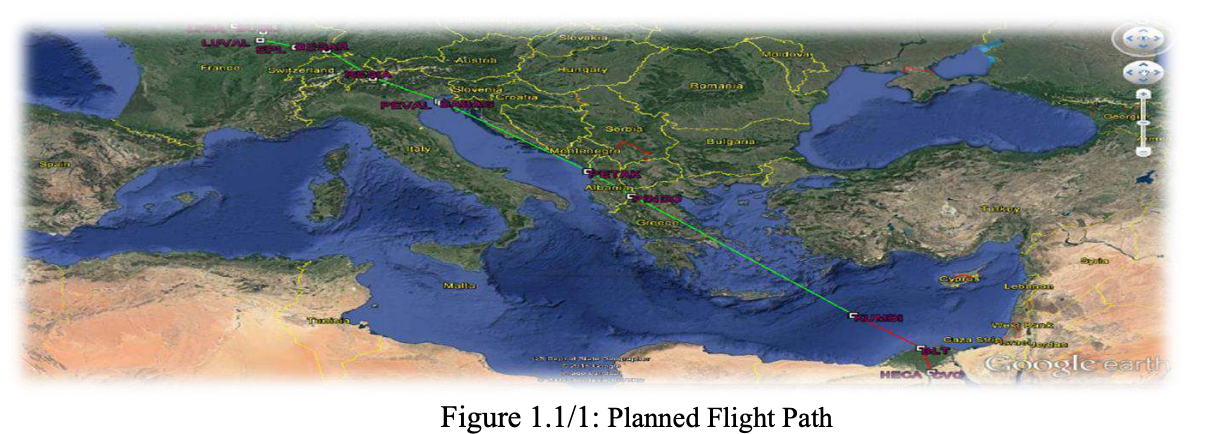
Photo: EAAID
At 00:30 UTC, shortly after the Egyptair aircraft had entered the country’s airspace, the A320 disappeared from the Egyptian and Greek air traffic control (ATC) radars.
Both countries’ controllers had attempted to contact the flight crew shortly afterward and after the single-aisle jet’s emergency locator transmitter (ELT) sent out a signal, Egypt began search and rescue efforts.
The African country, as the state of registry and operator, led the investigation according to requirements of the International Civil Aviation Organization’s (ICACO) Annex 13.
The Bureau d’enquêtes et d’analyses pour la sécurité de l’aviation civile (Bureau of Enquiry and Analysis for Civil Aviation Safety, BEA) represented France, which was the state of manufacture of the aircraft during the investigation.
Airbus and the United States National Transportation Safety Board ( NTSB) also provided technical assistance during the process.
Voepass ATR-72 Blackbox: Crash Came 1 Minute After Pilot Noticed Steep Altitude Loss
The investigators stated that a preliminary report should be published in 30 days.
Fire warnings
The EAAID pointed out that data from the flight data recorder (FDR) revealed lavatory smoke and avionics smoke warnings, with several onboard computers failing a few minutes later.
Analysis of the cockpit voice recorder (CVR) showed that the first officer, a 25-year Egyptian national with over 2,900 total flight hours (FH) and 2,771 FH on the A320, called out “fire,” with a cabin crew member, who was in the cockpit at the time, and the captain, a 36-year Egyptian national with over 6,639 FH and 2,108 on the A320, audibly acknowledging the flames. The captain requested a fire extinguisher, the report noted.
“The investigation committee received a report from the Egyptian judicial authority, which had formed a committee headed by a forensic evidence expert and included an aviation expert and a forensic medicine expert. The report concluded that an explosive device had been placed inside catering trolleys, in the galley behind the cockpit.”

Photo: BeAvPhoto | Shutterstock
The EAAID concluded that explosive materials located at the forward galley, just behind the rear section of the cockpit, resulted in fire and smoke, which affected the cockpit’s right-hand side crew oxygen system.
“The oxygen flow enriched the fire. The aircraft flight path was uncontrollable as the aircraft and the flight crew were severely affected by fire and smoke. The aircraft crashed into the sea with no survivors.”
Egyptian investigators provided four safety recommendations, namely to study whether anti-hijacking camera recordings need to be retained, the appropriateness of cockpit fire/smoke procedures in the event of an oxygen-enriched fire, whether non-Halon fire extinguishers are suitable to treat such fires, and the design of the flight crew oxygen mask emergency knob.
Related
The Tragedy Of EgyptAir Flight 990
Twenty-three years ago, on October 31st, 1999, an EgyptAir Boeing 767-300ER crashed into the Atlantic Ocean, killing all 217 people on board.
Disputed by BEA
In July 2018, the BEA issued a statement that France, and by extension, the investigative team at the bureau, had contributed to the investigation from the onset. Initially, the BEA acted as an advisor to the EAAID and later helped repair the CVR and FDR at the request of its Egyptian counterpart.
The BEA, which collected additional elements, including that the ELT transmitted a signal at 00:37 and the Greek ATC’s data showed the aircraft descending while turning before crashing into the sea, concluded that:
“[…] a fire broke out in the cockpit while the aeroplane was flying at its cruise altitude and that the fire spread rapidly resulting in the loss of control of the aeroplane.”
In its final report, the EAAID acknowledged that the BEA conducted a study regarding the potential source of the fire, including battery, cigarette, extinguisher, and propagation tests, yet stated:
“The BEA oxygen fire study assumed that fire started in the co-pilot’s mask storage box and was fueled by a leak of pressurized oxygen. However, the study neither identified the source of ignition nor determined which came first: the fire or the oxygen leak.”
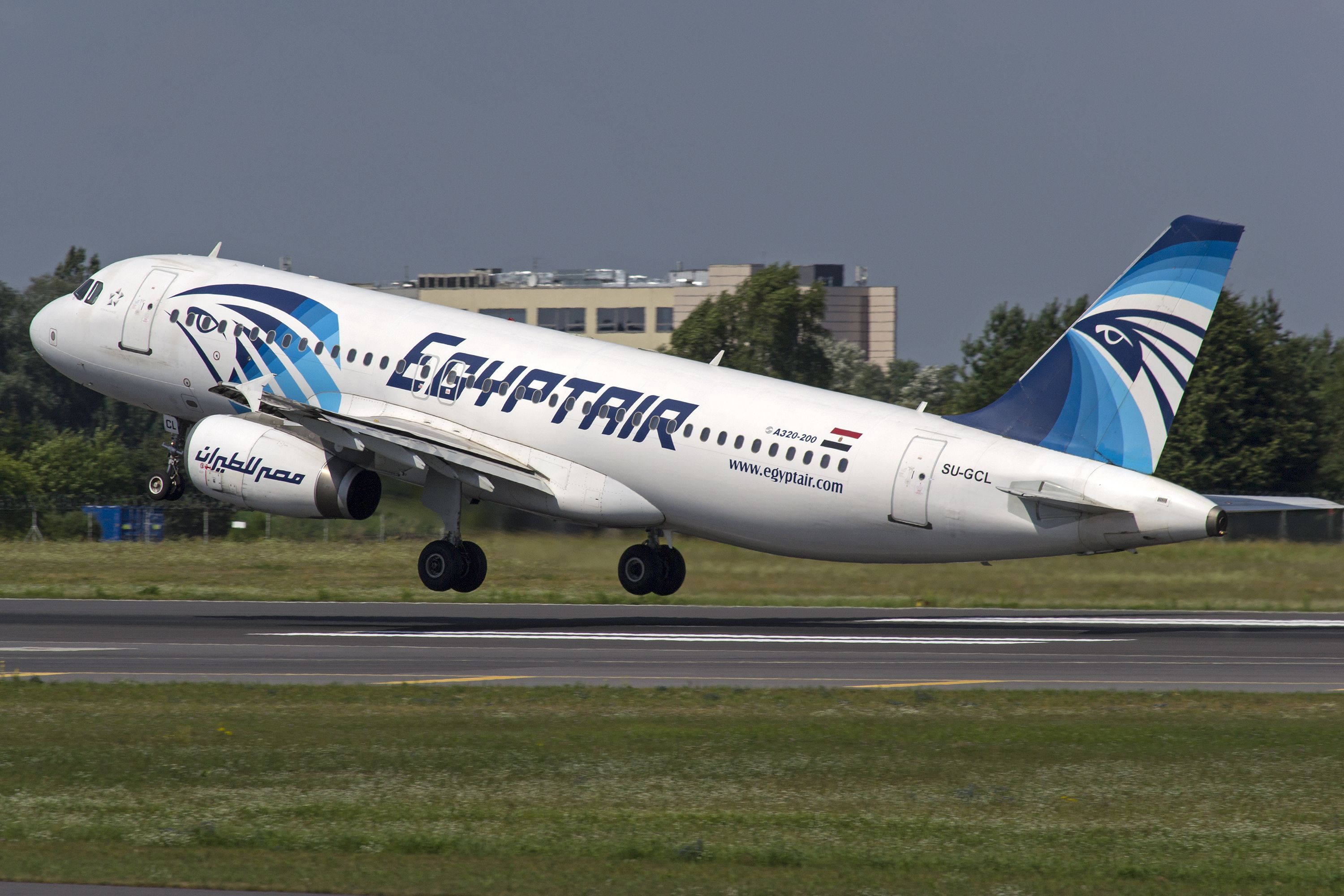
Photo: Konwicki Marcin | Shutterstock
Commenting on the final report, the BEA criticized the Egyptian investigators, saying that there were factual discrepancies, including the omittance of parts of the cockpit that were affected by the fire.
“The lavatory smoke warning preceded the avionics smoke alarm by 46 seconds. Although this sequence of alerts might suggest that the fire started in the cabin, this fact taken in isolation cannot be conclusive. Therefore, a fire in the cockpit could also have led to this sequence.”
Disputing the explosives theory, the BEA said that, in its experience, the cockpit area microphone (CAM) would normally pick up explosion noise from the galley.
“EAAID did not provide any evidence or analysis of the noises heard on the CVR consistent with an explosive material explosion. This absence should be mentioned in the report.”
Consequently, the French investigators disputed the EAAID’s scenario of the flight, noting that it could not pinpoint the beginning of the sequence of events that led to the crash.
It was likely that it was when the oxygen flow started in the mask storage box and was fed by a leak of pressurized oxygen due to either a component failure or someone pressing the EMERGENCY knob on the first officer’s oxygen mask.
“Whichever the case, the oxygen-fed fire spread to the outside of the storage box. This type of fire is rapid, large-scale, and uncontrollable. It produces a characteristic noise comparable to that of a blowtorch. The protective and extinguishing equipment items in the cockpit were not sufficient to bring the fire under control.”
The BEA concluded that the fire damaged the computers’ power supply, leading to the autopilot disconnecting. However, no flight crew actions were recorded, yet it was not possible to determine whether they were unconscious, fled the fire and then returned to the cockpit, or remained outside of it.
As a result, the Egyptair A320 crashed into the Mediterranean Sea with no one controlling the flight path of the aircraft.

