


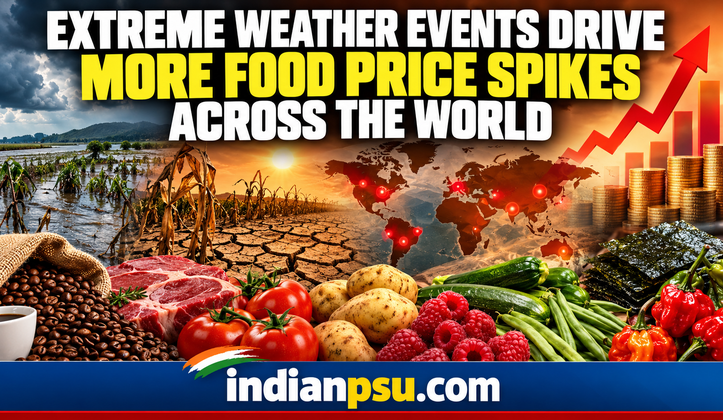
Brussels, September 30, 2026 — Extreme weather is emerging as an increasingly persistent driver of food-price inflation, with droughts, heatwaves, torrential rainfall and other climate shocks disrupting agricultural production and pushing up the cost of essential foods across the world.
A new briefing by Zero Carbon Analytics (ZCA), Climate extremes threaten global dietary quality and nutrition, accompanied by an interactive global map, documents 28 cases of weather-related food price spikes since 2022.
The map tracks real-world instances in which extreme weather affected food production and subsequently contributed to sharp price increases. ZCA says its methodology follows the framework used in an academic study led by Max Kotz and colleagues in 2025, assessing both the severity of weather anomalies and actual commodity-price movements.
The initial tracker includes 16 cases identified in the original academic study and 12 additional cases compiled by ZCA involving food-price disruptions since 2024.
From coffee to beef, climate shocks are hitting food markets
The newly documented cases cover a wide range of commodities and countries.
In Brazil, the driest May–September period on record in 2024 across the country’s Arabica coffee belt severely affected fruit development and harvest prospects. Arabica coffee prices were subsequently around 35% higher year-on-year by November 2025.
In the UK, exceptionally wet conditions between May 2023 and April 2024 affected livestock fields, contributing to a 19.9% rise in annual lamb prices in 2024.
US beef prices rose 14.4% by April 2026, following a prolonged Great Plains drought and an unprecedented March 2026 heat dome in the Mountain West, according to the briefing.
The UK also experienced its warmest spring and summer on record in 2025. Heat-stressed pastures forced livestock farmers to purchase additional feed, contributing to a 12.8% year-on-year increase in beef prices.
Vegetables have also been particularly vulnerable.
Heavy rainfall across Spain’s Almería region during January and February 2026 damaged tomato crops and pushed winter auction prices up by an average of 11%.
In Florida, an extreme cold event damaged approximately 80% of the state’s tomato crop, contributing to a 40% increase in US tomato prices between January and April 2026.
Heatwaves hit crops across Europe
France provides another illustration of how extreme heat can simultaneously affect several food commodities.
Record June temperatures damaged maize during critical stages of crop development, contributing to an estimated 16% year-on-year increase in French maize export quotes in 2026.
The same heatwave in Nouvelle-Aquitaine affected vegetable production. Consumer prices in July 2026 were reported to be 32% higher for courgettes, 31% higher for tomatoes and 24% higher for green beans compared with a year earlier.
In Serbia, record temperatures in June 2025 damaged raspberry production, pushing benchmark export prices for frozen whole raspberries up 51% year-on-year by September 2025.
Mexico’s potato sector was similarly affected after an exceptionally warm December reduced the number of required chill hours in Sonora’s Mayo and Yaqui valleys. Yields reportedly fell from 40 tonnes to 25 tonnes per hectare, while potato prices were 57.3% higher year-on-year by May 2026.
Climate pressure extends beyond conventional crops
The effects are not confined to land-based agriculture.
In Japan, record sea-surface temperatures in the Ariake Sea in October 2025 delayed seaweed cultivation and shortened growing periods. Japanese manufacturers subsequently raised prices of roasted nori and processed products by about 20% in March 2026.
Jamaica’s Scotch bonnet pepper market experienced an even sharper disruption. Exceptional rainfall associated with Hurricane Melissa caused local prices at Coronation Market to spike dramatically within a week and raised concerns about wider hot-sauce supplies.
‘Climateflation’ becoming a structural concern
Joanne Bentley-McKune, lead author of the ZCA briefing, said the effects were extending beyond temporary market disruptions.
“Far beyond temporary market shocks, the compounding financial pressure of ‘climateflation’ will continue to inflate baseline prices until full decarbonisation and structural adaptation are achieved,” she said.
According to Bentley-McKune, climate-driven destruction combined with fossil-fuel dependence can translate into persistent increases in everyday living costs.
Dr. Max Kotz, lead author of the academic study on which the mapping methodology is based, welcomed the development of a continuous tracker.
He said the price shocks have implications for households and economies, including cost-of-living pressures, health risks when consumers switch to less nutritious foods, and broader inflationary and interest-rate pressures.
Growing threat to nutrition and global food security
ZCA’s briefing argues that climate extremes are increasingly affecting perishable and nutrient-dense foods, potentially making healthy diets less affordable.
The report also highlights the growing risk of multiple agricultural production regions being affected simultaneously. Such “multi-hazard” shocks could become particularly damaging when drought, extreme heat and excessive rainfall occur against a backdrop of geopolitical tensions and already-constrained supply chains.
The briefing further points to the interaction between a severe El Niño event, macroeconomic pressures and geopolitical disruptions, arguing that these factors have reduced the buffers available within global food supply chains.
The implication is significant: food systems that once had sufficient reserves to absorb isolated weather disruptions may have considerably less room to withstand several shocks occurring at the same time.
With 28 documented cases now included in its tracker, Zero Carbon Analytics’ analysis provides a growing body of evidence that extreme weather is no longer simply an agricultural risk. It is increasingly becoming a global food-price and nutrition issue, with consequences extending from farms and commodity markets to household budgets and public policy.
The writer of this article is Dr. Seema Javed, an environmentalist & a communications professional in the field of climate and energy
