


A KLM Airbus A330 flying from Amsterdam to Houston had to return to Amsterdam shortly after takeoff due to both engines suffering bird strikes during the initial climb out. The aircraft landed safely and without incident.
Bird strike event
On Friday, November 15th, KLM Royal Dutch Airlines (KLM) Flight KL661, which services the direct route from Amsterdam Schiphol Airport (AMS) to Houston George Bush Intercontinental Airport (IAH) using an Airbus A330-200 (registered PH-AOA), was forced to return to AMS only 28 minutes after takeoff.
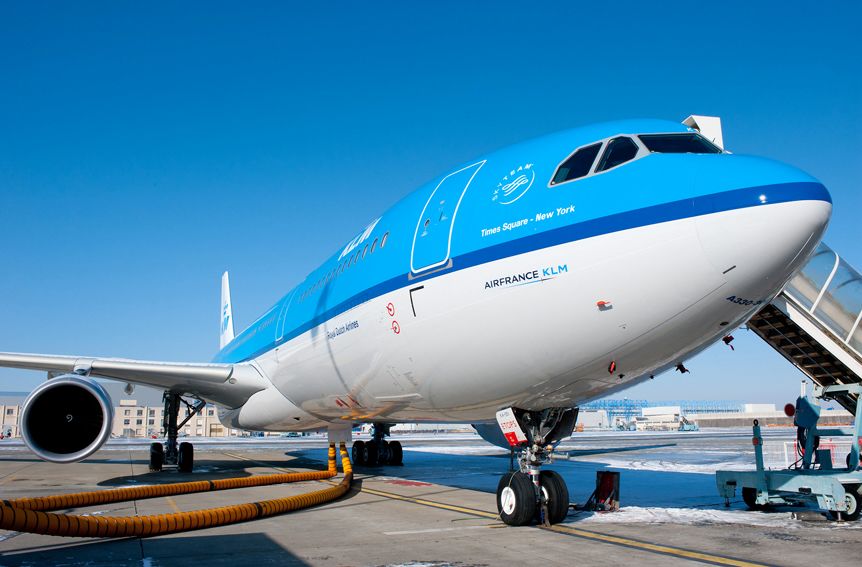
Photo: Airbus
According to The Aviation Herald, the aircraft was climbing from AMS runway 24 when the crew stopped the climb at 6,000 ft. Shortly after, they communicated to Air Traffic Control (ATC) that they had collided with a flock of birds and were experiencing vibrations on both engines of the widebody twinjet. As a result, the crew requested clearance to keep the aircraft close to the airport while they ran through checklists.
According to data from Flightradar24, only 12 minutes elapsed between the aircraft lifting off from the runway and then leveling off at 6,000 ft. It is unclear at exactly which altitude the aircraft collided with the birds, but we can assume that they stopped the climb almost immediately after impact.
The aircraft remained at 6,000 ft for nearly 15 minutes before beginning its descent towards the AMS. It landed safely on runway 18R.
Aftermath
Since the incident, the aircraft has remained on the ground at AMS. The extent of the damage isn’t clear, but Simple Flying has contacted KLM for a statement.

Photo: Olaf Schulz | Shutterstock
According to ch-aviation, the aircraft is a 19.3-year-old Airbus A330-200 equipped with two General Electric CF6 engines. It has 18 business class seats, 36 economy plus seats, and 210 economy class seats, for a total of 264 seats.
The aircraft was produced at the Airbus Toulouse Blagnac construction site. It was first delivered to KLM in August 2005. As of August 2024, the aircraft had accumulated 80,316 total hours and 14,481 flight cycles. The airline operates the aircraft for roughly 4,205 hours and 758 each year. The airline is expected to retire the aircraft in early 2027.
The effect of bird strikes
Bird strikes are an inevitable part of aviation. It is estimated that roughly 21,000 bird strikes occur a year. However, many of these birds contact the fuselage and do not get ingested into the engine.
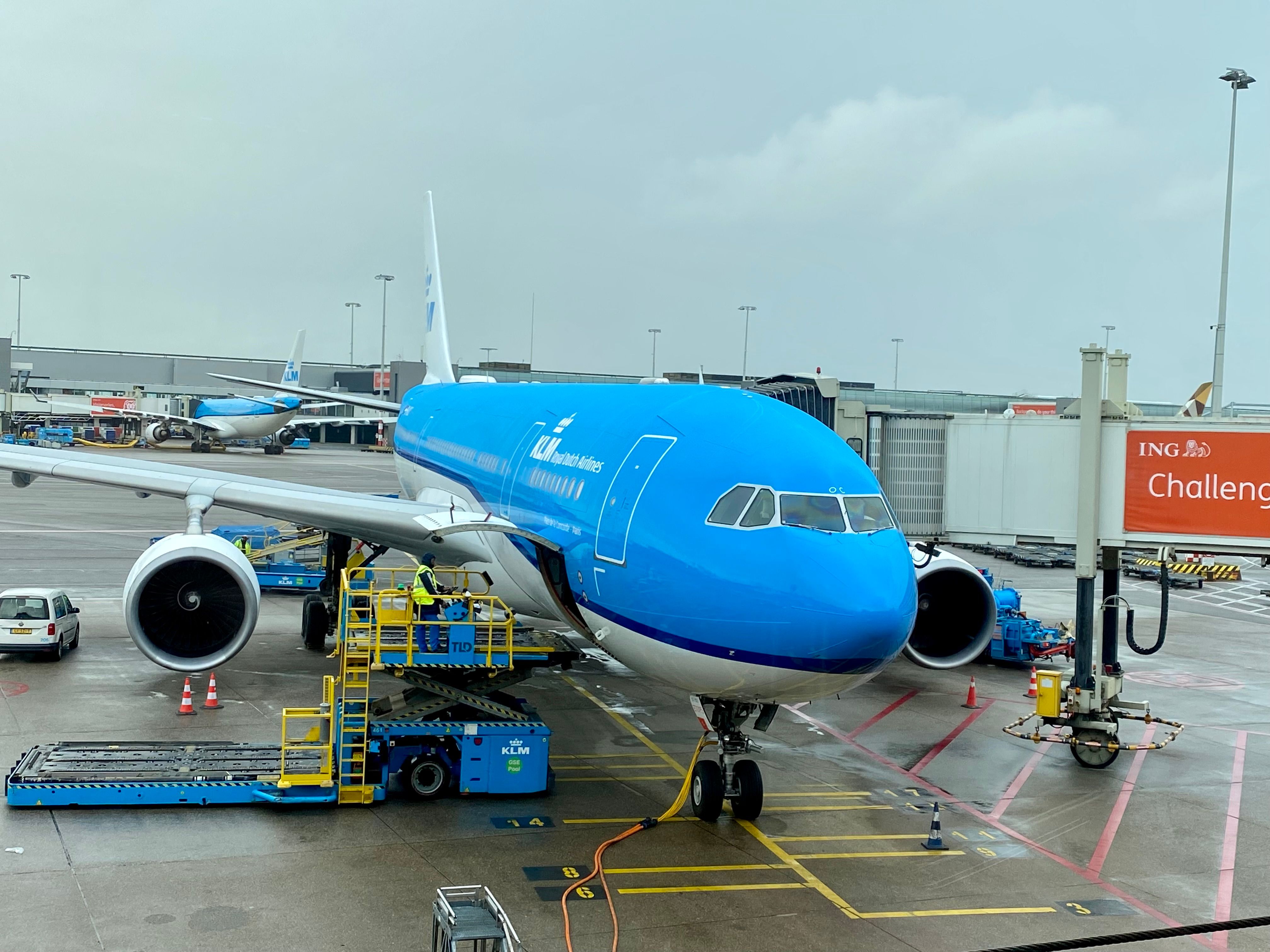
Photo: Omar Memon | Simple Flying
Aircraft are built with a high level of safety and redundancy, and this includes engines. While bird strikes can severely damage engines, they are designed to sustain an impact and continue working for a limited time.
The damage sustained by a bird strike often depends on the bird’s size, the aircraft’s velocity, and the engine’s power setting. If a bird strikes a fan blade and it becomes dislodged, it can get sucked deeper into the engine and cause a cascading failure.
A single bird strike to an engine is unlikely to cause a complete failure. However, a flock of birds and multiple impacts can cause an engine to shut down. An extreme example is US Airways Flight 1549, which landed in the Hudson river after losing both engines due to multiple bird strikes.

Related
5 Famous Bird Strike Incidents From Throughout Aviation History
These range from fatal crashes to miraculous saves.
