


A pair of new California laws signed over the weekend sets demands for cold storage warehouses in a bid to hold them accountable for industrial disasters like the recent fire at a warehouse in Los Angeles, but some industry voices say they go too far.
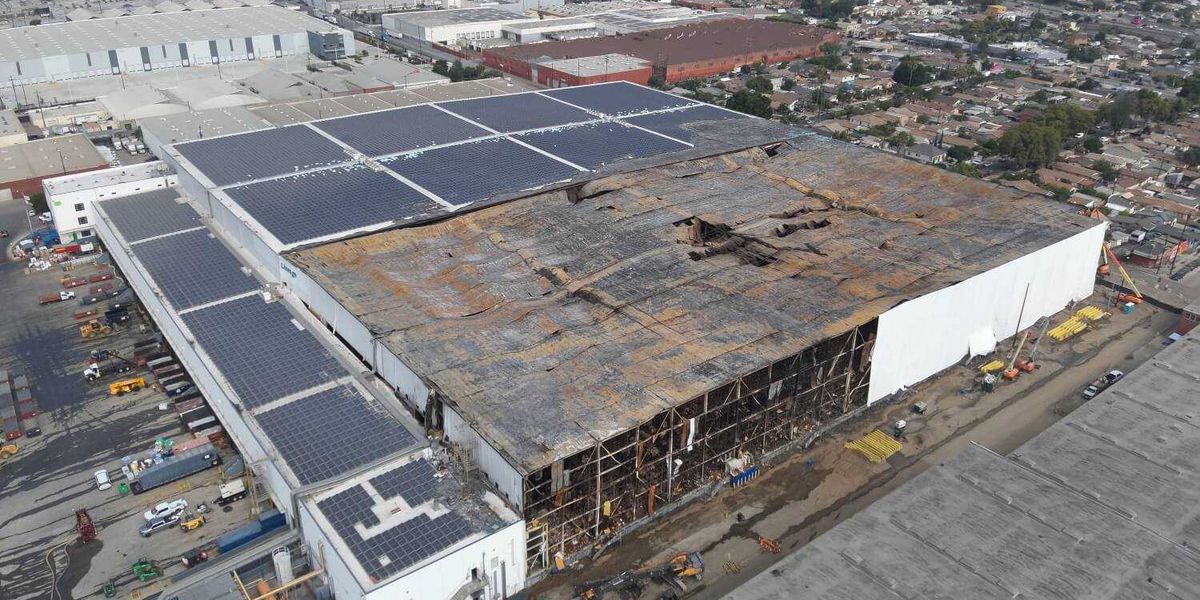
The June 17 fire at a nearly 500,000-square-foot cold storage facility operated by Lineage Logistics in Boyle Heights, California, burned for eight days and was followed by significant cleanup and public health challenges. The immediate fallout featured air pollution that has since caused health problems for neighbors, and a persistent rotting odor caused by the decomposition of some 89 million pounds of frozen food.
The $100 million cleanup plan took months, and Lineage announced it had cleared all remaining food waste and debris from the wreckage on September 5.
The state’s legislature drafted two bills in response, and on Sunday, California Governor Gavin Newsom signed Assembly Bill (AB) 817 and Senate Bill (SB) 716, saying they strengthen accountability to help communities respond to future emergencies. Specifically, AB 817 establishes new contingency-fund requirements for specified community needs for certain large cold storage facilities. And SB 716 strengthens local enforcement tools by increasing fines for violations of local ordinances involving specified nonresidential structures of 20,000 square feet or more when the violations pose a threat to health and safety.
However, one business group opposing the new laws is the Global Cold Chain Alliance (GCCA), which expressed “disappointment” in the move, saying today that it had actively opposed the bills since they were introduced in August.
In the GCCA’s view, the warehouse fire offered an opportunity to strengthen emergency preparedness and response at industrial sites statewide. But rather than directing new resources or support to communities affected by industrial incidents, the new bills primarily add financial and regulatory burdens on the food and pharmaceutical cold storage supply chain — raising costs for growers, processors, distributors, manufacturers, and retailers alike, the group said.
“We’re disappointed that this legislation moved forward in its current form, because it doesn’t deliver what communities actually need in the wake of the Boyle Heights fire, and adds real costs to an industry that keeps food and medicine available and safe for millions of Californians,” said Sara Stickler, President & CEO of GCCA. “However, we look forward to sitting down with Assemblymember Gonzalez, other lawmakers, and community stakeholders in the next legislative session to build a policy that genuinely strengthens emergency preparedness without pricing responsible businesses out of California.”
GCCA said it will continue to update its members and industry stakeholders as it works with the state legislature ahead of the laws’ effective date of January 1, 2027.
