


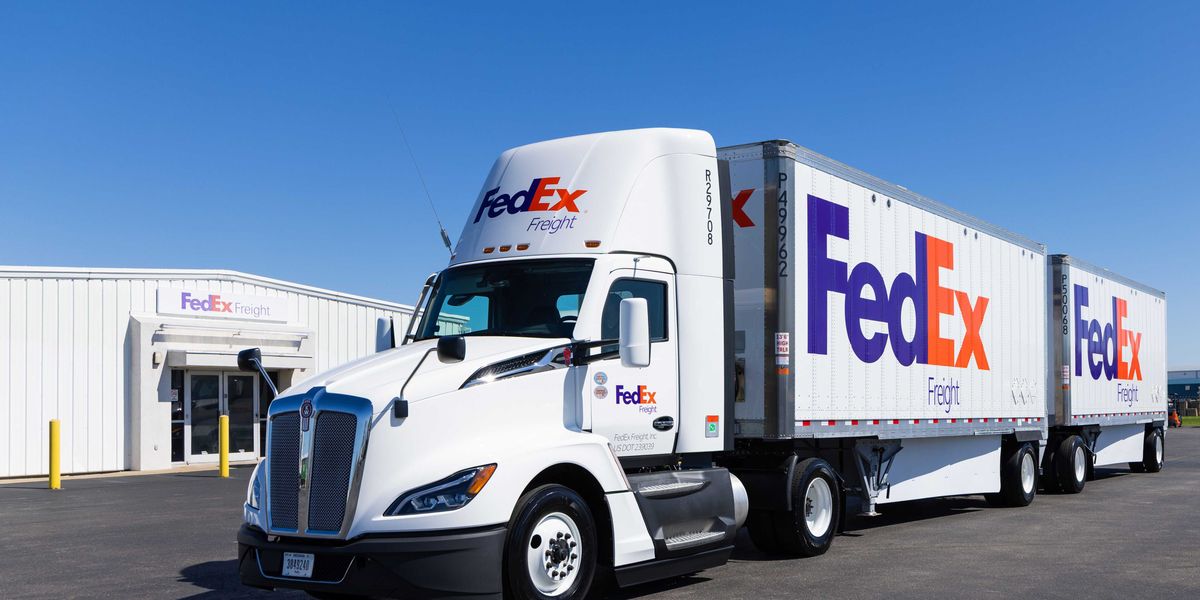
Market volatility and a fast-paced technology environment are converging to create opportunities in transportation markets, freight leaders told attendees at a less-than-truckload (LTL) industry conference taking place in Florida this week.
These are “exciting times for everyone in this room,” FedEx Freight President and CEO John Smith told attendees at SMC3 Connections, which runs through Wednesday, July 1, at The Breakers Palm Beach. Roughly 400 people turned out for the event, representing LTL carriers, freight brokers, technology companies, and logistics service providers.
In a one-on-one interview with Elisabeth Barna of EAB Strategies, Smith talked about industry conditions and market opportunities in LTL in light of FedEx Freight’s recent spin-off from FedEx Corp., which was completed June 1. The move created an independent, publicly traded company in the North American LTL industry.
Smith discussed FedEx Freight’s “tremendous journey” over the past year, describing the need to unbundle the organization from its parent company—which required investments in people and technology. Those investments included hiring 500 LTL-focused salespeople and adding nearly 900 to its IT group, according to Smith.
Those and other efforts will help the company achieve its goal to penetrate new markets—including small- and medium-sized businesses (SMBs), healthcare companies, data centers, and the food and beverage industry—as well as expand its already vast coverage across North America. This spin-off makes FedEx Freight the largest pure-play LTL carrier in North America, with 26,000 dock doors throughout the region.
Smith and others pointed to the extended downturn in freight markets over the past few years as a catalyst for the changes taking place in the industry as well—and as a driver of resiliency on a larger scale, noting that he expects a slow recovery from the longest down market in recent history.
The shifting market conditions have opened the door to new entrants in LTL as well, most notably Amazon Freight, which earlier this month expanded its inbound-to-Amazon lanes to reach any type of destination, including third-party warehouses, distribution centers, and retail partners. The move continues a steady expansion of the e-commerce giant’s logistics operations, which began with an in-house fleet and has expanded to serve its sellers’ LTL needs and now offers those services to the broader marketplace, according to Morgan Roberts, principal and supply chain manager at Amazon Freight.
“Our progression has been intentional,” Roberts told SMC3 Connections attendees, also in a one-on-one interview.
Operating under Amazon Supply Chain Services, Amazon Freight adds LTL service with a fleet of more than 80,000 trailers and 24,000 intermodal containers.
