


Korean Air and Asiana Airlines should clear their final hurdle to consummate their merger, with reports indicating that the United States Department of Justice (DOJ) has approved or at least not objected to the transaction.
Last stakeholder
After the European Commission (EC) had given its final approval for Korean Air and Asiana Airlines to merge, with the surviving entity, Korean Air, finalizing the conditions that alleviated the European legislators’ competition concerns, the US DOJ remained the last governmental party that had not approved the merger.
However, according to an exclusive report by South Korea-based Maeil Business Newspaper, which cited sources familiar with the matter, the DOJ has given its final approval for the merger to go through.
When the EC gave its last approval for the Korean Air and Asiana Airlines merger on November 28, the former airline said that it had submitted the Commission’s approval to the DOJ.
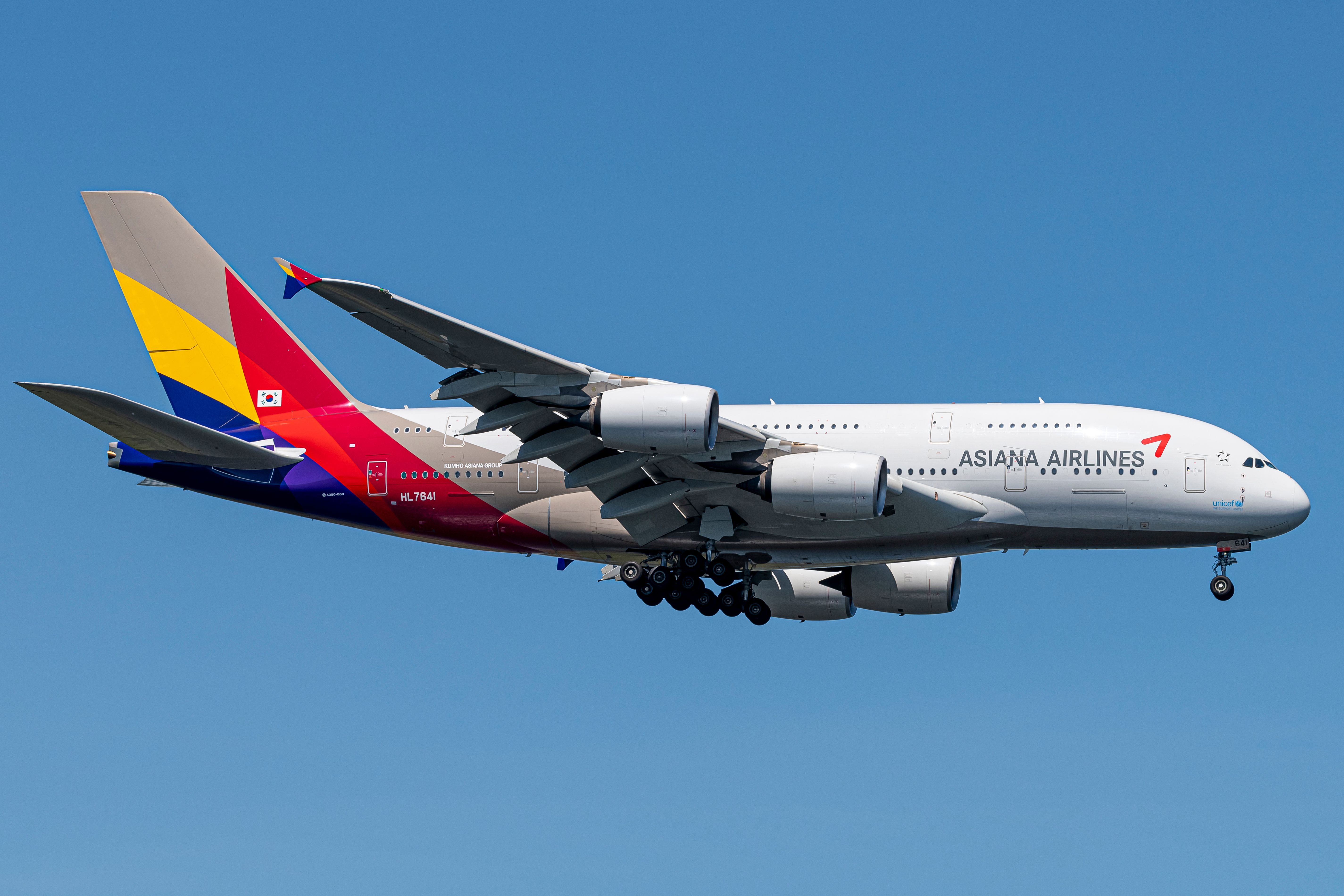
Photo: Vincenzo Pace | Simple Flying
At the time, Korean Air stated that it planned to complete the transaction by the end of the year, completing a process that it has initiated in 2020 when it announced that it would be acquiring Asiana Airlines.
In a statement to Simple Flying on December 2, a Korean Air spokesperson reiterated that after the EC’s final approval, it had submitted the clearance and its plan to acquire Asiana Airlines’ shares to the DOJ.
“ If no objections arise before the share acquisition, we expect to complete the transaction by December 11.”
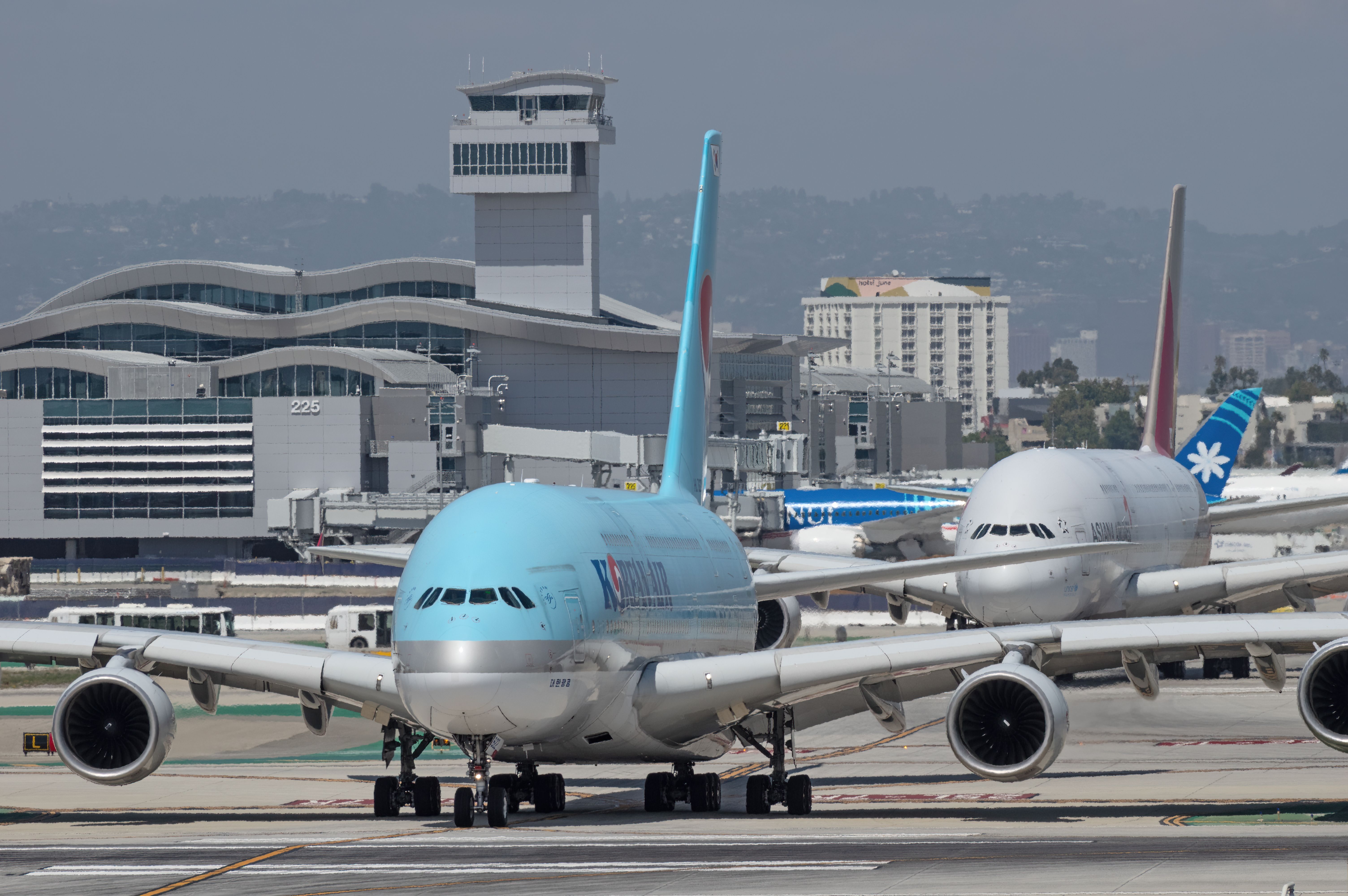
Related
Korean Air-Asiana Airlines Merger Gets Final EU Nod: Still Lacks US DOJ Approval
Korean Air said that it expected to gain approval from the DOJ before the end of 2024.
One of the largest airlines in the world
In November 2020, Korean Air announced that its parent group, Hanjin Kal, which also owns the low-cost carrier Jin Air, made the decision to acquire Asiana Airlines for KRW 1.8 trillion ($1.2 billion).
“Korean Air decided to acquire Asiana Airlines after much consideration and deliberation in order to pursue its founding mission to contribute to the nation through transportation. Following its mission, the carrier will ensure job security for employees at both airlines as well as relevant industries and support the development of Korea’s aviation industry.”
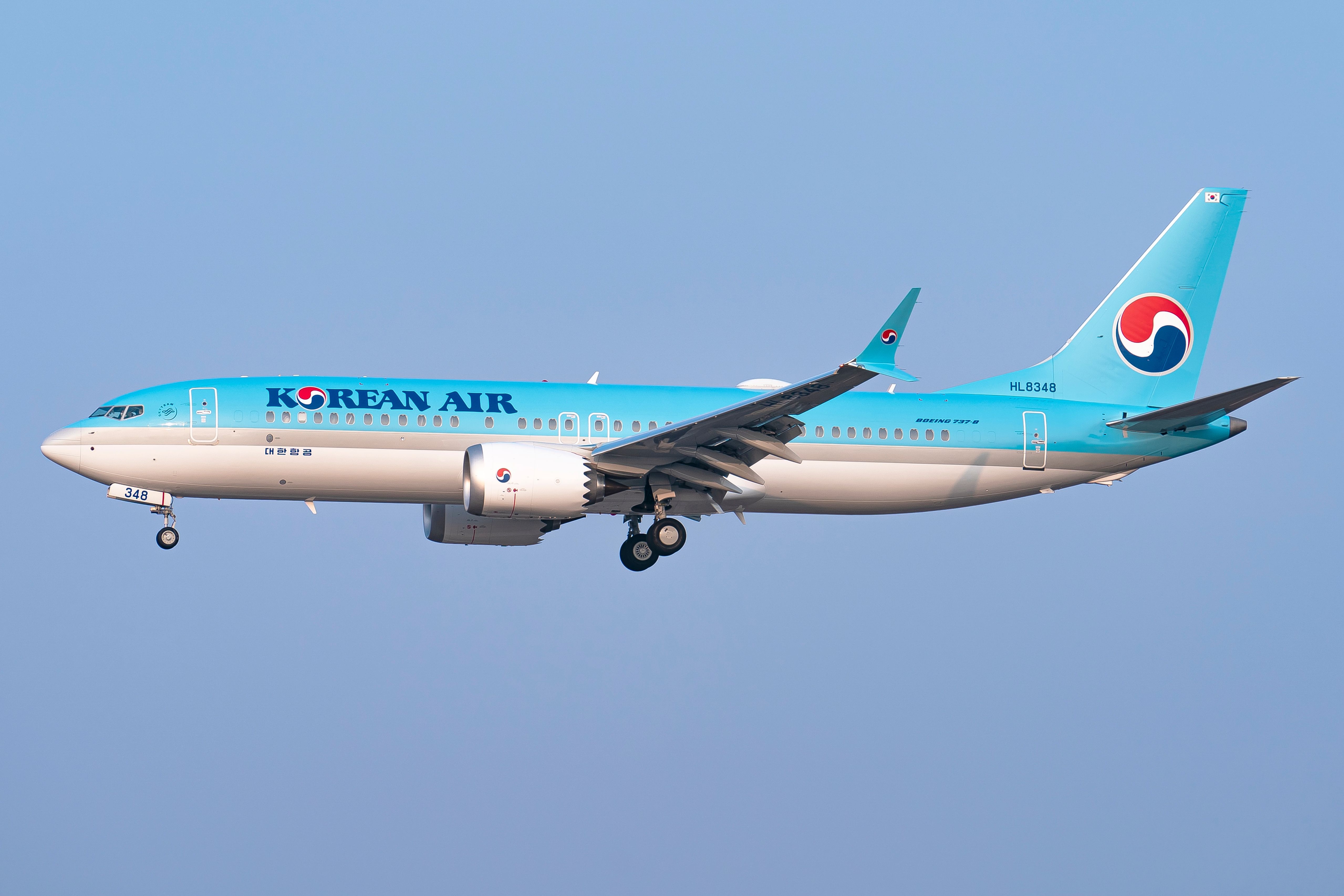
Photo: Parkdolly | Shutterstock
The Korean carrier, which will be the surviving entity of the merger, said that it would be one of the top ten airlines in the world, noting that generally, countries with less than 100 million people have one flag carrier.
Meanwhile, South Korea had two, which had put the country’s aviation industry at a disadvantage versus Germany (  Lufthansa), France ( Air France), and Singapore (
  Singapore Airlines). Nearby Japan also has two de facto flag carriers: Japan Airlines and All Nippon Airways (ANA).
“However, Korean Air’s acquisition and the expansion of its routes, fleet and capacity will give the airline the competitiveness to compete with global mega airlines.”

Related
Examined: How The Korean Air & Asiana Airlines $1 Billion Merger Moves Forward Following EU Approval
The two carriers will soon become one of the world’s largest.
Alleviating competition concerns
Still, Korean Air and Asiana Airlines had to alleviate competition-related concerns, including the EC’s. When it first approved the merger pending the fulfillment of certain conditions, the EC mandated that Korean Air would help a competitor – with T’Way Air becoming the remedy taker – to help launch new flights on routes with little-to-none competition.
As a result, throughout the past few months, T’Way Air launched flights from Seoul Incheon International Airport (ICN) to Barcelona-El Prat Airport (BCN),  Frankfurt Airport (FRA), Paris Charles De Gaulle Airport (CDG), and Rome Leonardo da Vinci–Fiumicino Airport (FCO).
In addition, Air Incheon was the remedy taker for Asiana Airlines’ cargo assets, including aircraft, slots, customer contracts, and other resources, such as slots.
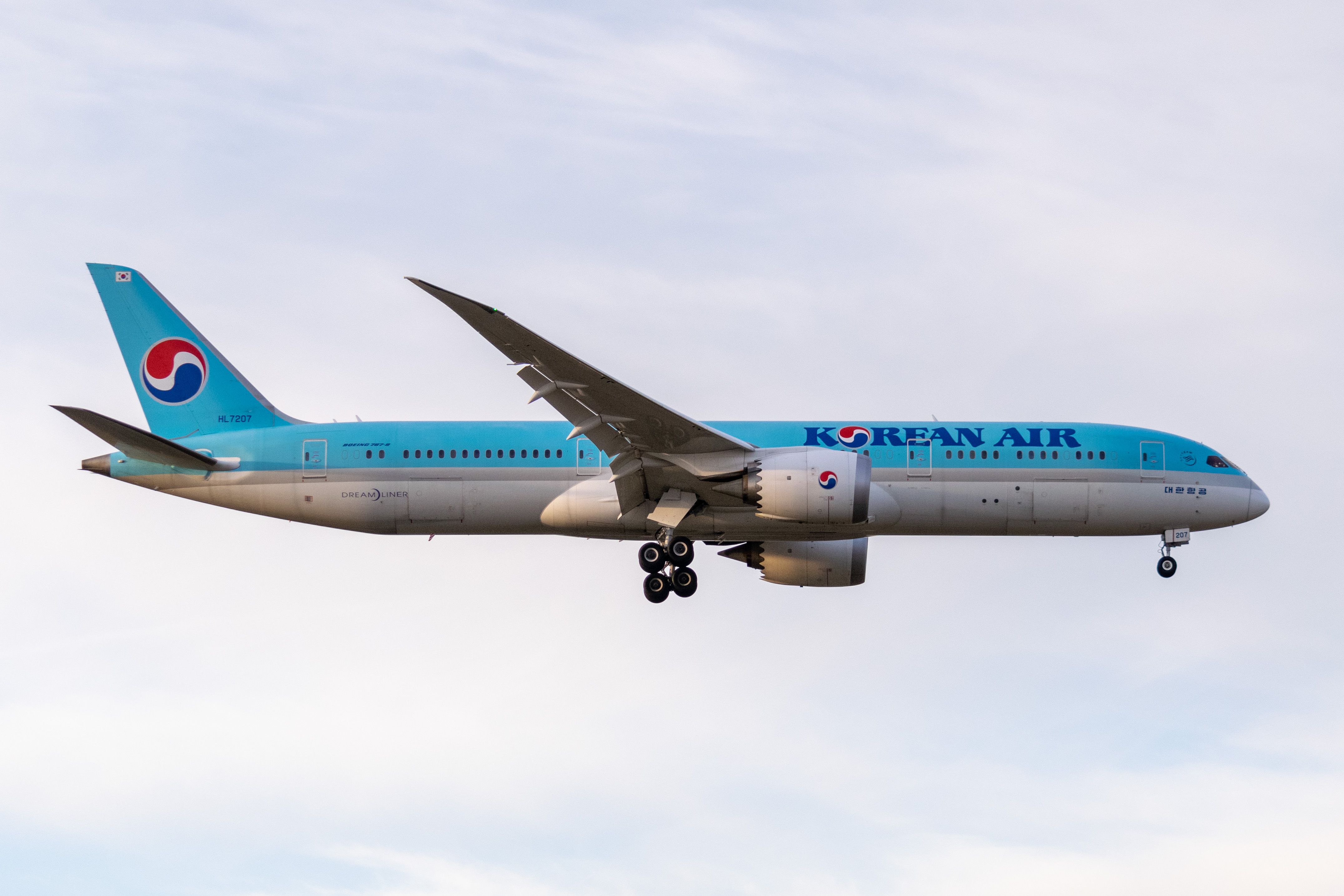
Photo: Tom Boon | Simple Flying
Korean Air, to alleviate the DOJ’s concerns, had also decided to lease at least four Boeing 787-9 aircraft to rival Air Premia, an all-787-9 operator based in the country, according to local media reports in January.
On August 29, Air Premia announced that following a deal with an aircraft lessor, it would be introducing four 787-9 into its fleet between the end of 2024 and Q3 2025, with the quartet being used to launch new routes from South Korea to the Americas and Southeast Asia.
Out of the five 787-9s the South Korean carrier currently operates, two are former Norwegian Air airframes. Another ex-Norwegian Air 787-9, registered as LN-LNI (current registration VP-CVD), should be joining Air Premia’s fleet soon, ch-aviation data showed.
The aircraft belongs to FWCAS, an Irish aircraft lessor, which has another three 787-9s in its portfolio. Similarly to LN-LNI/VP-CVD, all three were previously operated by Norwegian Air.
Air Premia did not detail whether the transaction was related to Korean Air’s potential concerns about the DOJ’s approval, which had an interest in prohibiting a monopoly from forming on flights from South Korea to the US that could harm consumers.
Related
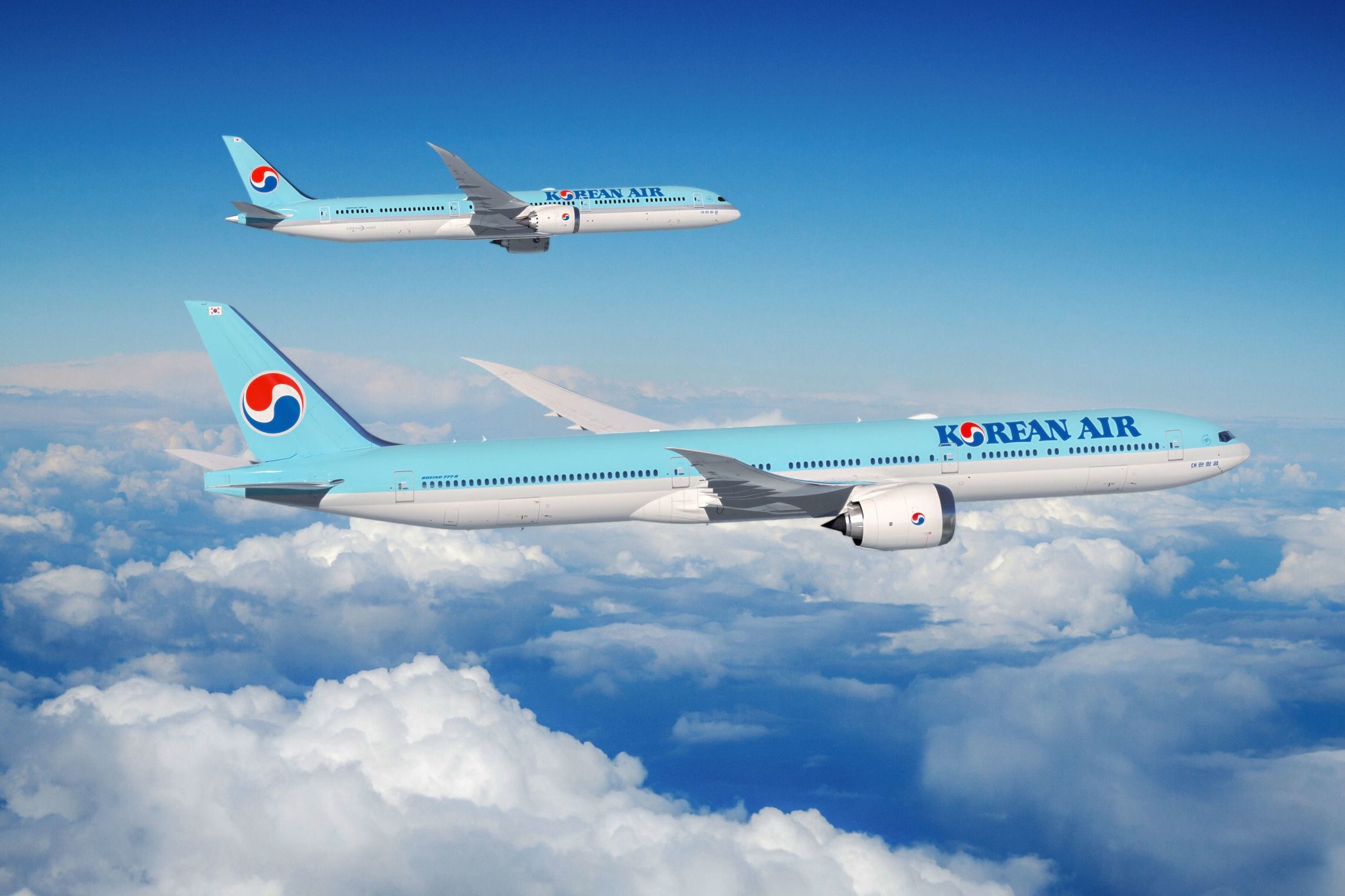
Korean Air Boosts Boeing With Order Of 20 777X And 30 787 Dreamliners At Farnborough Airshow
This was Boeing’s second order at the airshow, with Korean Air becoming a new 777X customer.
